
Under NRC 10 CFR 20.1201, what is the annual occupational shallow-dose equivalent (SDE) limit to the skin of the whole body or to the skin of any extremity for an adult radiation worker?
Select an answer to reveal the explanation.
Short Explanation
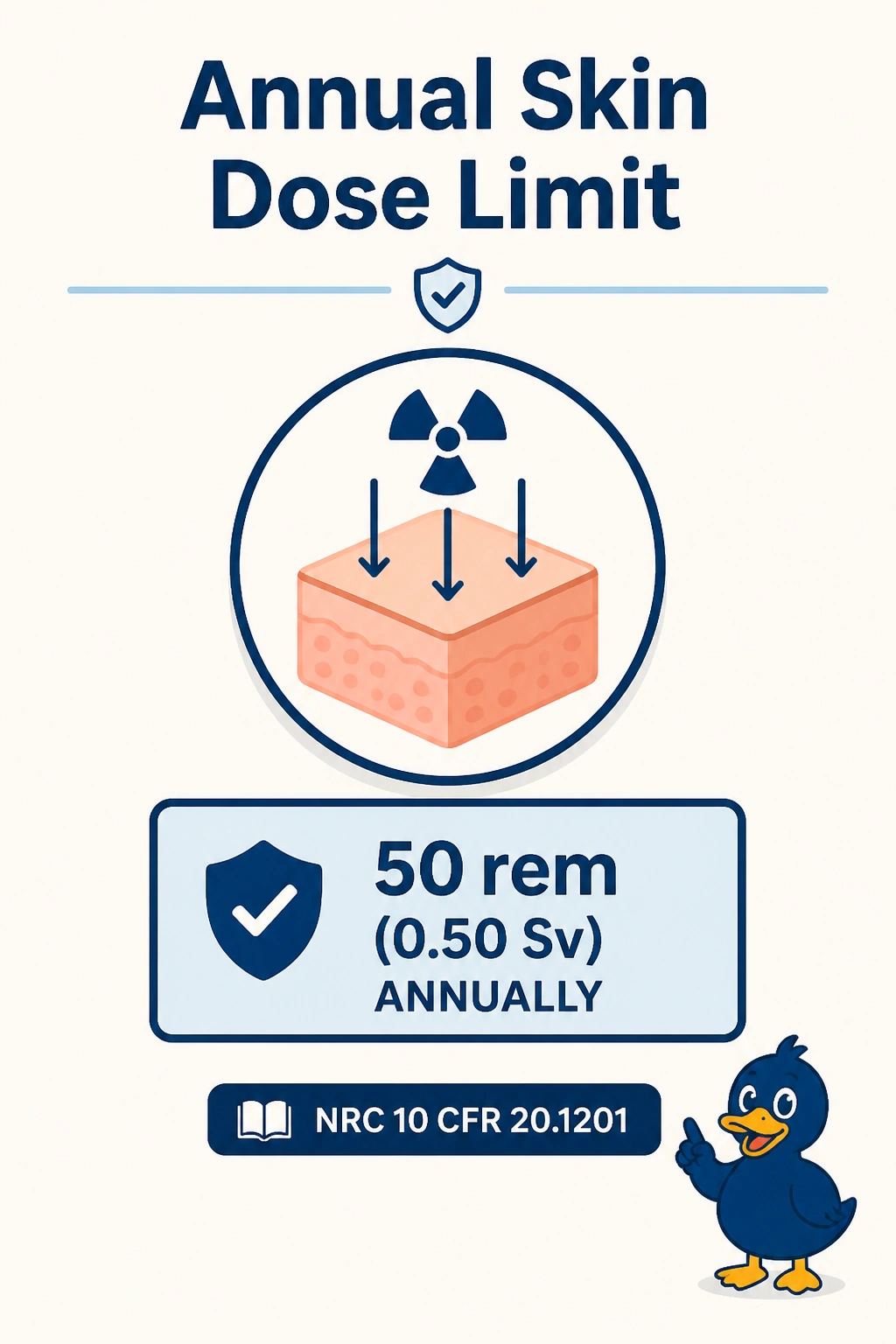
Your hands and skin can safely tolerate a higher localized dose than your blood-forming organs, which is why NRC rules give them a tenfold higher annual ceiling than the whole-body limit. Do not confuse this 50 rem extremity cap with the 15 rem lens-of-the-eye limit or the 5 rem TEDE limit on exam day.
Full Explanation
50 rem (0.50 Sv) annually is correct because 10 CFR 20.1201 establishes an annual occupational shallow-dose equivalent limit of 50 rem (0.5 Sv) to the skin of the whole body or to the skin of any extremity, averaged over the contiguous 10 square centimeters of skin receiving the highest exposure. 5 rem (0.05 Sv) is incorrect because that is the annual occupational Total Effective Dose Equivalent (TEDE) limit for the whole body under 10 CFR 20.1201, not the localized skin or extremity cap. 15 rem (0.15 Sv) is wrong because that figure is the annual occupational lens dose equivalent (LDE) limit for the lens of the eye under 10 CFR 20.1201. 100 rem (1.0 Sv) is incorrect because no routine annual occupational limit in 10 CFR 20 reaches 100 rem; that figure exceeds the regulatory extremity limit by a factor of two. As an exam caveat, if an extremity also receives deep penetrating radiation, the 50 rem annual limit under 10 CFR 20.1201 applies to the sum of deep-dose equivalent and shallow-dose equivalent to the extremity. Operationally, verify that technicians handling beta-gamma sources wear ring dosimeters on the highest-exposed finger and compare cumulative quarterly SDE totals against administrative action levels.
Prefer to study offline? Printable PDF study book + test engine ($7.50, unofficial). These questions stay free here.