
A shipper surveys a non-exclusive-use Class 7 radioactive package and measures a maximum external surface dose rate of 10 mrem/hr and a Transport Index (TI) of 1.5. Under DOT 49 CFR 172.403, which labeling rule applies?
Select an answer to reveal the explanation.
Short Explanation
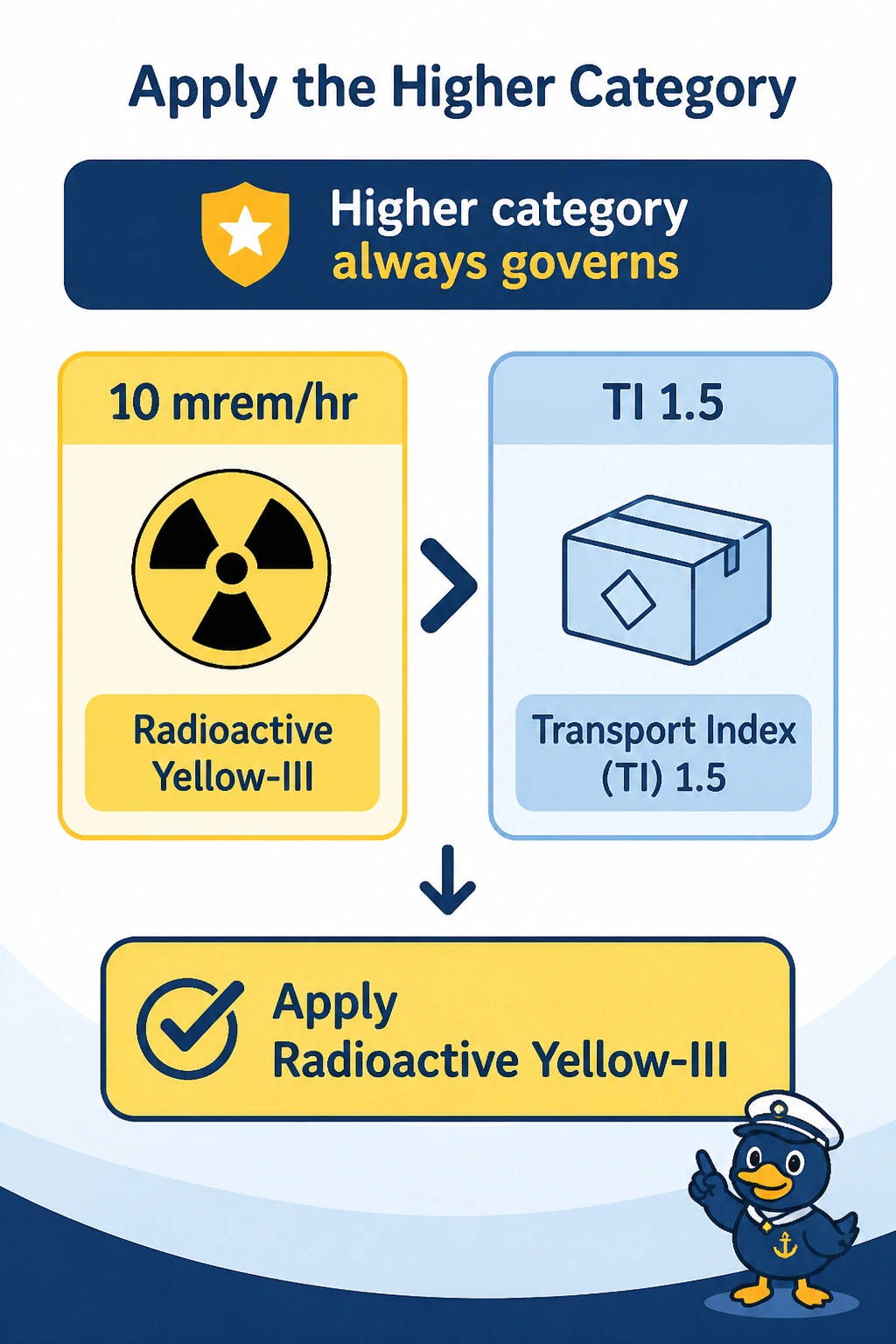
Think of DOT radioactive package labels like a strict safety gate where the tougher rule always wins. If your surface dose rate looks mild but your Transport Index is high, you cannot pick the lower label. The classic trap is letting a moderate surface reading fool you into under-labeling the package.
Full Explanation
Under DOT 49 CFR 172.403, when a Class 7 package's external surface radiation level and Transport Index (TI) fall into different label categories, the shipper must Apply Radioactive Yellow-III because the higher category always governs. Specifically, Radioactive Yellow-II is limited to packages with a maximum surface dose rate above 0.5 mrem/hr up to 50 mrem/hr and a TI of 1.0 or less; once the TI exceeds 1.0 (up to 10 for non-exclusive use), the package enters the Yellow-III category regardless of a lower surface reading. Choosing to Apply Radioactive White-I because the surface dose rate is below 50 mrem/hr is doubly wrong because White-I is restricted to surface rates of 0.5 mrem/hr or less and a TI of zero. Selecting Apply Radioactive Yellow-II because the surface dose rate takes precedence over the Transport Index reverses the regulatory hierarchy, which always requires the more restrictive category. Trying to Average the surface dose rate and Transport Index to determine the intermediate label has no basis in 49 CFR 172.403 and mixes two distinct quantities. As an exam caveat, remember that Yellow-III packages also trigger vehicle placarding requirements under 49 CFR 172.504. As an operational check, record both the highest contact reading and the highest reading at 1 meter on all sides before selecting the package label.
Prefer to study offline? Printable PDF study book + test engine ($7.50, unofficial). These questions stay free here.