
A radiation protection technician surveys a non-exclusive-use Type A package prepared for highway shipment, measuring a maximum surface dose rate of 15 mrem/hr and a Transport Index of 0.4. Which DOT radioactive label must be applied to opposite sides of this package?
Select an answer to reveal the explanation.
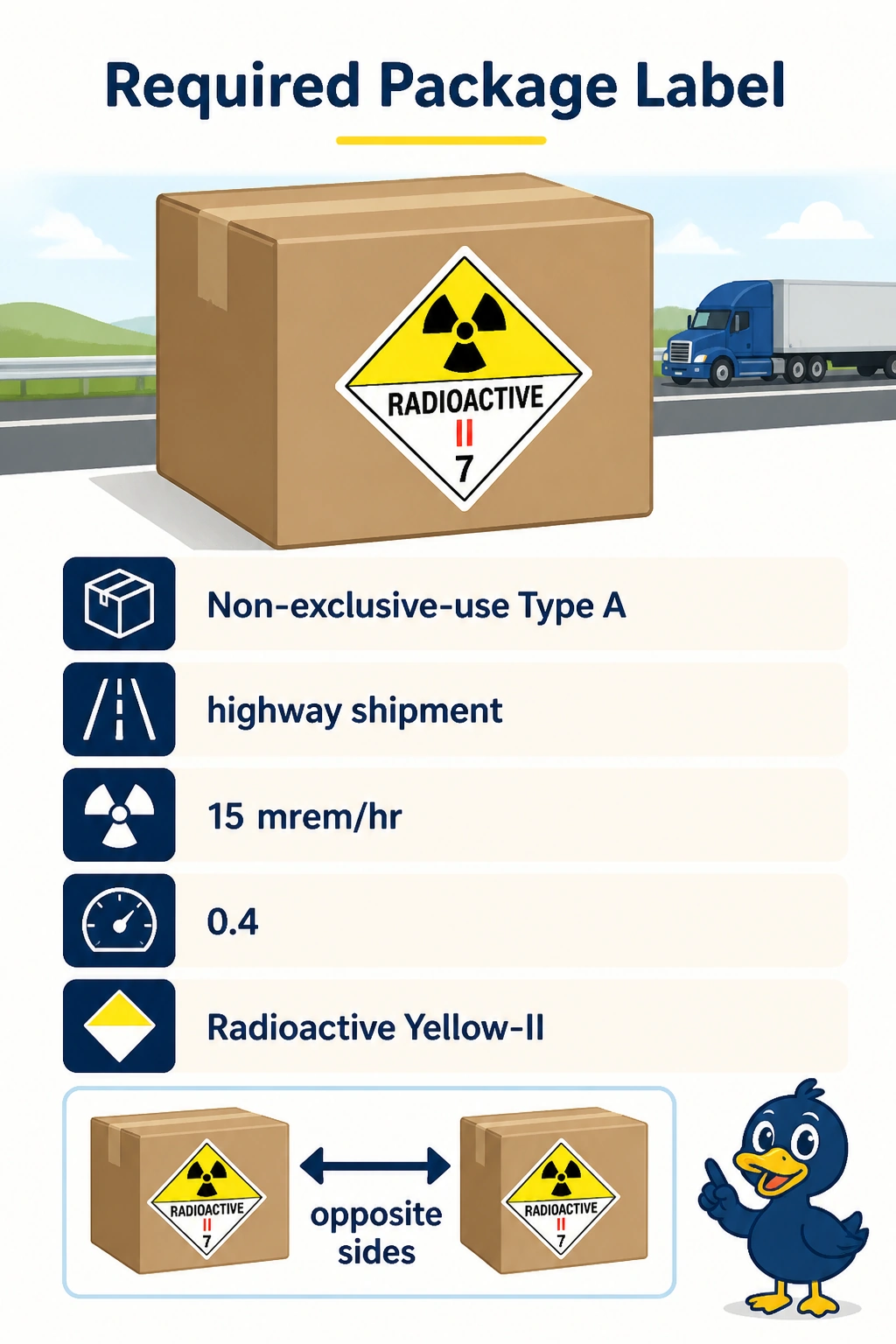
Short Explanation
Think of DOT package labels like a traffic light for dose rates, where you match the color to how hot the box is on contact and at one meter. The trap is jumping straight to Radioactive Yellow-III whenever a package reads above a few millirem per hour, even when it still sits well below the 50 mrem/hr ceiling.
Full Explanation
Under 49 CFR 172.403, a non-exclusive-use package requires Radioactive Yellow-II when its maximum external surface radiation level is greater than 0.5 mrem/hr but no more than 50 mrem/hr and its Transport Index (TI) does not exceed 1.0. Because 15 mrem/hr and a TI of 0.4 fall squarely inside both bounds, Radioactive Yellow-II is required on two opposite sides of the package. Radioactive White-I applies only when the surface dose rate is 0.5 mrem/hr or less and the TI is zero. Radioactive Yellow-III is reserved for packages exceeding 50 mrem/hr on the surface (up to 200 mrem/hr for non-exclusive use) or having a TI above 1.0. Empty Class 7 Exemption applies to empty packagings that meet specific internal contamination and surface dose limits rather than loaded Type A shipments. As a key regulatory caveat, whichever parameter—surface dose rate or TI—falls into the higher category always governs the final label choice, and exclusive-use shipments follow separate provisions. Before releasing the shipment, survey all accessible exterior faces at contact and at one meter with a calibrated meter to verify both the highest surface reading and the TI.
Prefer to study offline? Printable PDF study book + test engine ($7.50, unofficial). These questions stay free here.