
During an outdoor emergency response to a ruptured radioactive material transport package, the incident commander establishes three concentric control zones. What is the primary purpose of the intermediate contamination reduction zone between the hot zone and the cold zone?
Select an answer to reveal the explanation.
Short Explanation
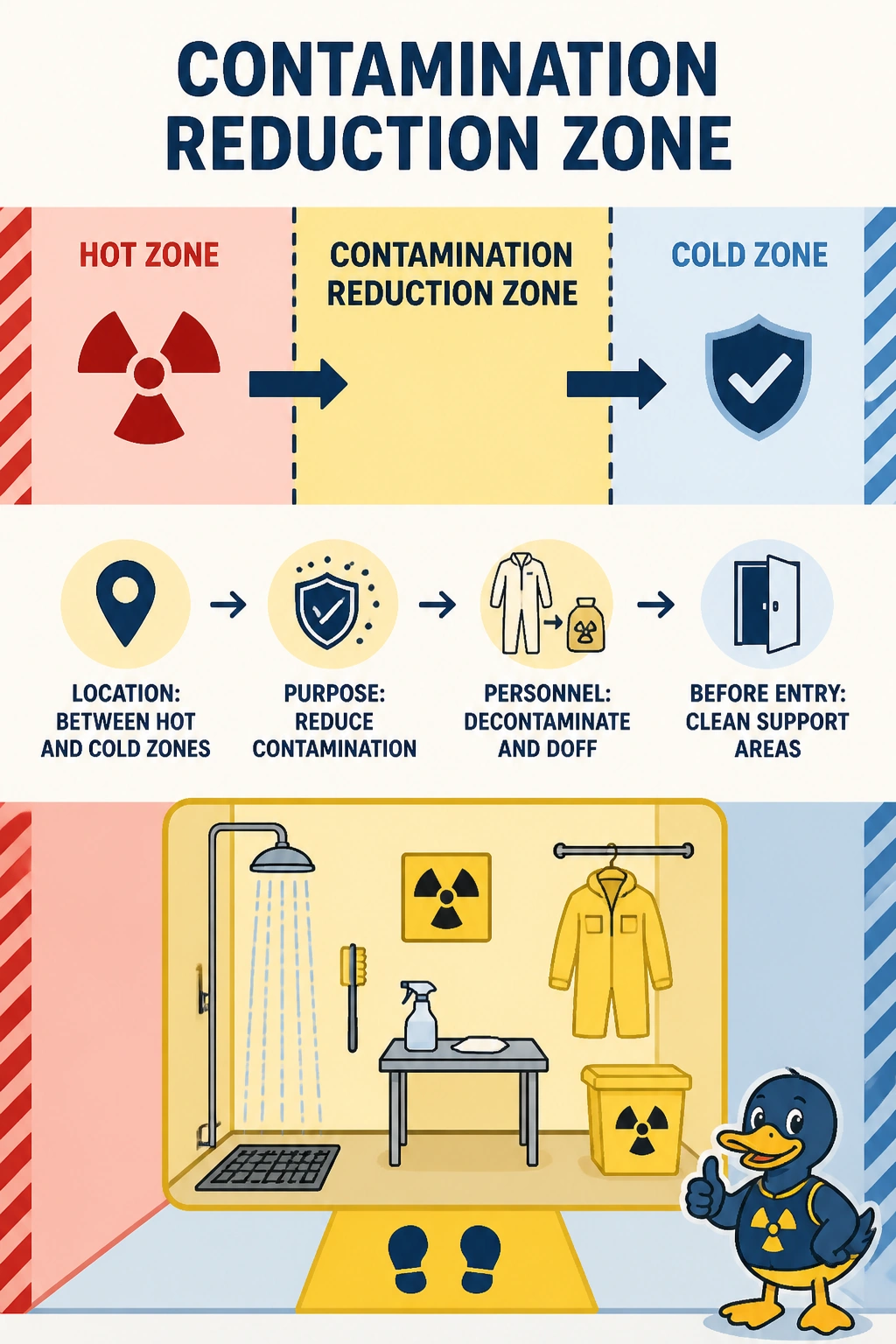
Think of the contamination reduction zone as an airlock between a messy workshop and your clean living room. If you walk straight from a spill into the command post, you carry radioactive material onto clean gear and unprotected responders. The trap is confusing this active transition corridor with the upwind cold zone where command posts and staging vehicles wait.
Full Explanation
In radiological emergency response, three-zone control isolates contamination while keeping support operations functional. Selecting "To perform personnel decontamination and doffing before entering clean support areas" identifies the core function of the contamination reduction (warm) zone, which serves as a controlled corridor for removing protective gear and frisking responders. Choosing "To stage uncontaminated emergency vehicles and command posts upwind of the release" describes the cold support zone located outside the contamination boundary. Picking "To provide a perimeter where only fully encapsulated responders perform source recovery" describes the innermost hot or exclusion zone where the primary hazard resides. Choosing "To serve as a downwind buffer where airborne plumes are allowed to disperse naturally" is incorrect because downwind areas affected by a plume require protective actions or expanded exclusion rather than acting as a passive buffer. As a caveat, zone boundaries are dynamic and must be shifted immediately if wind direction changes or surveys detect migrating contamination. As an operational check, verify with a calibrated survey meter that contamination levels at the cold-zone boundary remain at background before clearing responders.
Prefer to study offline? Printable PDF study book + test engine ($7.50, unofficial). These questions stay free here.