
During a fire in a radiochemistry building that may release airborne particulates, emergency responders establish an outdoor incident command post and personnel assembly area. Where should these areas be positioned relative to the building?
Select an answer to reveal the explanation.
Short Explanation
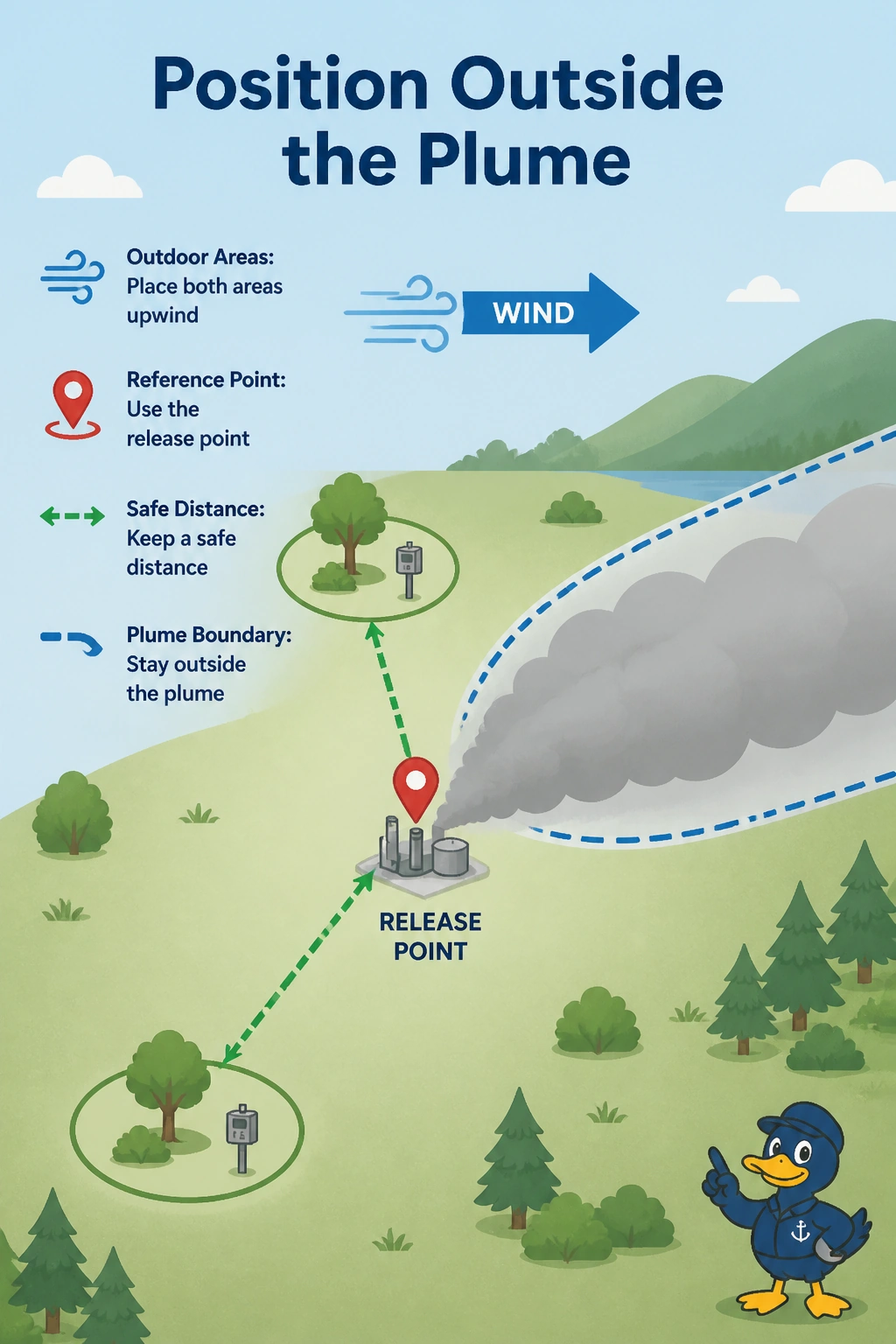
Just like standing behind a campfire rather than in the smoke, you want the wind blowing from your command post toward the building, not the other way around. Setting up upwind keeps responders out of the plume so they can manage the incident safely.
Full Explanation
Emergency command posts, staging areas, and evacuee assembly points must be positioned Upwind of the release point at a safe distance outside the plume. Placing personnel upwind prevents inhalation of smoke and airborne radionuclides, avoids external contamination of responders and equipment, and preserves a clean area for accountability and triage. Directly downwind at the building perimeter to monitor plume concentration would expose command staff and evacuated workers to the highest airborne concentrations and potential fallout. Inside an adjacent basement room with ventilation fans running at maximum risks drawing contaminated outdoor smoke into the building's air intake and trapping personnel indoors. At the lowest terrain elevation near the site storm drain outfall is hazardous because firefighting runoff water can carry dissolved or suspended radioactive contamination toward storm drains and low-lying ground. As a field caveat, wind direction can shift during a prolonged incident, so responders must be ready to relocate if meteorological conditions change. Operationally, check a wind sock or site meteorological tower upon arrival, establish the command post upwind, and deploy a portable air sampler or survey meter to verify the area remains clean.
Prefer to study offline? Printable PDF study book + test engine ($7.50, unofficial). These questions stay free here.