
While transferring a liquid beta-gamma radiotracer inside a laboratory, a technologist accidentally drops the bottle, spilling 200 mL onto the floor without suffering any physical injury. What should the technologist do immediately after warning nearby coworkers?
Select an answer to reveal the explanation.
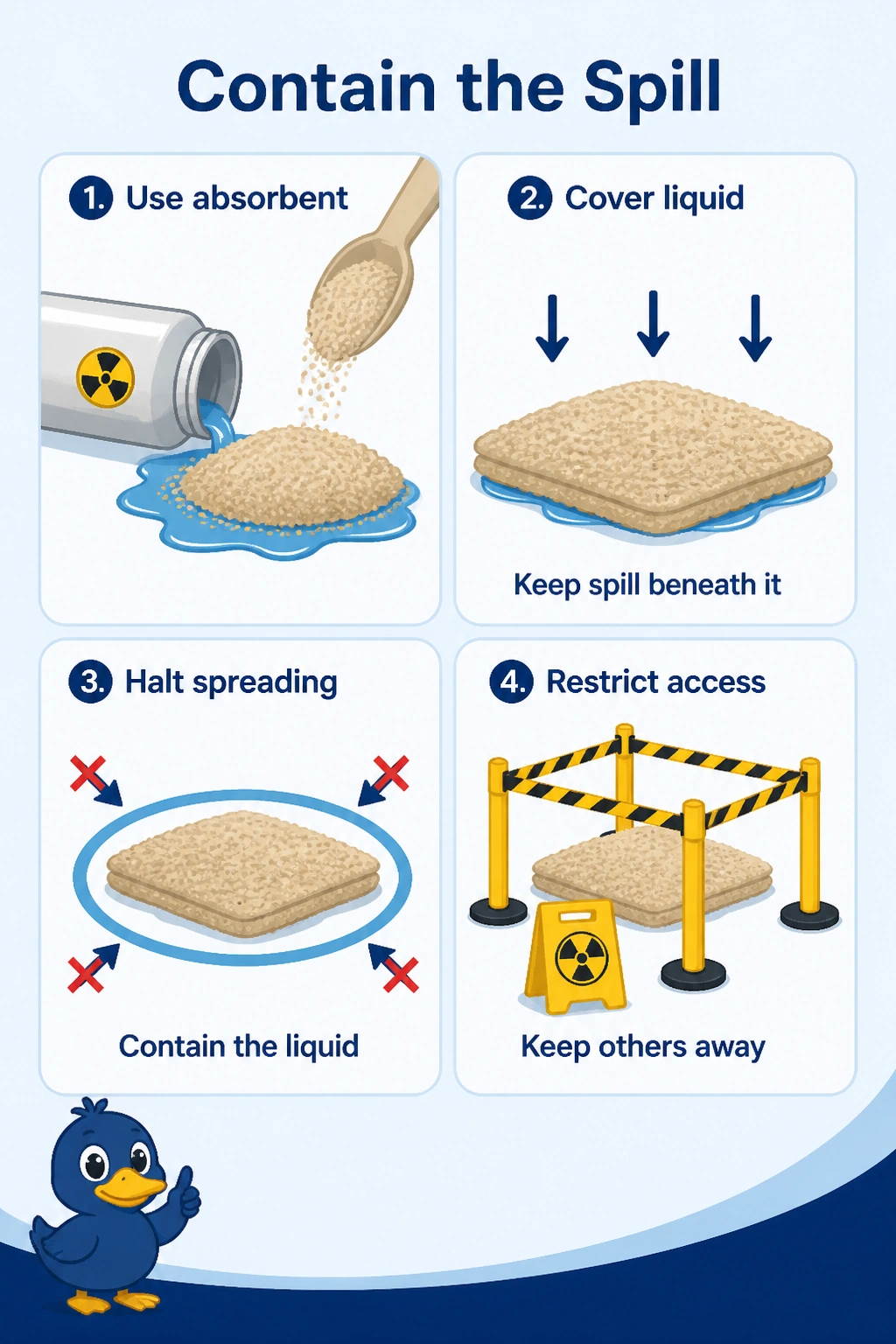
Short Explanation
Think of the spill like a puddle on the kitchen floor: absorbent material helps keep it from spreading, while airflow can carry contamination farther. After warning coworkers, cover the liquid and restrict access; filing a report first, blowing it dry, or mopping it into a drain are unsafe responses.
Full Explanation
Because no life-threatening injury is present, your immediate priority after warning nearby personnel is to cover the liquid with absorbent material and restrict access to the area. Absorbent material helps stop the spill from flowing under cabinets or spreading on shoes while radiation safety staff are summoned. Leaving to file a formal written incident report before notifying anyone on the floor delays containment and leaves an unguarded spill that others could walk through. Directing portable air blowers onto the puddle is a serious error: airflow can aerosolize volatile or dried contamination, turning a surface spill into an inhalation hazard. Diluting the spill with copious water and mopping it into the laboratory sanitary floor drain can spread contamination over a wider floor area and risk an unauthorized release to the sewer system. One exam caveat is that a spill involving volatile radioiodine or high airborne potential calls for evacuating and securing the room rather than lingering over the puddle. As a practical check, after securing the perimeter, frisk your shoes and clothing before leaving the immediate area, then wait for health physics support.
Prefer to study offline? Printable PDF study book + test engine ($7.50, unofficial). These questions stay free here.