
During a radiological emergency involving an atmospheric release of mixed fission products, what is the specific protective mechanism of administering potassium iodide (KI) to exposed personnel?
Select an answer to reveal the explanation.
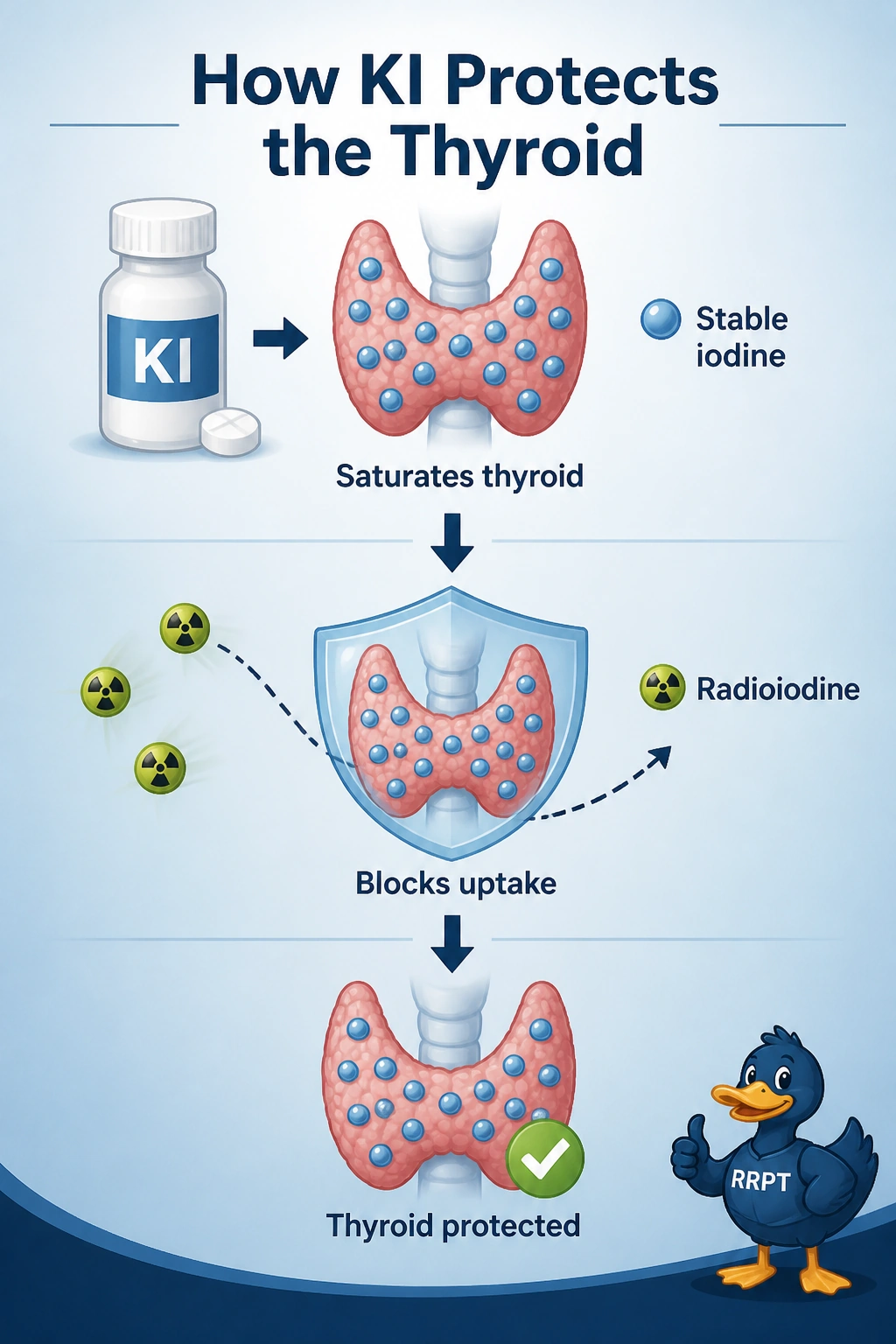
Short Explanation
Think of potassium iodide as filling every parking spot in your thyroid with harmless stable iodine so radioactive iodine has nowhere to park. The trap is treating KI like a universal radiation shield—it only protects your thyroid from radioiodine, not from external gamma rays or other isotopes.
Full Explanation
In a radiological emergency involving radioiodine, potassium iodide (KI) is administered because It saturates the thyroid gland with stable iodine to block uptake of inhaled or ingested radioiodine. By flooding the thyroid with non-radioactive iodide prior to or within a few hours of exposure, the gland cannot trap significant quantities of I-131, reducing the risk of radiation-induced thyroid cancer. It chelates plutonium and americium isotopes in the bloodstream for renal excretion describes decorporation therapy such as DTPA, not KI. It shields whole-body bone marrow cells from acute external gamma-ray exposure is false because KI provides zero protection against external penetrating radiation. It accelerates the physical decay rate of internally deposited fission products is physically impossible because chemical compounds cannot alter nuclear half-lives. As an important caveat, KI effectiveness drops sharply if given many hours after radioiodine intake, and it does not protect against other fission products like cesium-137. As an operational check, follow emergency medical director protocols for age-based KI dosing and screen for iodine sensitivity before distribution.
Prefer to study offline? Printable PDF study book + test engine ($7.50, unofficial). These questions stay free here.