
While workers are handling unsealed alpha-emitting material inside a laboratory, the continuous air monitor (CAM) sounds an unexpected high-airborne-activity alarm. What is the most appropriate immediate action for the personnel in the room?
Select an answer to reveal the explanation.
Short Explanation
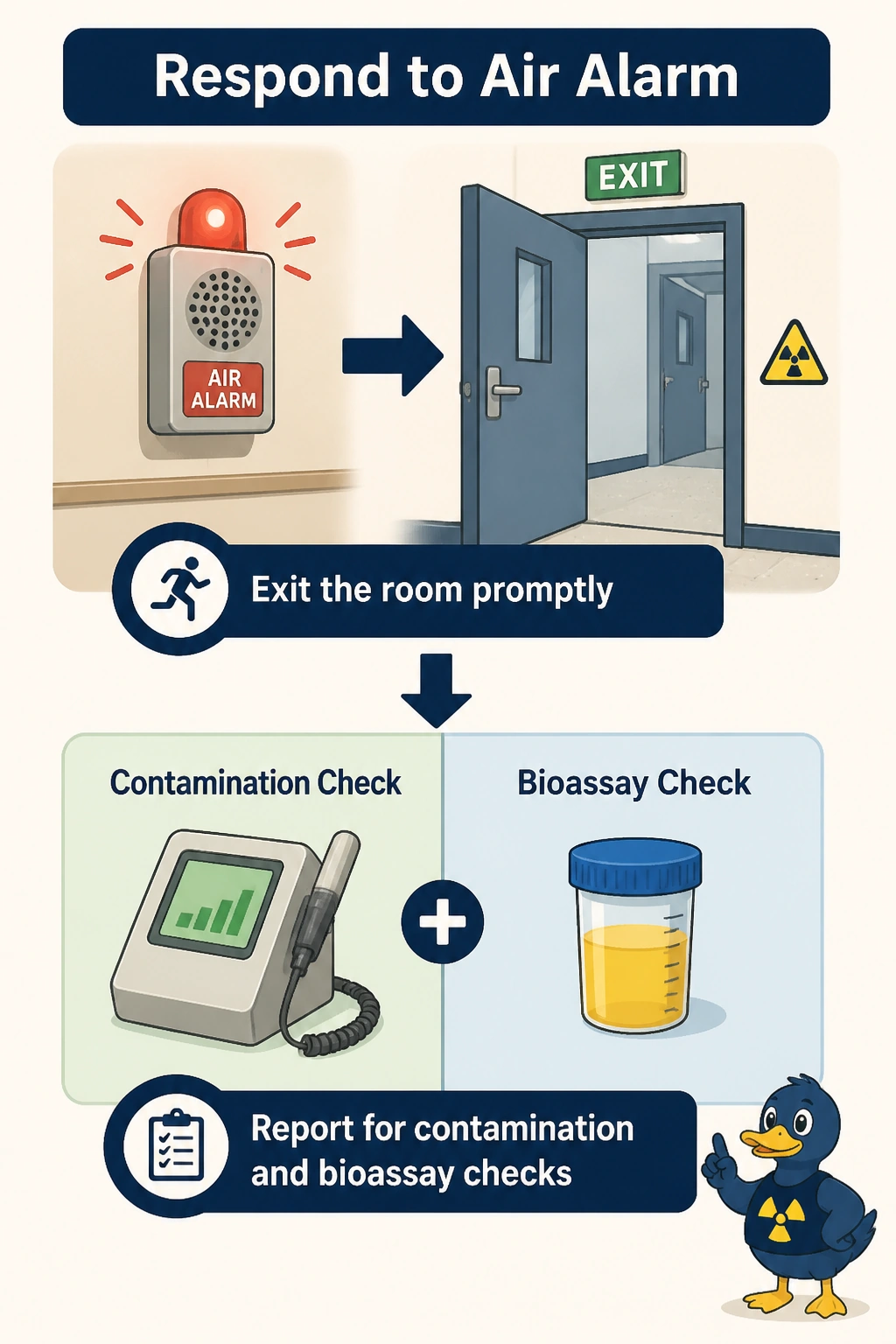
When the continuous air monitor alarms, your lungs come first—exit the room promptly before trying to identify a failing filter. Don’t shut off the exhaust or drive home to shower; get checked for contamination and possible internal uptake.
Full Explanation
An unexpected continuous air monitor (CAM) alarm signals a possible acute airborne release of high-hazard alpha emitters, and every second in the room can increase committed effective dose from inhalation. Exit promptly and report for contamination and bioassay checks so radiation protection staff can assess possible intake at a clean staging area. Staying at the workstation to identify a failing filter exposes you to an uncharacterized airborne plume; troubleshooting can wait for appropriate support. Turning off the room exhaust fans destroys negative pressure and can let contaminated air migrate into clean hallways and occupied areas. Leaving the building and driving home to shower may spread contamination from skin or clothing into your vehicle and home, while bypassing timely nasal-swab and bioassay measurements. As an operational caveat, close the room door as you leave and alert nearby personnel without re-entering. At the designated clean monitoring point, complete facial and hand frisking and nasal swabs, then wait for health physics clearance before leaving the facility.
Prefer to study offline? Printable PDF study book + test engine ($7.50, unofficial). These questions stay free here.