
A technician spends 10 minutes walking through an entry corridor reading 12 mrem/hr, 20 minutes repairing a pump in a 90 mrem/hr field, and 10 minutes exiting back through the same 12 mrem/hr corridor. What is the technician's total external deep-dose equivalent for the entry?
Select an answer to reveal the explanation.
Short Explanation
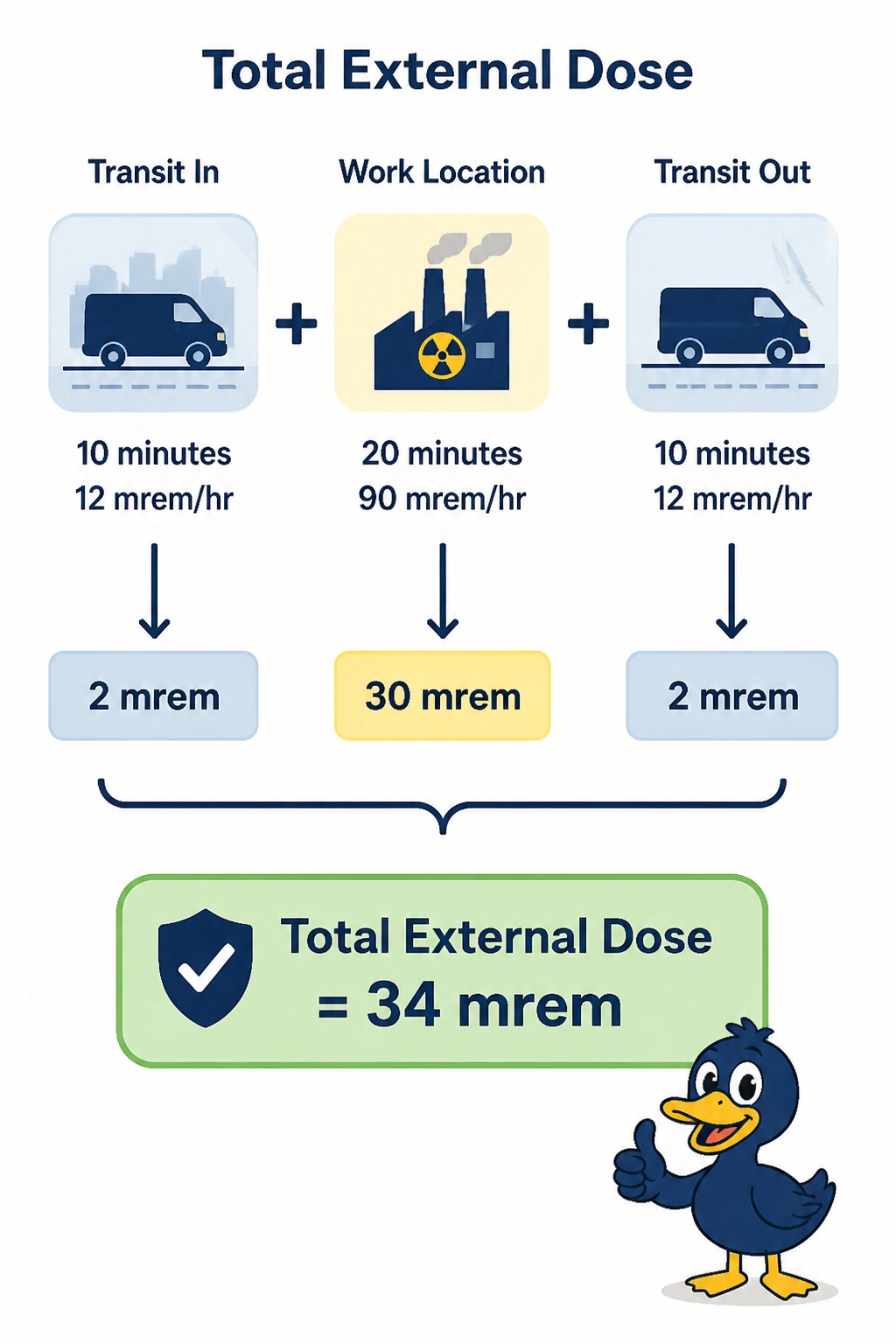
Every minute on the clock counts toward your badge, not just the time spent turning wrenches at the pump. Adding 10 minutes in, 20 minutes on the job, and 10 minutes out gives 34 mrem total; the trap is forgetting the return trip through the corridor.
Full Explanation
Converting each segment to hours gives 10/60 hour at 12 mrem/hr (2 mrem) entering, 20/60 hour at 90 mrem/hr (30 mrem) at the pump, and 10/60 hour at 12 mrem/hr (2 mrem) exiting, totaling 34 mrem, summing transit and work-location exposures. Choosing 32 mrem, omitting the exit corridor transit time accounts for the entry walk and pump repair (2 plus 30 mrem) but drops the 2 mrem received while walking back out. Selecting 36 mrem, using the pump rate for half an hour miscalculates the 20-minute repair as 30 minutes (45 mrem) or misapplies the corridor rates. Picking 114 mrem, summing the hourly dose rates directly adds 12, 90, and 12 without multiplying each rate by its fractional-hour stay time. As a caveat, localized hot spots along a piping run can deliver higher extremity or localized torso doses than the general-area survey reading indicates. Before exiting the radiologically controlled area, always read your electronic personal dosimeter against the pre-job dose estimate and investigate any unexpected discrepancy immediately.
Prefer to study offline? Printable PDF study book + test engine ($7.50, unofficial). These questions stay free here.