
A technician working with unsealed beta-gamma material in a laboratory slips, sustains a deep laceration with heavy arterial bleeding, and triggers a contamination monitor alarm indicating significant skin contamination. What is the first response priority for the responding team?
Select an answer to reveal the explanation.
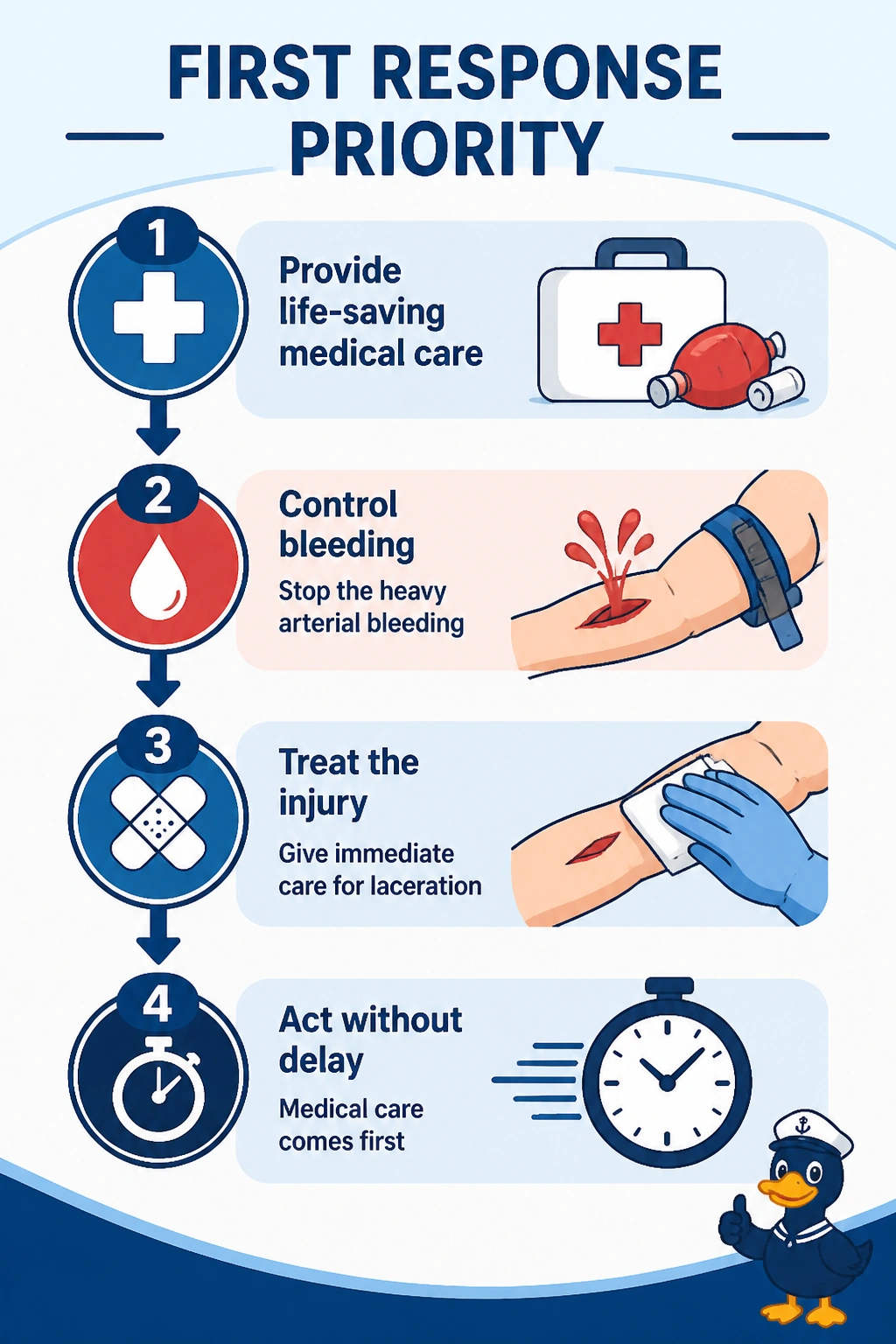
Short Explanation
In any radiological emergency, you treat the patient first and the isotopes second, because radiation rarely kills in minutes while severe bleeding can. The trap is letting a loud contamination alarm delay urgent trauma care while responders try to scrub the skin clean.
Full Explanation
Established radiation emergency protocols require responders to Provide immediate life-saving medical care and control bleeding before addressing radiological contamination. Severe trauma poses an immediate threat to life, whereas external skin contamination presents a far slower and manageable hazard to both the patient and responders wearing standard protective equipment. Choosing to Perform complete whole-body radiological decontamination before transport wastes critical minutes and can worsen shock or blood loss. Stopping to Collect nasal swabs and bioassay samples to assess internal uptake is an important follow-up step once the patient is medically stable, not an immediate life-safety action. Moving first to Survey the spill area and post temporary airborne radioactivity signs protects bystanders from secondary spread, which another responder can handle while medical aid is underway. As an operational caveat, notify emergency medical personnel and the receiving hospital of potential radioactive contamination so they can drape surfaces and manage waste without delaying transport. In practice, apply direct pressure or a tourniquet as trained, wrap or cover contaminated areas during transport if feasible, and document survey findings for medical follow-up.
Prefer to study offline? Printable PDF study book + test engine ($7.50, unofficial). These questions stay free here.