
A facility with an unlined historical retention pond needs to install groundwater monitoring wells to detect any potential radionuclide migration into the shallow aquifer. Where should the primary detection wells be positioned?
Select an answer to reveal the explanation.
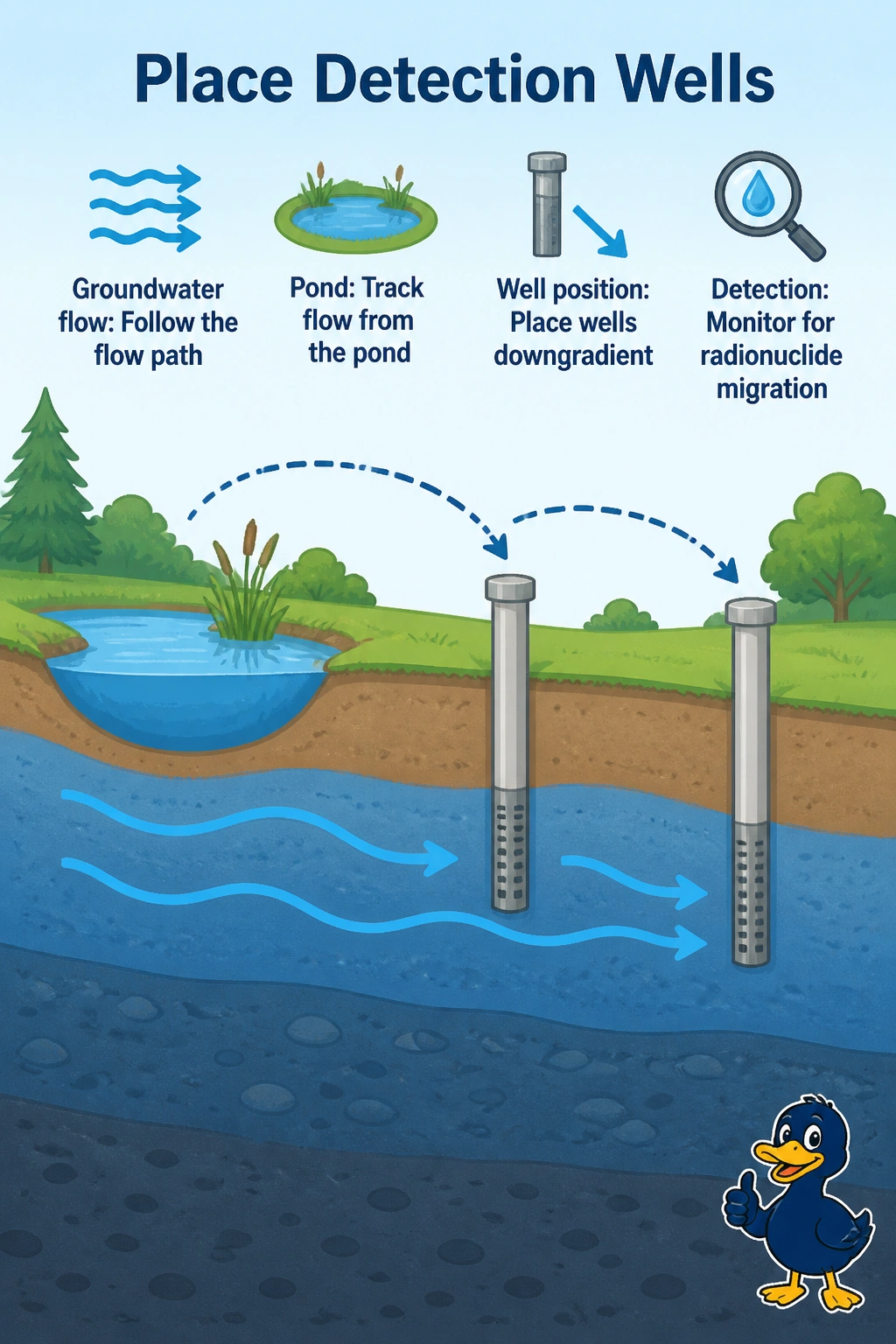
Short Explanation
If you want to know whether a dye is leaking into a river, you sample downstream rather than upstream. Watch out for the trap of picking upgradient wells—those give you your baseline, not your early warning of a migrating plume.
Full Explanation
Subsurface contaminants dissolved in groundwater travel in the direction of the hydraulic gradient, so placing detection wells Hydraulically downgradient along the groundwater flow path intercepts any plume moving away from the retention pond toward offsite receptors. By contrast, wells located Hydraulically upgradient of the pond sample water before it reaches the facility; they are essential for establishing natural background concentrations, not for detecting a release from the pond itself. Drilling Directly inside the pond's bottom liner would puncture the engineered barrier and create a preferential vertical pathway for contaminated water to enter the aquifer. Siting wells Adjacent to the facility's main air stack monitors airborne stack deposition geography rather than the hydrogeologic flow path beneath the retention pond. As a caveat, groundwater flow direction can shift seasonally due to pumping or recharge, so a single well may miss a narrow plume if hydraulic contours change. For an operational check, measure static water-level elevations across multiple piezometers to confirm the current hydraulic gradient before interpreting analytical results.
Prefer to study offline? Printable PDF study book + test engine ($7.50, unofficial). These questions stay free here.