
After two gentle washes with mild soap and lukewarm water, a worker's forearm still shows residual fixed beta-gamma contamination, and the skin is beginning to turn red. What should the technician do next?
Select an answer to reveal the explanation.
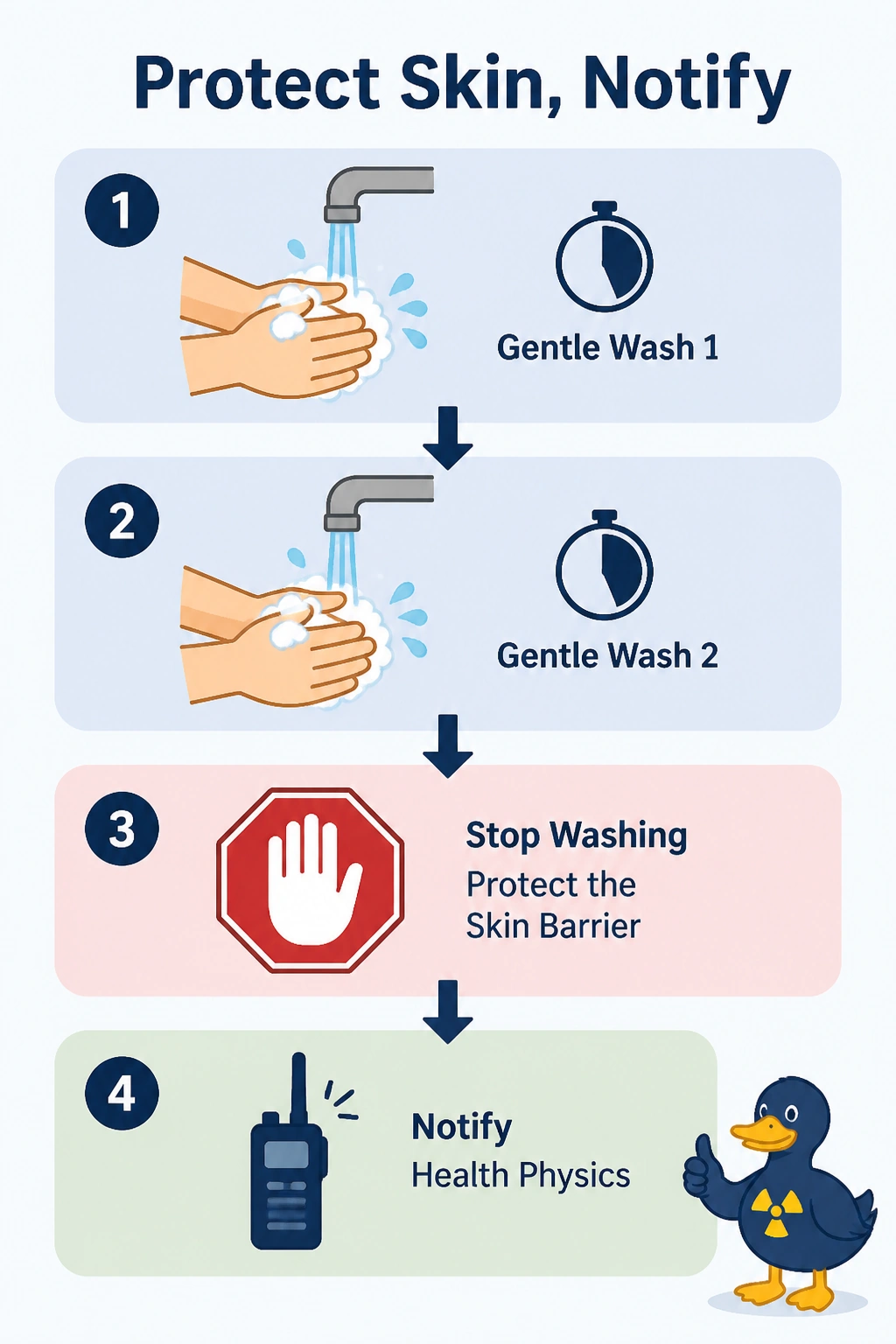
Short Explanation
Your intact skin is an important barrier, so turning a surface spot into an abrasion can make the situation worse. When redness appears, stop washing to protect your skin barrier and notify health physics rather than scrubbing harder or using harsh chemicals.
Full Explanation
When gentle washing fails to remove residual contamination and the skin begins to turn red, stop washing to protect the skin barrier and notify health physics. Intact skin helps prevent internal uptake; continued washing can break the epidermis and drive radioactive material into the dermis or bloodstream, changing an external issue into an internal dose. Scrubbing vigorously with a stiff nylon brush and abrasive soap can abrade the outer skin and create micro-tears that accelerate percutaneous absorption. Applying undiluted household bleach directly to the reddened forearm causes chemical irritation and tissue damage without safely binding most radionuclides. Rinsing under hot water for twenty minutes to open pores is harmful because heat causes vasodilation and increases skin permeability. As an exam caveat, fixed skin contamination that resists two gentle washes often sheds naturally with normal skin cell turnover, and health physics may cover the spot with a clean dressing. As a practical check, document the residual count rate, location, and time on the skin contamination log, then have health physics evaluate whether further medical decontamination is warranted.
Prefer to study offline? Printable PDF study book + test engine ($7.50, unofficial). These questions stay free here.