
A worker's forearm shows removable beta-gamma contamination after a glove tear, with no broken skin or open wounds. Which decontamination method should be used first to remove the contamination safely?
Select an answer to reveal the explanation.
Short Explanation
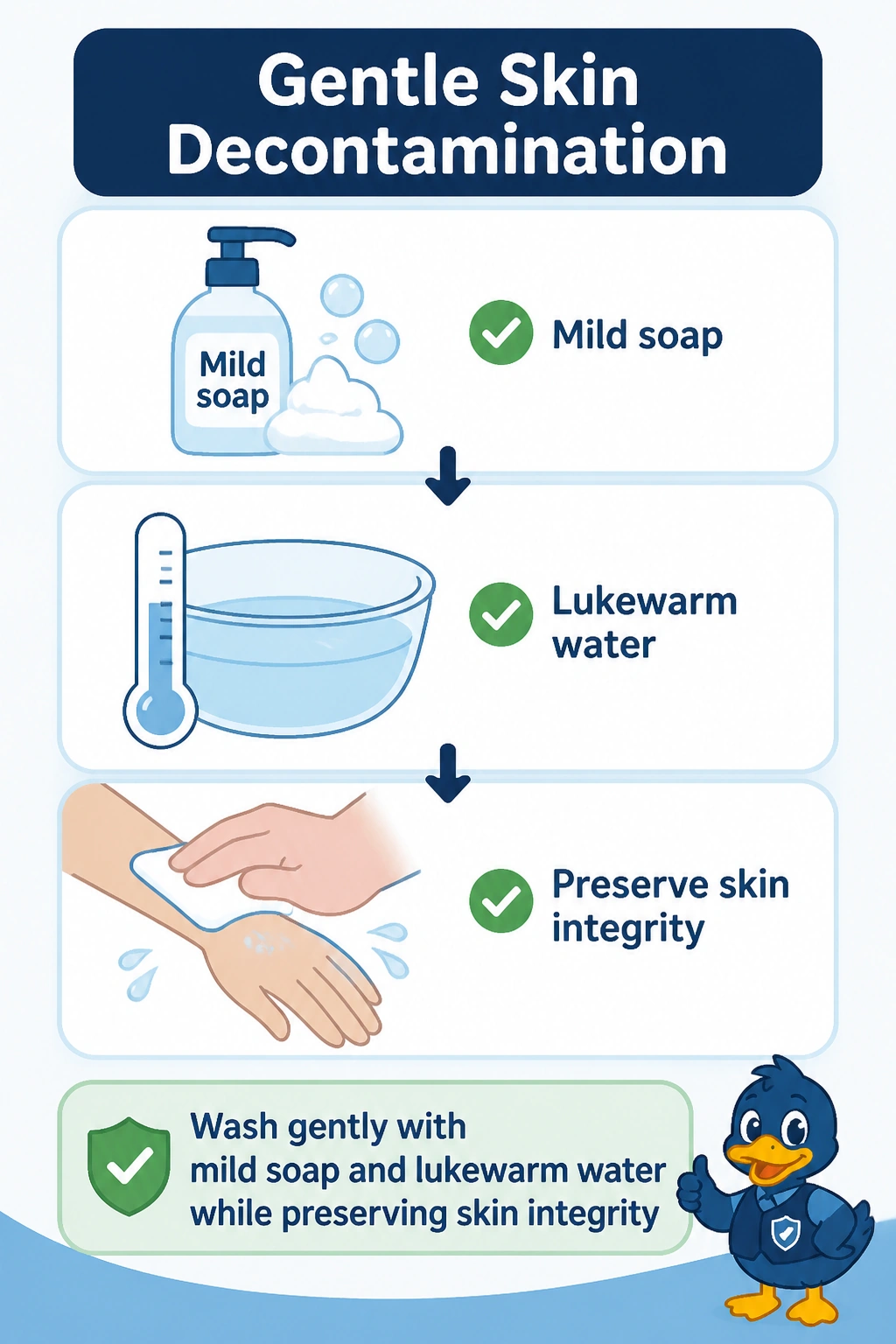
Your skin is the best natural barrier you have against internal uptake, so treat it gently when washing off loose contamination. The trap is reaching for hot water or a stiff brush to speed things up, which only opens pores or abrades the skin and drives activity deeper.
Full Explanation
The outer stratum corneum blocks most radionuclides from entering the bloodstream, so the correct initial action is to Wash gently with mild soap and lukewarm water while preserving skin integrity. Tepid water and mild surfactant lift loose particles without irritating tissue or altering skin permeability. Choosing to Scrub vigorously with a stiff brush and hot water causes vasodilation and micro-abrasions, which can turn external skin contamination into an internal uptake. Selecting to Apply an organic solvent such as acetone to dissolve the residue strips protective skin lipids and can carry dissolved radionuclides directly through the epidermis. Deciding to Rinse with cold water and apply a mild bleach solution risks chemical irritation and pore constriction that can trap material rather than lifting it cleanly. As a clinical caveat, discontinue washing immediately and consult medical personnel if redness develops or if contamination sits near a wound, eye, or mucous membrane. After washing, pat the forearm dry with disposable paper towels, resurvey with a pancake GM probe, and bag all wash water and wipes as radioactive waste.
Prefer to study offline? Printable PDF study book + test engine ($7.50, unofficial). These questions stay free here.