
When a worker uses a handheld pancake Geiger-Mueller frisker to check clothing and skin for beta-gamma contamination at a step-off pad, which technique ensures reliable detection of small spots?
Select an answer to reveal the explanation.
Short Explanation
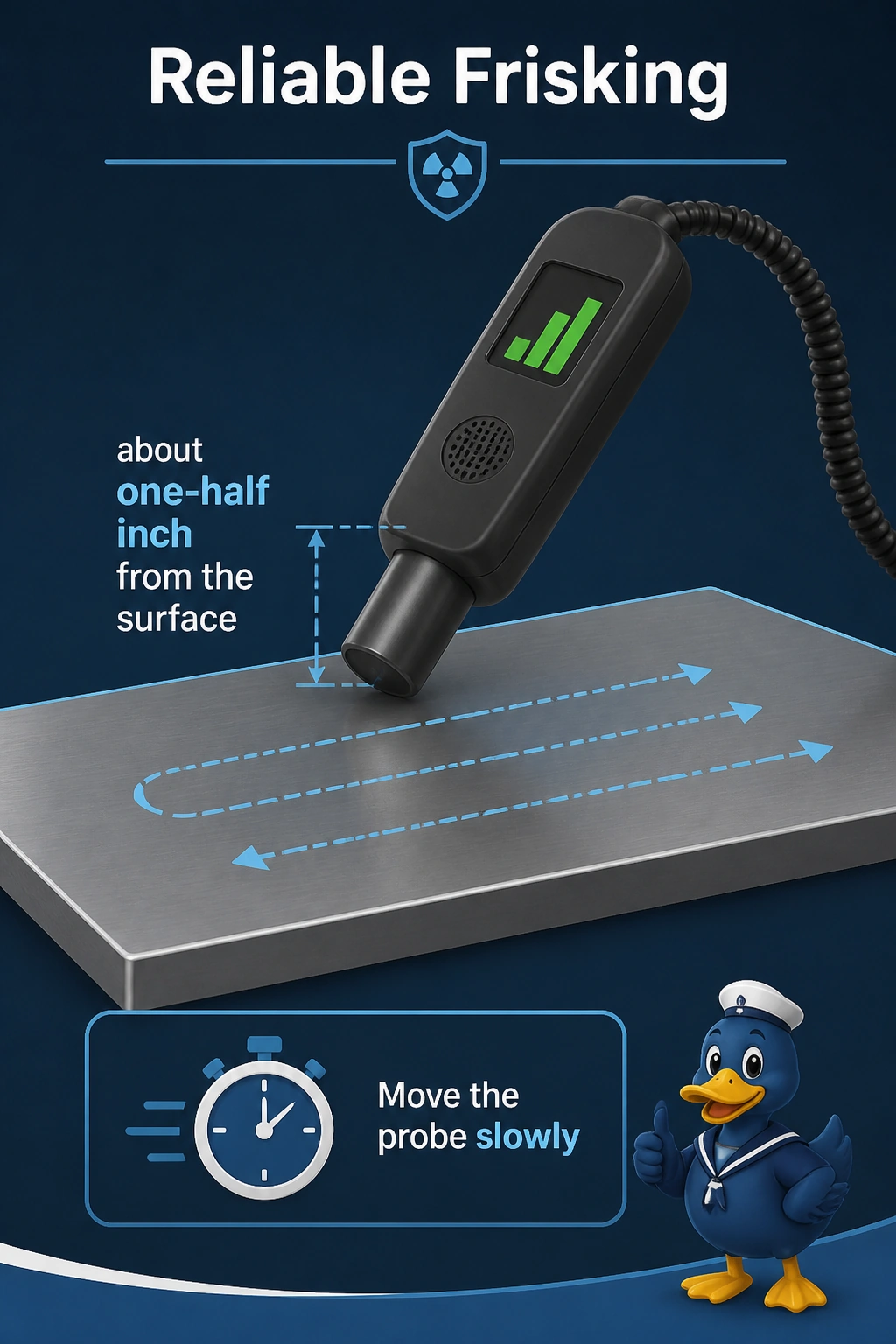
Frisking is like searching for a lost ring in the grass—if you sprint past, you will miss it. Moving the probe slowly at about one-half inch from the surface gives the detector enough dwell time and geometry to catch small beta-gamma spots. The trap is rushing through at several inches away or muting the clicks, which lets localized contamination walk right out the door.
Full Explanation
Moving the probe slowly at about one-half inch from the surface (typically 1 to 2 inches per second) maximizes geometric efficiency and provides sufficient ratemeter integration time so localized beta-gamma hot spots produce a clear audible and meter response. Sweeping the probe rapidly at six inches to cover the body faster drastically reduces geometric efficiency, attenuates low-energy beta particles in air, and moves past small spots faster than the ratemeter time constant can respond. Muting the audio speaker and watching only the analog meter needle degrades detection because the human ear detects subtle increases in click rate far sooner than a damped analog needle visibly deflects. Holding the probe about six inches from the surface and pausing only where dust is visible fails because distance sharply lowers counting geometry and air absorbs beta particles, while visible dust is unreliable since beta-gamma contamination can be invisible with no visual cue. As a caveat, background radiation near the step-off pad must be low enough to hear and distinguish small count-rate increases above ambient levels. As an operational check, perform a pre-use battery, background, and check-source response test on the frisker before beginning personnel surveys.
Prefer to study offline? Printable PDF study book + test engine ($7.50, unofficial). These questions stay free here.