
In cellular radiobiology, why are well-oxygenated tissues significantly more radiosensitive to low-LET gamma and X-ray radiation than hypoxic (oxygen-deprived) tissues?
Select an answer to reveal the explanation.
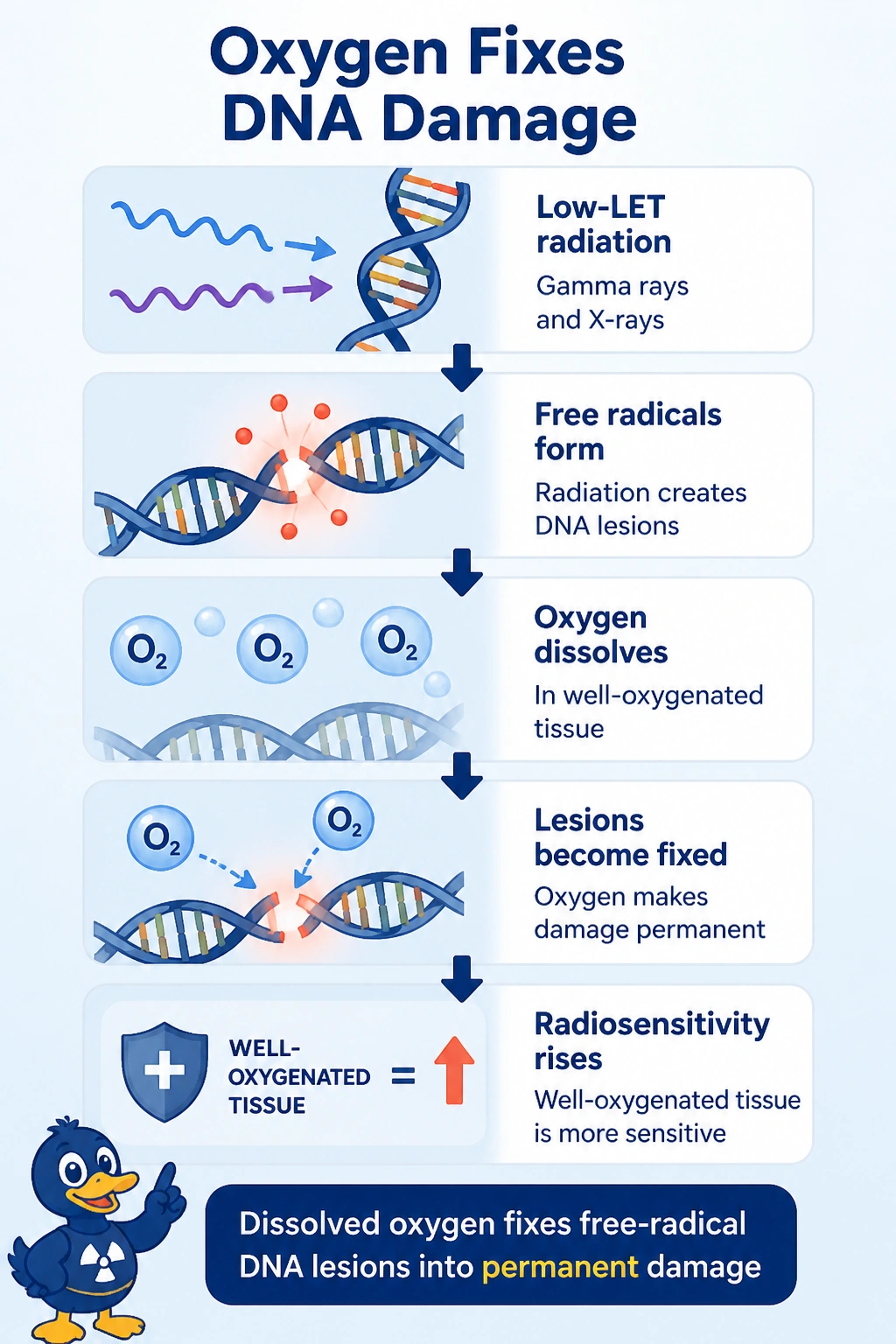
Short Explanation
Oxygen acts like a padlock on radiation damage—once a free radical nicks DNA, dissolved oxygen snaps onto the break so the cell cannot easily undo it. That is why you see a strong oxygen effect with low-LET gamma rays, while the trap is thinking oxygen blocks radiation or speeds up cell division.
Full Explanation
Most low-LET gamma damage occurs indirectly through water radiolysis free radicals, and dissolved oxygen rapidly reacts with damaged DNA radicals to form stable organic peroxides that resist chemical repair, so Dissolved oxygen fixes free-radical DNA lesions into permanent damage. Choosing Oxygen molecules physically shield the cell nucleus from gamma photons describes the opposite of radiosensitization and would make oxygenated cells more resistant, not more sensitive. Selecting Hypoxic cells divide much faster and enter mitosis more frequently is incorrect because oxygen deprivation slows cellular proliferation rather than accelerating it. Picking Dissolved oxygen directly absorbs gamma rays to create alpha particles confuses chemical free-radical fixation with a high-energy nuclear reaction that does not occur at diagnostic or occupational photon energies. As a caveat, the Oxygen Enhancement Ratio approaches 1.0 for high-LET alpha radiation because dense direct ionization along the track already causes irreparable clustered DNA damage regardless of oxygen level. When evaluating biological risk models, confirm whether the exposure involves low-LET photons or high-LET particles before applying quality or weighting factors.
Prefer to study offline? Printable PDF study book + test engine ($7.50, unofficial). These questions stay free here.