
A rehabilitation PCT must weigh a steady patient who fatigues easily, uses a wheelchair, and has a draining leg wound with bulky dressings, with standing, wheelchair, and bed scales available. Which weighing method best ensures accuracy and safety for ongoing monitoring?
Select an answer to reveal the explanation.
Short Explanation
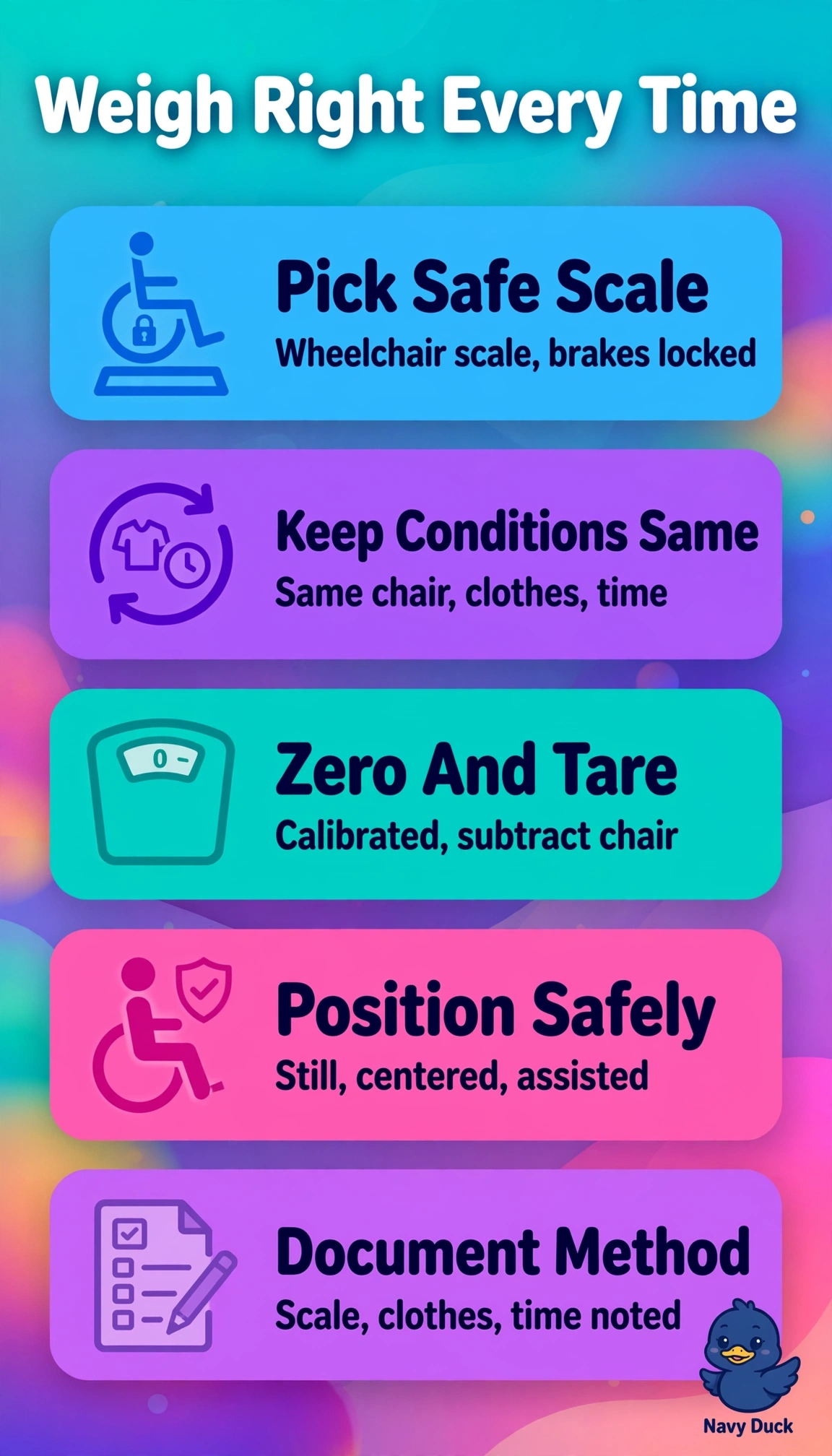
You're keeping your patient safe by rolling them onto the wheelchair scale in the same chair and clothes at the same time daily, then subtracting the chair. It's like using the same measuring cup for your morning coffee — your consistency lets real changes stand out from daily noise.
Full Explanation
The correct method succeeds because it matches equipment to function while controlling trend variables: seated wheelchair weighing eliminates standing fall risk and fatigue for a wheelchair user, identical chair and clothing with measured tare isolates body mass change, and fixed daily timing after voiding and before intake minimizes fluid and food variability, which matters especially with draining bulky dressings that already introduce fluctuation that must be held consistent and documented. The method using any available wheelchair with its listed weight fails standardization because actual chair weight varies with model, accessories, repairs, and debris, so subtracting an assumed value creates systematic error and destroys comparability despite good timing. The assisted standing method fails suitability and safety because ease of fatigue and routine wheelchair use signal inability to stand motionless for an accurate reading, increasing fall risk, energy cost, and sway artifact while offering no advantage when a wheelchair scale is available. The flexible-timing wheelchair method fails trending reliability because normal diurnal shifts from meals, fluids, voiding, and edema mobilization can mask true gain or loss even when tare is perfect. Exam caveat is to distinguish medically steady from functionally able to stand and to favor identical conditions over convenience when the stem emphasizes ongoing monitoring. Practical check is to calibrate and zero the scale, weigh the specific empty chair, keep clothing and dressing burden as similar as possible, use the same time of day, and record scale type, chair identifier, clothing, dressing change, and void status.