
A PCT receives orders for coagulation studies, a complete blood count, and a basic metabolic panel using a light-blue citrate tube, a lavender EDTA tube, and a serum separator tube with no blood cultures ordered. Which collection sequence follows correct order of draw for these tubes?
Select an answer to reveal the explanation.
Short Explanation
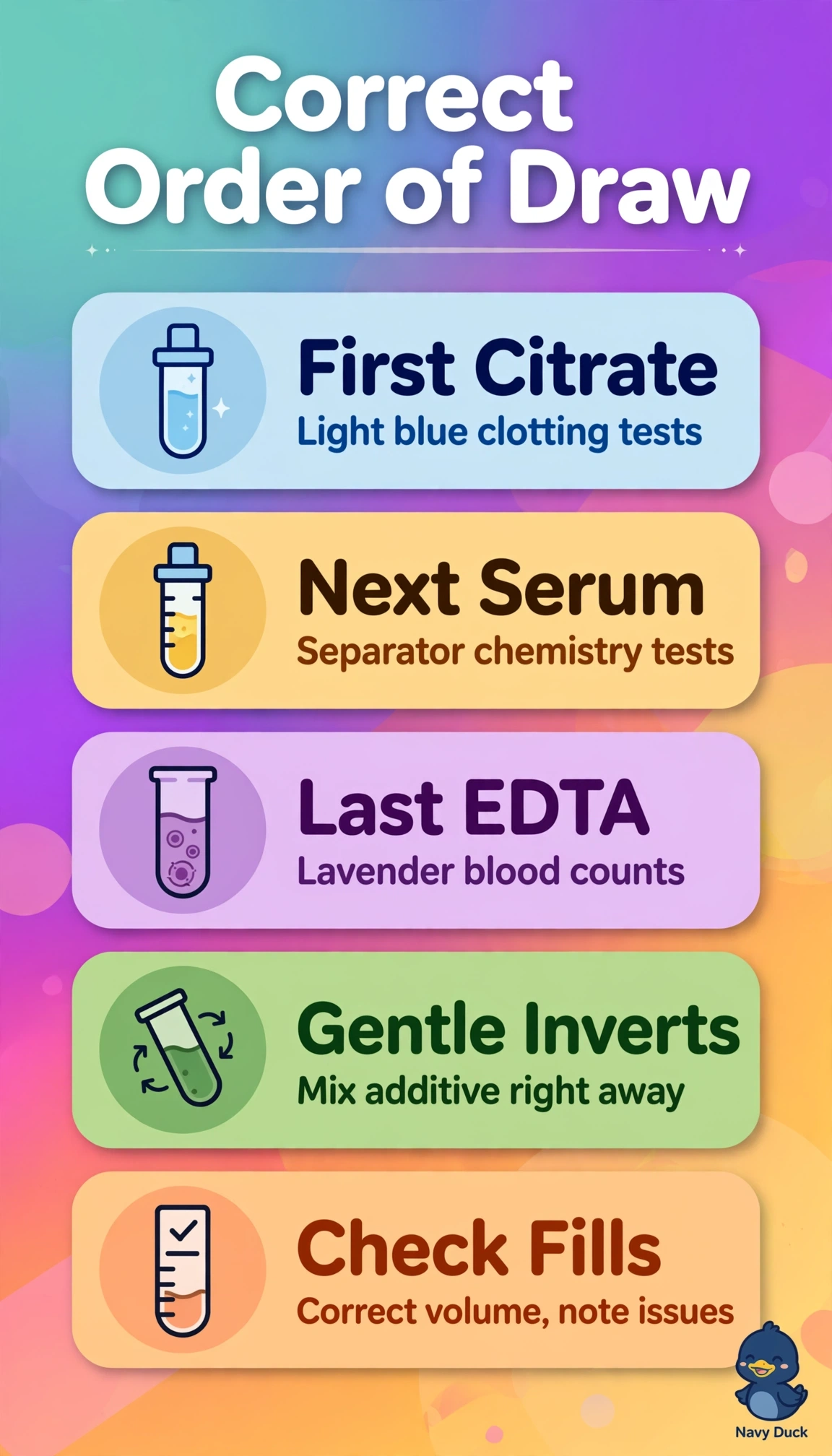
You've got to protect each tube from the last one's additives, like keeping laundry soaps separate so they don't spoil the next load. That's why you'll draw your light-blue citrate first, then the serum separator, and finish with lavender EDTA to prevent carryover.
Full Explanation
The correct sequence preserves accuracy because light-blue citrate for clotting tests must be drawn before serum and EDTA tubes so tissue thromboplastin and EDTA carryover do not falsely alter coagulation or chemistry results, with serum before EDTA to protect potassium and calcium measurements. Drawing lavender first fails by concept of additive carryover because EDTA chelates calcium and elevates potassium, which can contaminate the citrate tube and prolong clotting times. Drawing serum first then lavender then light-blue fails by concept of citrate sensitivity because placing the coagulation tube last exposes it to both clot activator and EDTA from prior tubes despite correct serum-before-EDTA pairing. Drawing in any convenient order fails by concept of closed-system transfer because small amounts of additive reflux at the needle adapter during tube changes is enough to compromise sensitive assays. Exam caveat is that blood cultures, when ordered, come before light-blue, and discard or fill requirements follow facility policy. Practical check is to verify orders, check expirations, invert each tube gently the required times immediately after fill, and note any missed fill or wrong order to the nurse and lab.