
In a crowded emergency department, an alert adult patient needs nonurgent stitches and hesitates, asking about pain, scarring, and the right to refuse. The provider stepped away briefly and no signed consent is on file. Which consent action best applies medical ethics, informed and implied consent before the procedure?
Select an answer to reveal the explanation.
Short Explanation
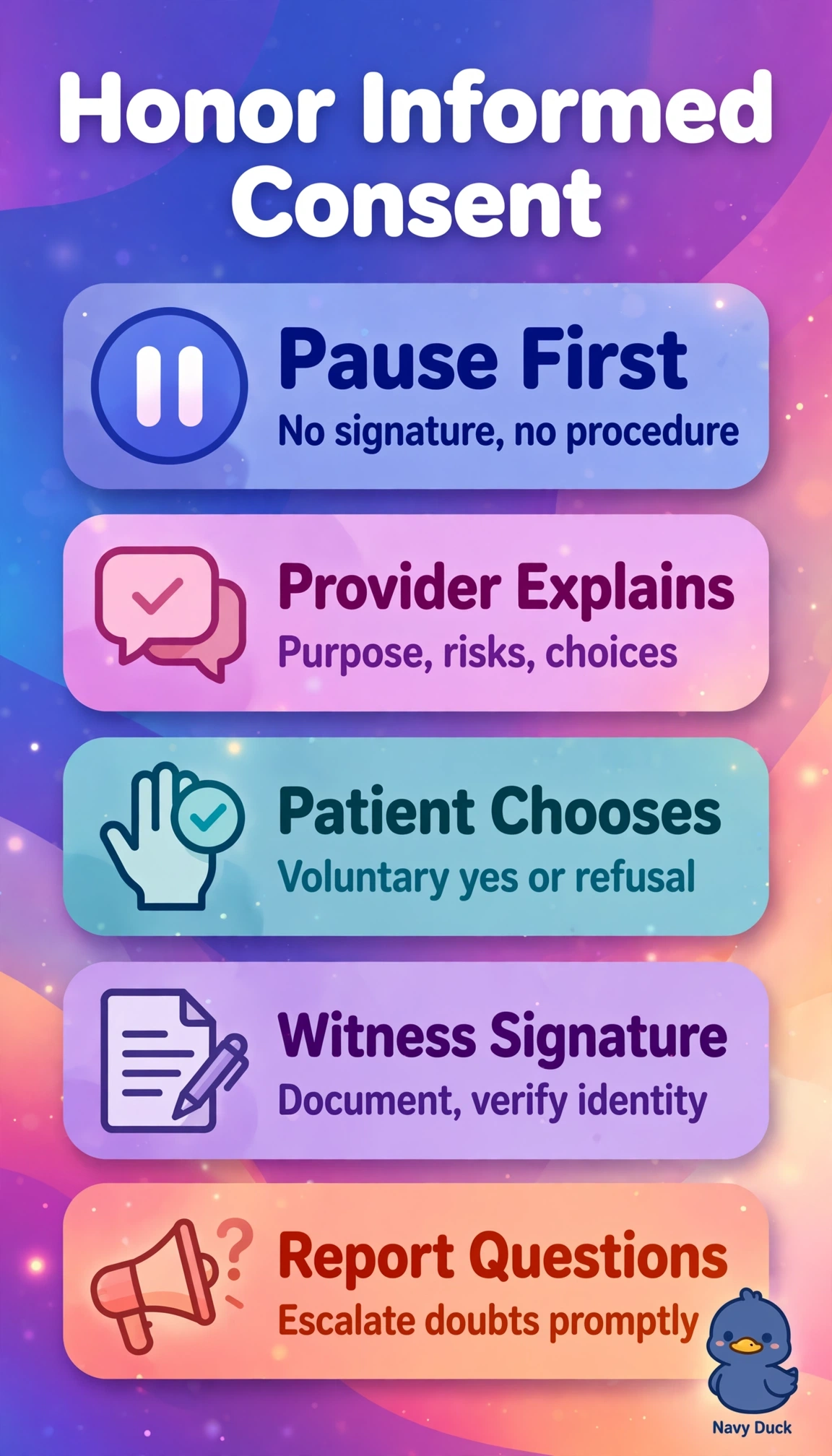
Haste has no place when someone’s weighing pain and scars, so you hit pause. Informed consent means the provider explains, the patient freely chooses, and you witness the signature.
Full Explanation
For an alert adult with capacity needing nonurgent sutures who asks about pain, scarring, and refusal, the standard is to pause and secure provider-led informed consent before the procedure, covering purpose, material risks and benefits, alternatives including no treatment, and the right to refuse without pressure, with voluntary agreement documented by signature. Continuing preparation while planning disclosure and signature after suturing fails on timing because consent must precede the intervention to preserve genuine choice, and department crowding does not validate retroactive authorization. Treating arrival and cooperation as permission fails on scope because implied consent applies to true emergencies where delay risks harm or to minor routine cooperation such as vital signs, not to nonurgent invasive closure when the patient explicitly requests information and has not authorized it. Having the nurse alone deliver disclosure and obtain signature while the provider remains absent fails on responsibility because the clinician directing the procedure must explain and answer questions, with nursing appropriately witnessing, reinforcing, and documenting rather than substituting. An exam caveat is that pressure, triage load, or brief provider absence never converts nonurgent suturing into emergency-exception consent, and hesitation with specific questions signals need for more disclosure, not faster completion. A practical check is to stop setup, bring the provider to bedside, use plain language with teach-back, confirm voluntariness, secure signature beforehand, and chart disclosure, questions, and decision.