
A PCT is asked to set up a sterile dressing tray in a small double room while the roommate watches television and the patient needs to cough. The outer wrap is intact and the tray will be used within minutes. Which sterile field setup and maintenance technique best preserves sterility until use?
Select an answer to reveal the explanation.
Short Explanation
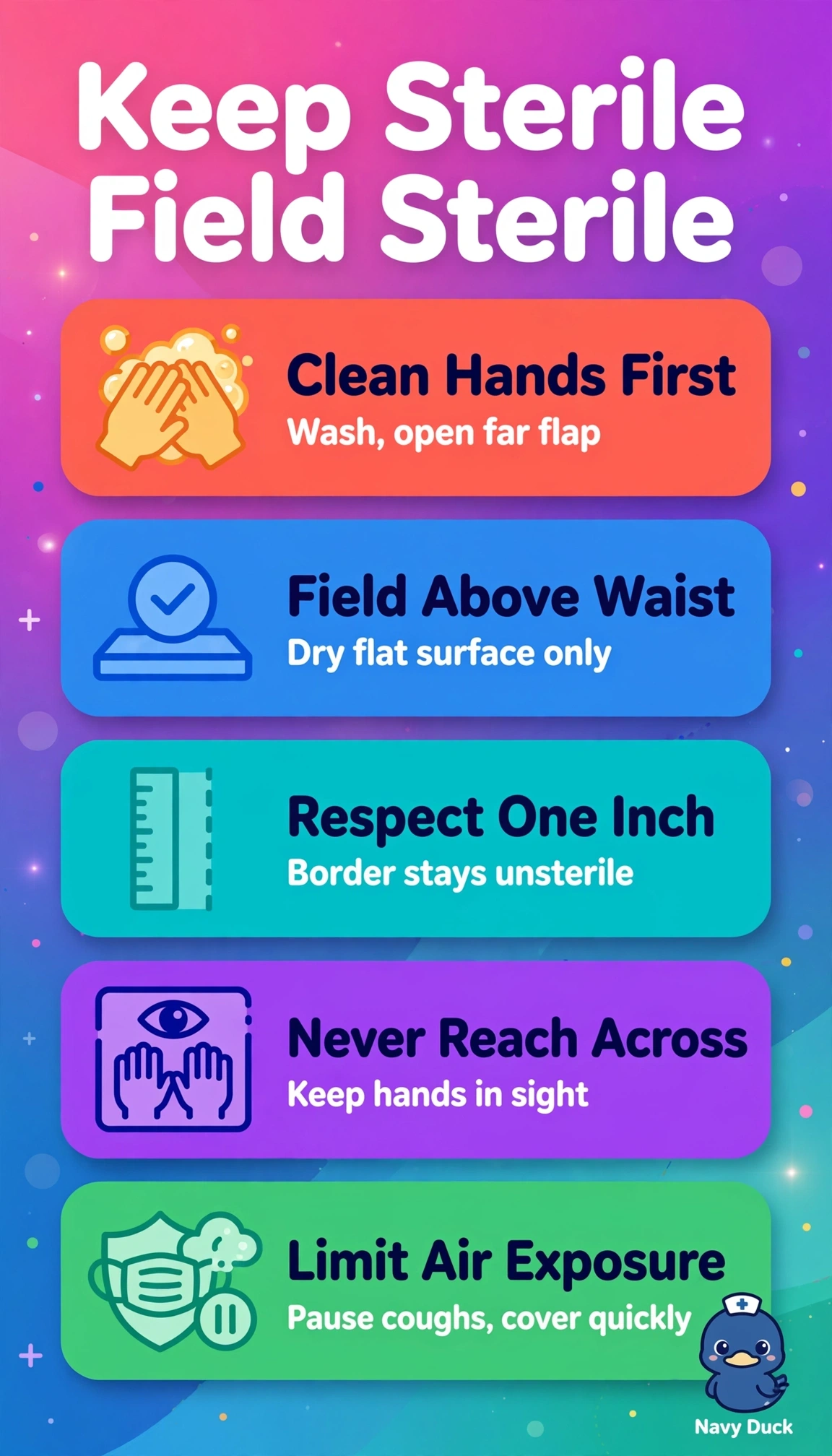
You preserve sterility by opening the wrap away from you first, keeping the dry field above your waist and in view, and asking the patient to turn away. Keep the one-inch border off-limits because the edges are considered contaminated, even when the center looks perfect.
Full Explanation
The setup that opens the outer wrap away from you first, then toward you, while keeping the field dry and above your waist and asking the patient to turn away preserves sterility. Hand hygiene reduces bioburden; opening away first avoids reaching over the sterile surface, dryness prevents strike-through wicking of microbes, and keeping the field above your waist keeps it in view. Asking the coughing patient to turn away provides droplet source control in a small double room, where a roommate and television airflow add exposure. The intact wrap and use within minutes also limit exposure. Letting the patient cough freely toward the field fails respiratory hygiene because droplets can settle on sterile items despite correct hand hygiene, opening order, dryness, and height. Opening the wrap toward you first fails non-touch technique because hands and cuffs may pass over the exposed sterile area. Waiting three hours to use the tray fails time- and event-related sterility: prolonged open exposure in a shared, trafficked room allows dust, moisture, inadvertent touch, and loss of observation. Exam caveat: the outer one-inch border is considered contaminated, and any dampness implies strike-through, so a damp, low, or long-unattended field must be discarded. In practice, verify intact, dry packaging and expiration; set up just before use above your waist and keep the field in continuous view. Ask the patient to turn away, and restart with a new tray if cough exposure, dampness, or delay occurs.