
A night-shift PCT cares for an 84-year-old patient with confusion, a history of falls, and a bed alarm, who needs to use the bathroom urgently while the wheelchair brakes and bed rails are available. Family asks about keeping all rails up and using a vest restraint for safety. Which fall and injury prevention action best ensures bed, wheelchair, and restraint safety?
Select an answer to reveal the explanation.
Short Explanation
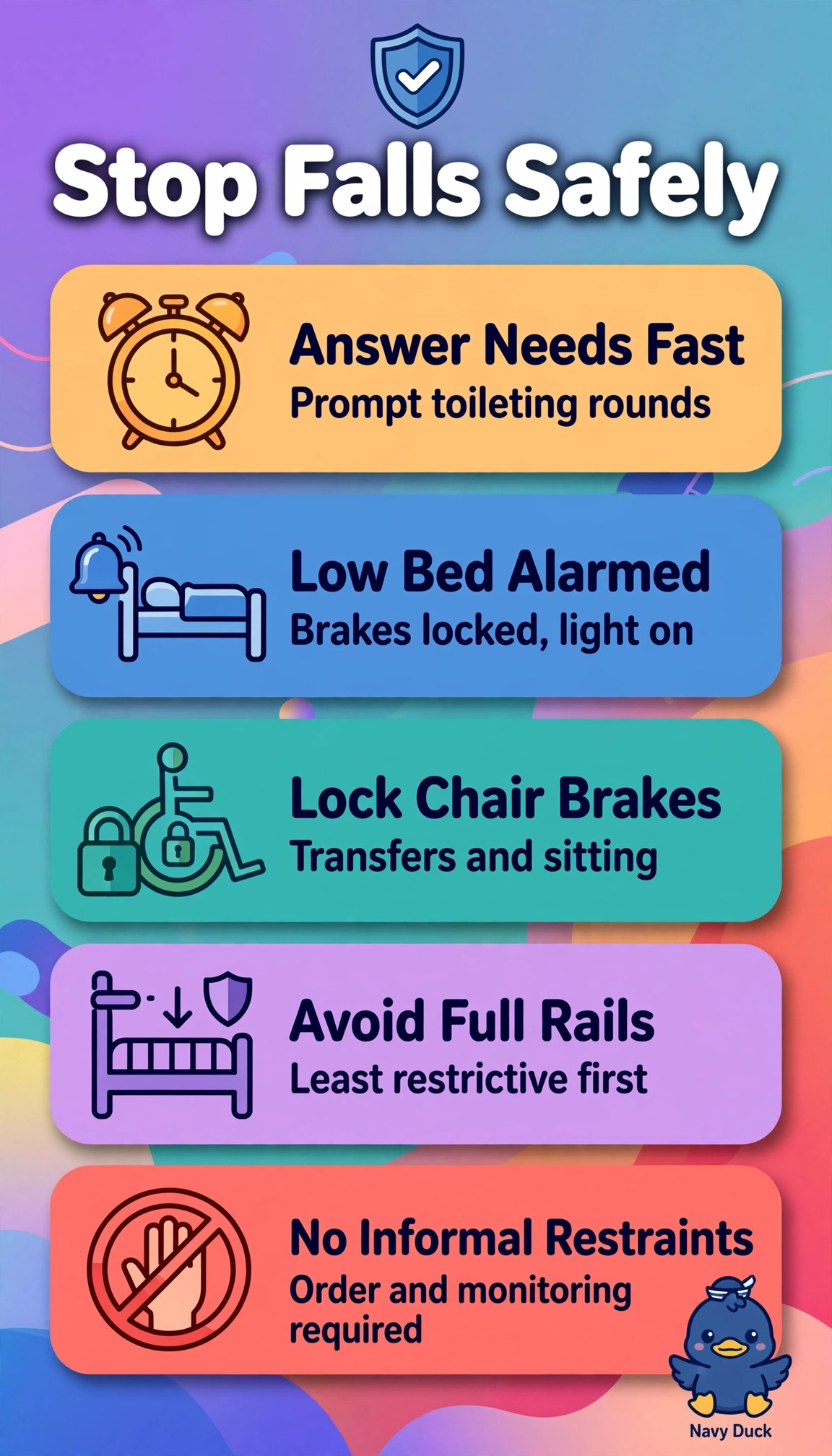
You've got a tricky mix here — confusion plus an urgent bathroom need is like a flashing warning light for falls. You'll keep them safest with prompt toileting, a low bed with the alarm on and brakes locked, and no restraints without an order.
Full Explanation
The correct response integrates anticipatory, environmental, and autonomy-preserving strategies ideal for confusion with fall history. Responding promptly to urgent toileting removes the most common trigger for unassisted bed exit, while a low locked bed with an active alarm reduces both fall likelihood and injury severity and allows early intervention, locked wheelchair brakes ensure stable transfer, and avoiding restraints without orders upholds least-restrictive care since restraints increase agitation, entrapment, and deconditioning without addressing voiding needs. The high-bed with four raised rails fails on environmental safety because increased height raises injury force and four rails function legally and clinically as a restraint that encourages climbing and entrapment rather than safe support. The postponed-toileting approach fails on anticipation of needs because delaying help for an urgent confused patient predictably causes independent bathroom attempts despite correct brake and bed positioning. The vest restraint with order and monitoring fails on restraint minimization because physician authorization and proper technique do not justify restraint when reversible alternatives would suffice and family request alone never establishes necessity. An exam caveat is that availability of rails, brakes, or alarms and family insistence never override requirements for medical authorization, documented least-restrictive trials, and frequent reassessment. A practical bedside check is to confirm the bed is low, locked and alarmed, the call light is within reach, toileting is complete, wheelchair brakes hold for transfer, and alternatives and alarm status are handed off.