
A PCT sustains a needlestick from a used venipuncture needle while recapping in a busy outpatient clinic, with visible blood on the finger and a source patient still present. The clinic has a written exposure control plan and sharps containers nearby. Which immediate response best follows the exposure control plan after this occupational exposure?
Select an answer to reveal the explanation.
Short Explanation
Quick cleansing plus fast reporting opens the door to care and testing. Washing gently and activating your exposure plan protects you far better than waiting or home remedies.
Full Explanation
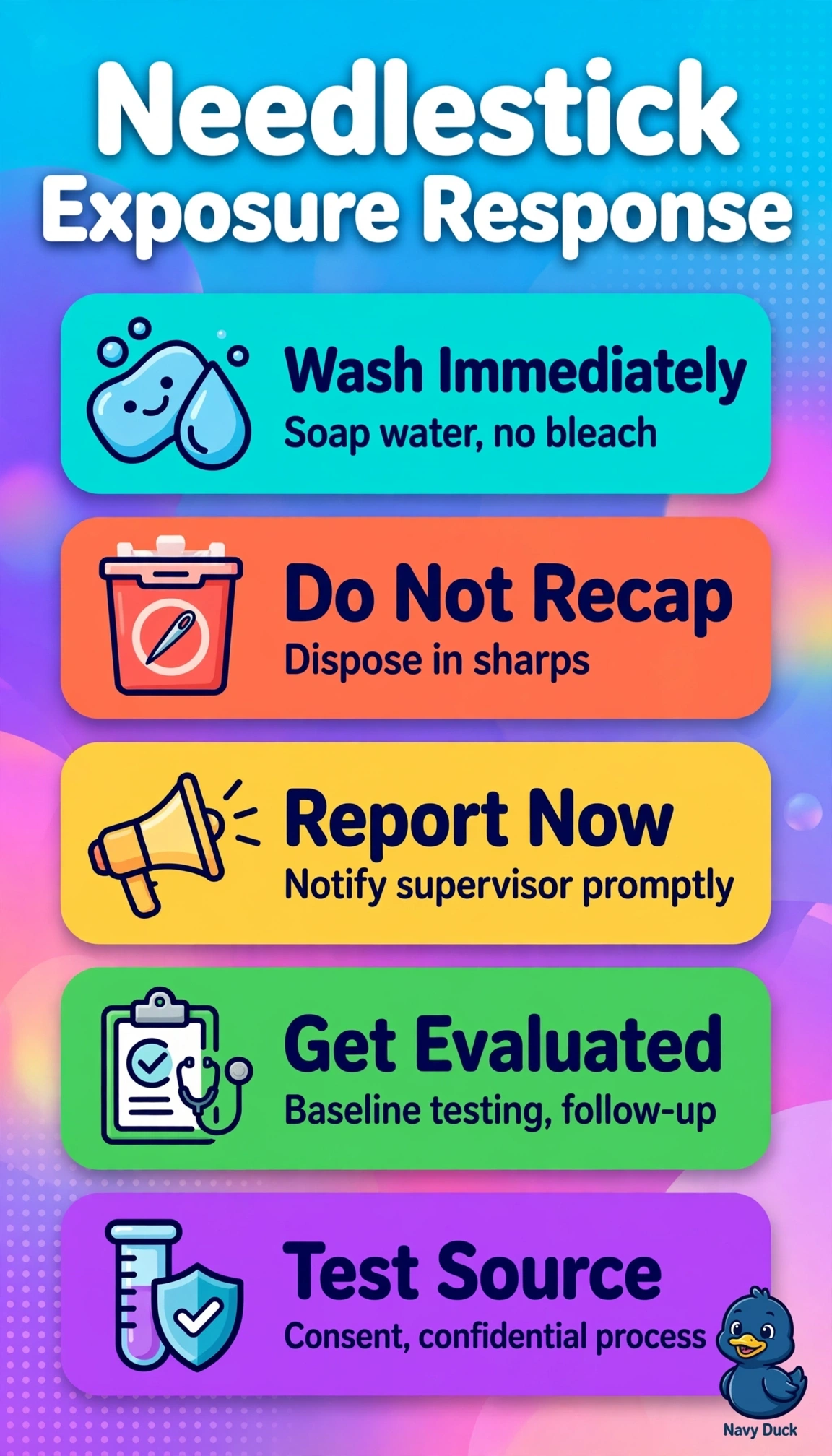
The correct response aligns with OSHA Bloodborne Pathogens standard and the clinic exposure control plan requiring immediate wound cleansing with soap and water to reduce viral load without traumatizing tissue, prompt notification of the supervisor to activate the reporting chain, and urgent medical evaluation including baseline testing, risk assessment, consideration of prophylaxis, counseling, and source patient testing while still available with consent. The distractor describing washing, safe disposal and waiting for symptoms fails on timeliness of clinical follow-up because post-exposure prophylaxis and baseline serology are time-sensitive and cannot await seroconversion signs, even though hygiene and reporting are correct. The distractor describing thorough documentation and prompt evaluation without supervisor notification fails on chain-of-command because formal incident documentation does not substitute for immediate verbal notification that triggers workers compensation, safety review and facilitated referral. The distractor describing alcohol sanitizer cleansing with prompt notification and evaluation fails on decontamination method because visibly bloody puncture wounds require mechanical washing with soap and running water, while alcohol alone is inadequate and irritating and does not replace flushing. Exam caveat is to distinguish immediate first aid and activation steps from later counseling, testing windows and prophylaxis decisions and not to select answers that delay any link for convenience in a busy clinic. Practical check is to know sharps container location, wash immediately without squeezing or applying bleach, notify the supervisor at once, preserve source identity for testing, and present urgently to employee health or emergency department with exposure details.