
During morning care in long-term care, a resident with limited mobility has an intact sacral area that is reddened, warm, and does not blanch with gentle pressure, with no blister or open skin. The resident reports tenderness when turned. Which skin-care assessment and action correctly identifies this stage of breakdown?
Select an answer to reveal the explanation.
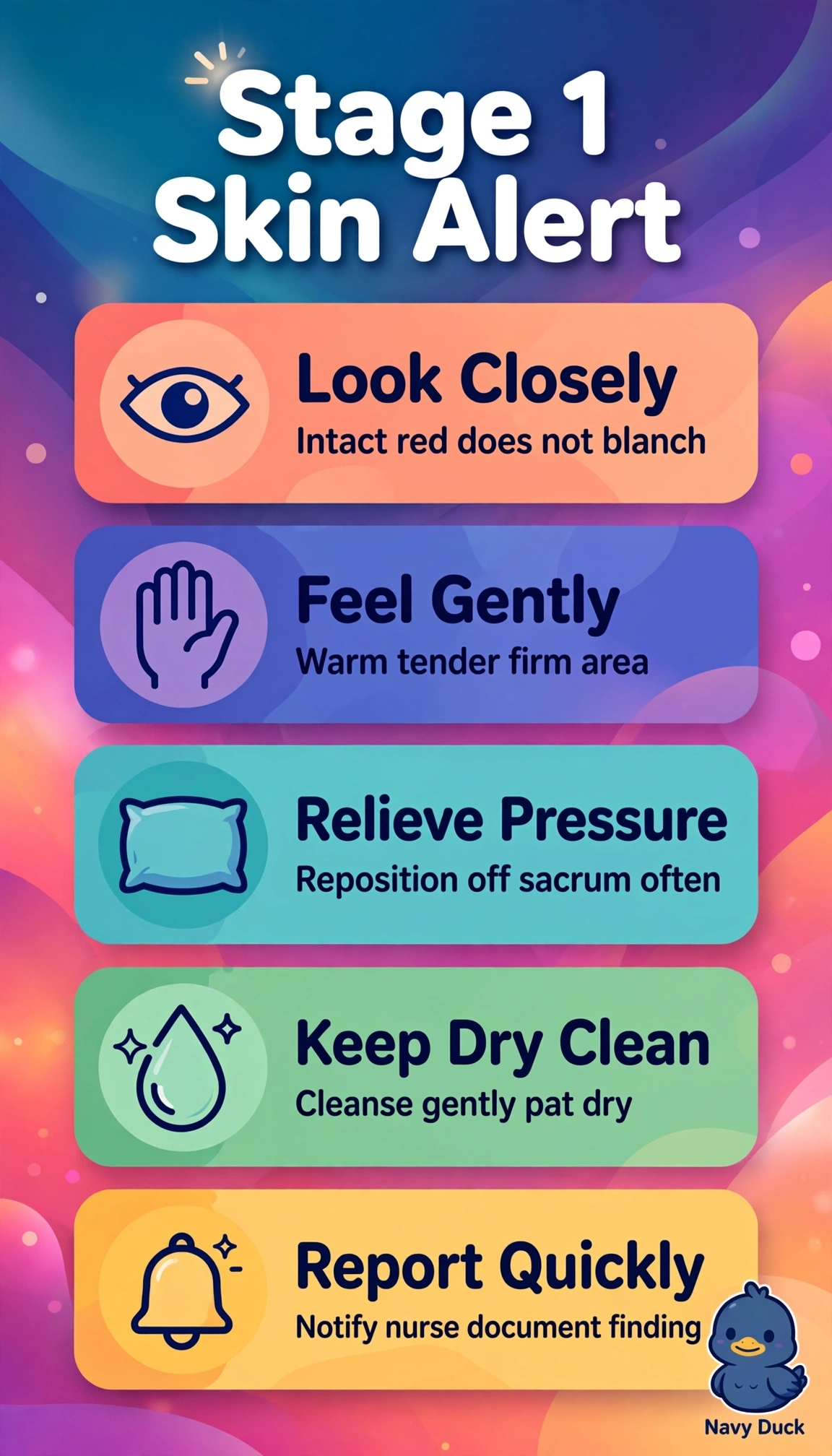
Short Explanation
You caught the earliest warning while skin is still closed. Spotting nonblanchable redness as Stage 1 lets quick offloading prevent an open wound.
Full Explanation
The intact sacral redness that does not blanch with gentle pressure in a resident with limited mobility defines Stage 1 pressure injury because skin remains closed without blister or opening while localized warmth and tenderness reflect pressure-induced ischemia, so correct care is prompt sustained offloading with repositioning plus keeping skin clean and dry to restore perfusion and prevent progression. The distractor labeling the same closed finding as Stage 2 fails by concept because Stage 2 requires partial-thickness open loss such as a shallow pink bed or serum blister without slough, fat, or eschar, which is explicitly absent here. The distractor correctly naming Stage 1 but adding hydrocolloid coverage fails by concept because adhesive occlusive dressings protect and manage moisture in open shallow wounds, while intact Stage 1 skin needs pressure relief, gentle cleansing, dryness, and friction reduction and adhesives risk epidermal trauma. The distractor labeling tender warm redness as suspected deep tissue injury fails by concept because that diagnosis requires persistent deep red, maroon or purple discoloration or a blood-filled blister from deeper damage, not localized nonblanchable erythema. An exam caveat is to stage only what is seen and felt without upgrading for pain or warmth alone, always verifying blanch response and closure. A practical check is to press gently, confirm persistent redness with intact skin, offload the sacrum fully, ensure clean dry linens and continence care, then document color, size, tenderness, and reevaluate after turning.