
A PCT assists with a postoperative patient who reports new calf pain and swelling, helps with ambulation, and must update the care team in the EHR before shift change. The nurse asks for a clear, professional entry using proper medical terminology. Which EHR documentation entry best demonstrates correct medical terminology in communication?
Select an answer to reveal the explanation.
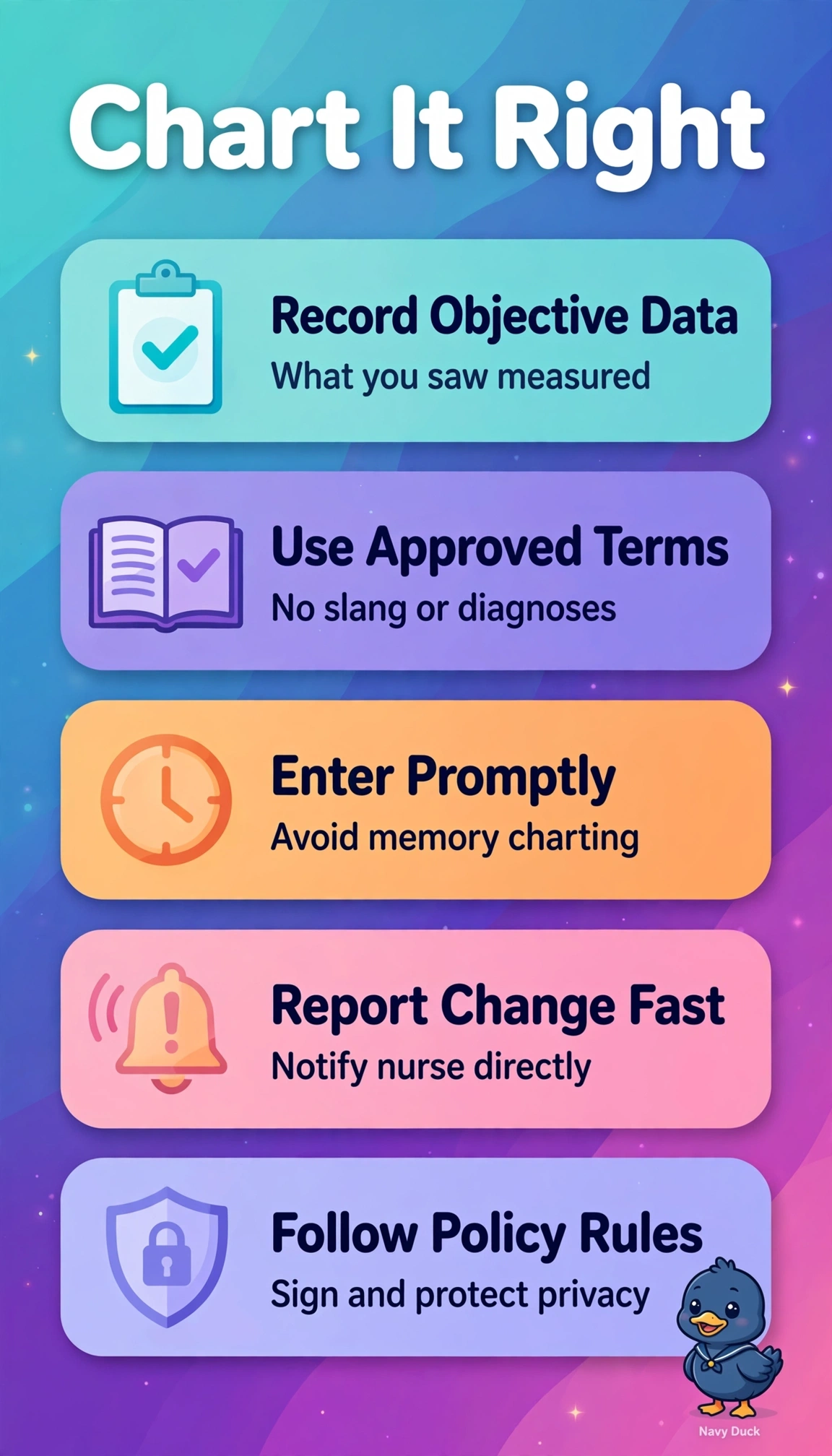
Short Explanation
Your chart should read like a clear lab report, not a group chat. Objective terminology keeps everyone on the same page and inside your scope.
Full Explanation
The correct entry succeeds because it pairs objective observation with approved medical terminology, timely EHR charting, and prompt escalation to the nurse, which fits PCT scope for a new postoperative calf change that requires licensed assessment. The ambulation-focused entry fails on completeness because timely EHR documentation with approved terms and nurse notification correctly covers routine mobility but omits the new pain and swelling that is the urgent clinical change driving communication. The handoff-to-aide entry fails on accountability and channel because correct EHR terminology is used yet informing only the oncoming aide at bedside does not meet the explicit need to notify the nurse promptly before shift change for evaluation. The everyday-language entry fails on terminology because prompt EHR documentation and nurse notification are appropriate but clear lay descriptions do not satisfy the requirement for proper medical terms that ensure precision and team understanding. An exam caveat is that stems asking for best terminology still test prioritization, recipient, timing, and record, so an otherwise strong entry is wrong if any single element is missing when matched against the stem. A practical check is to record what was seen and reported without stating a cause, use only facility-approved terms, save the EHR note before handoff, and verbally confirm the nurse heard and understood the change.