
In a same-day surgery unit you must draw morning labs on an adult whose median cubital vein feels bouncy and large, but the forearm shows a recent IV site with slight bruising and the other arm has an active infusion. You have one attempt before the nurse must reassess the difficult stick. Which venipuncture site selection best assesses venous accessibility within PCT scope?
Select an answer to reveal the explanation.
Short Explanation
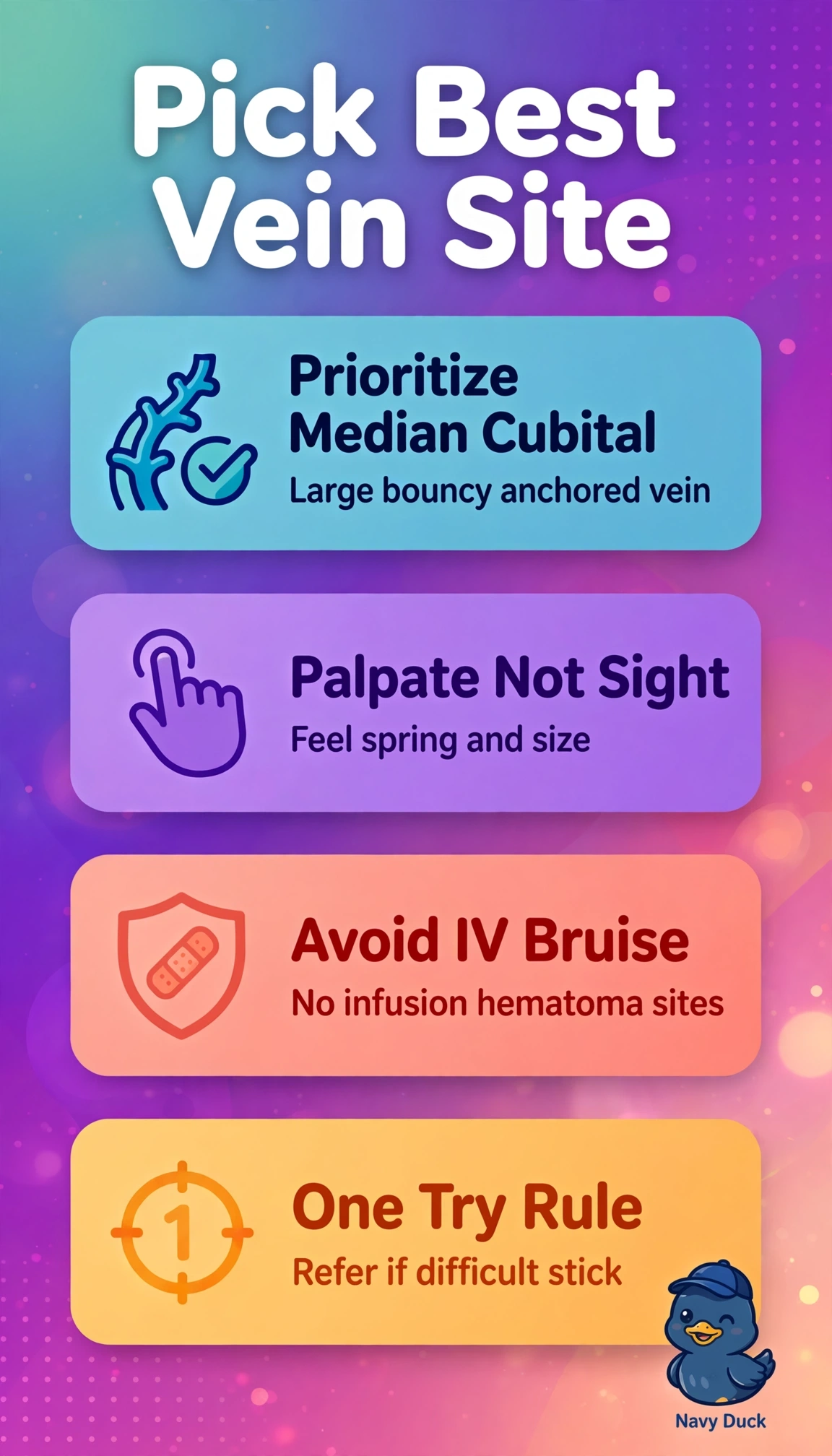
You can choose the bouncy median cubital vein while staying clear of bruising and the active infusion. A resilient patent vein supports a safer collection and more reliable results, so trust what you feel as well as what you see.
Full Explanation
The bouncy median cubital vein, selected away from bruising and the active infusion, is the best choice because its size and palpable resilience support access while avoiding areas that could compromise collection. Selecting a site by palpation and checking that the surrounding skin is intact are within PCT scope; with only one attempt, choosing the most accessible suitable vein supports a successful draw. The bruised recent IV site is unsuitable even if visible and marked: bruised tissue is compromised, and collecting there can cause discomfort or affect specimen quality. The arm with an active infusion should not be used merely by pausing the pump; infusion fluid can dilute or otherwise alter the sample, and briefly stopping the pump does not ensure a reliable specimen. Choosing a small hand vein first to preserve the large antecubital vein prioritizes conservation over accessibility: a smaller vein may be more difficult to access, increasing the chance of a failed attempt when a better suitable vein is available. Exam caveat: visibility alone does not make a site appropriate, and local policy and nurse direction govern difficult access. Practical check: assess both arms, palpate the median cubital vein, confirm it is away from bruising and the infusion, and alert the nurse if the available site is not suitable.