
After helping with wound care in a hospital room you have blood-soaked gauze, a used glucose lancet, and an overfilled sharps box with needles sticking out. Housekeeping is delayed and another PCT asks to recap the needle for safety. Which biohazardous waste and sharps disposal action should the PCT take per OSHA standards?
Select an answer to reveal the explanation.
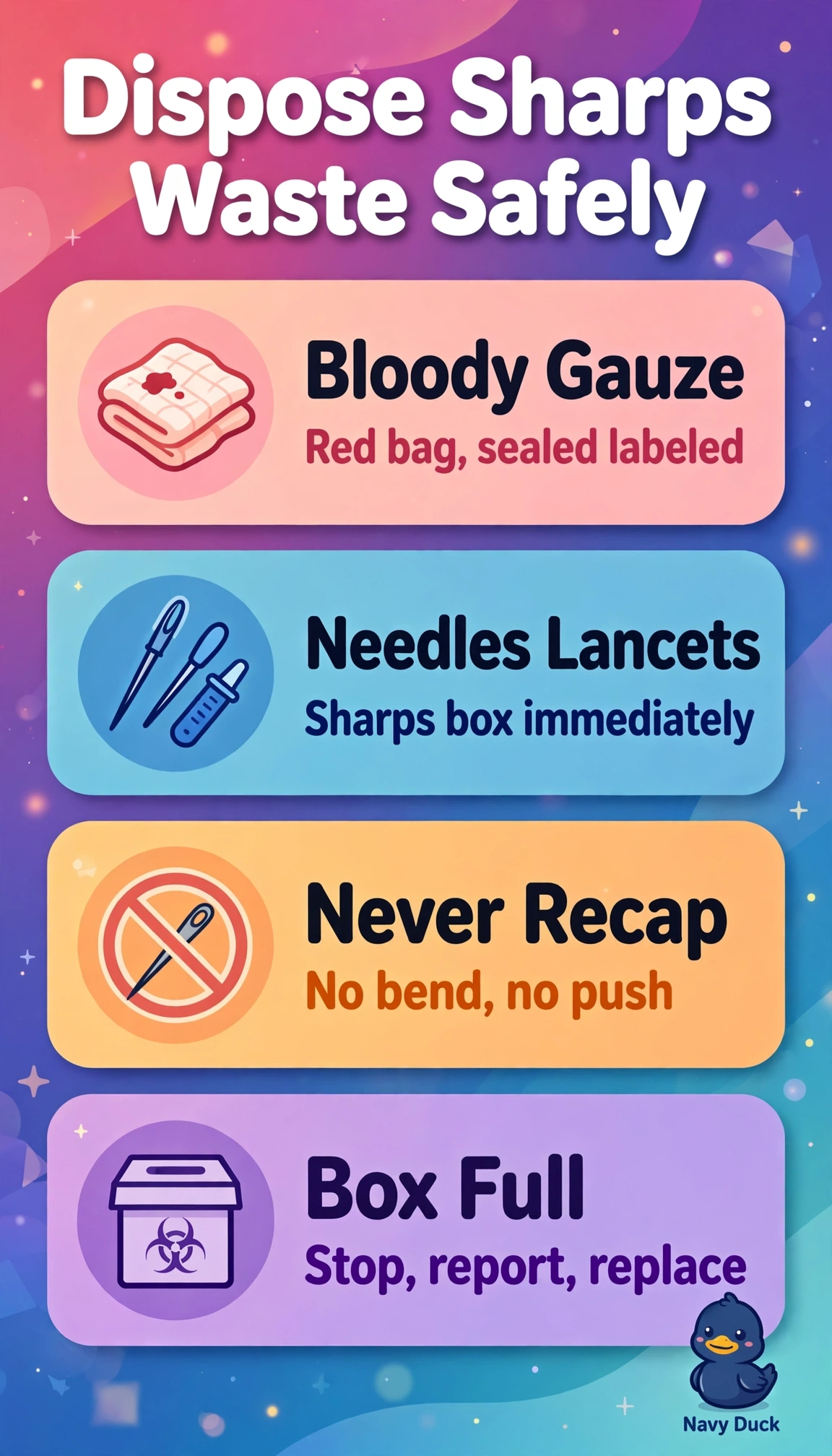
Short Explanation
You're sorting risky waste where one poke can change a career. Bag versus box separation with no recapping is your sharps-safe habit that keeps everyone protected. Contain it, don't compress it.
Full Explanation
Per OSHA Bloodborne Pathogens standard blood-soaked gauze is regulated waste requiring a labeled red biohazard bag and lancets require immediate disposal without bending or recapping into an accessible puncture-resistant leakproof labeled sharps container, and any overfilled box with protruding sharps must be closed, secured, taken out of service and reported for replacement rather than manipulated, which the correct action combines. The response that correctly bags gauze and disposes the lancet but forces the lid to continue using the full box until housekeeping arrives fails containment integrity because containers must be replaced at the three-quarter fill line and compressing an overfilled box creates high needlestick risk. The response that correctly bags gauze and reports the full box but recaps the lancet with a one-handed scoop to carry it centrally fails handling because the standard requires direct point-of-use disposal without recapping or carrying exposed sharps, with the scoop reserved for rare clinical necessity, not transport convenience. The response that correctly disposes the lancet and reports the box but double-bags bloody gauze in regular trash fails segregation because saturated blood remains regulated medical waste and clear trash bags lack required labeling and leak protection, though double-bagging suits noninfectious waste. Exam caveat is to reject familiar safe techniques when the stem specifies regulated blood or an unsafe container and prioritize immediate disposal, red-bag segregation, and reporting. Practical check is to confirm bag labeling, drop sharps directly, stop using the full container, notify the nurse and environmental services, then remove gloves and perform hand hygiene.