
A medical assistant in a clinic must dispose of a blood-filled gauze dressing, a used glucose lancet, and a cracked glass capillary tube after bedside testing, with red biohazard bags and puncture-resistant sharps containers nearby. Facility policy follows OSHA Bloodborne Pathogens disposal rules. Which OSHA-compliant disposal action should the technician take for the contaminated sharps and biohazard waste?
Select an answer to reveal the explanation.
Short Explanation
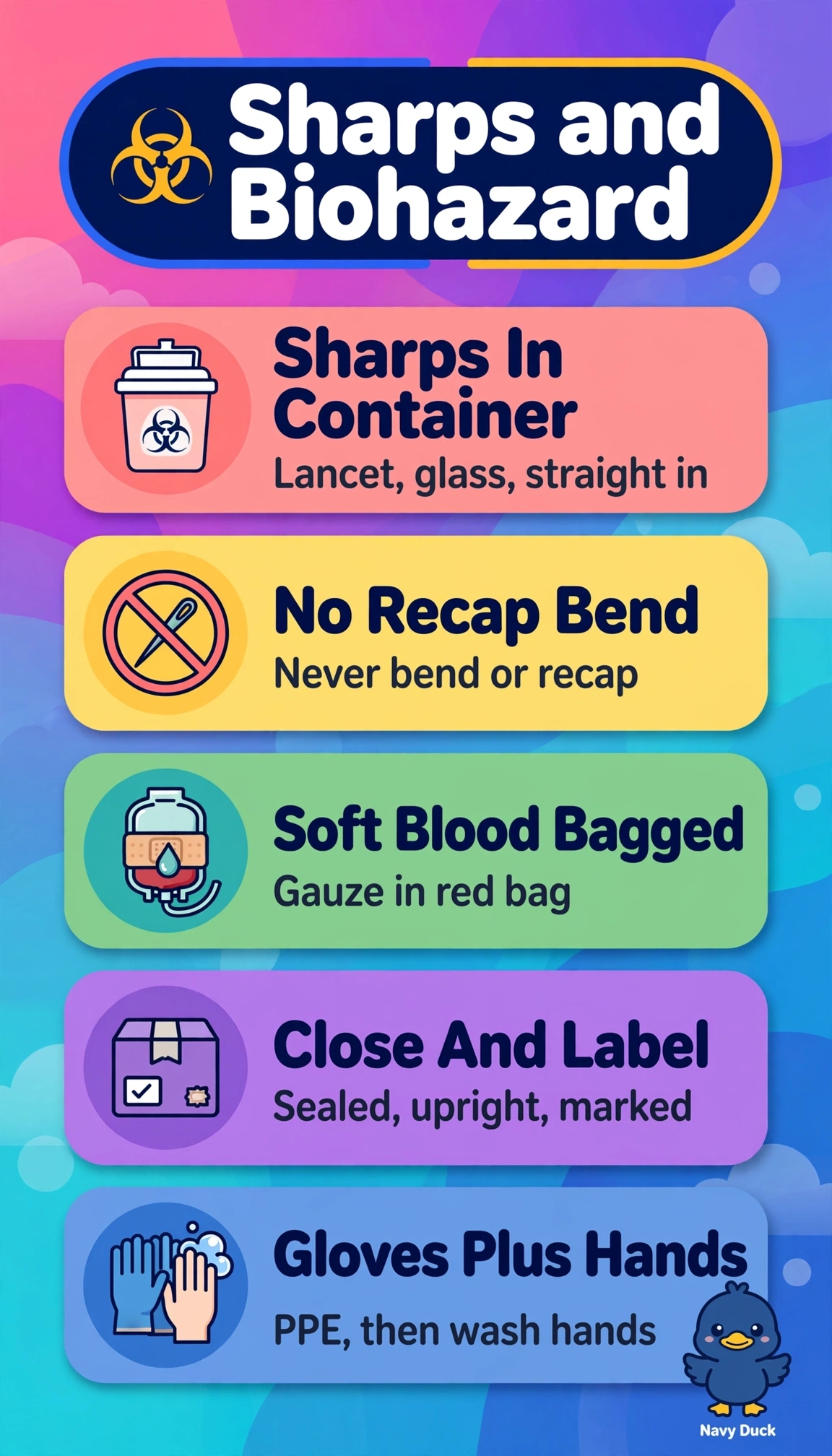
You sort danger by what can poke versus what can soak. Dropping sharps straight into the sharps container while bagging soft bloody waste keeps everyone safe.
Full Explanation
OSHA requires immediate source segregation by hazard type, so contaminated sharps including lancets and cracked capillary glass must go without manipulation directly into a closable puncture-resistant leakproof labeled sharps container while blood-soaked non-sharp waste such as the filled gauze goes into a red biohazard bag, which the correct action achieves by matching rigid protection to puncture risk and flexible biohazard packaging to infectious soft waste. Sealing the lancet and glass in a tied specimen bag placed with the red bag fails on containment because thin film offers no puncture resistance and can tear during handling, transport, and compaction despite correct biohazard labeling. Directing the disposable saturated dressing to laundry for reprocessing fails on waste-stream classification because laundering applies only to reusable textiles, whereas disposable regulated waste must be contained for treatment and disposal and never enter the washer. Placing only the lancet in the sharps container while adding cracked glass to the red bag with gauze fails on sharps definition because contaminated broken glass carries the same laceration and exposure risk as needles and therefore requires rigid disposal even when mixed with bloody waste. Exam caveat is to classify each item separately and select the container by physical hazard and saturation cues rather than by efficiency or cleaning cues. Practical check is to drop sharps straight in without bending or bagging, keep lids closed, tie red bags without overfilling or reaching inside, and move both to the designated accumulation area.