
During routine morning rounds on a stable adult medical unit, a PCT records temperature 99.1F, heart rate 118, blood pressure 88/54, respiratory rate 22, and oxygen saturation 91% on room air with mild confusion newly noted. Facility policy requires prompt nurse notification for abnormal trends. Which vital-sign recognition and reporting should the PCT prioritize for patient safety?
Select an answer to reveal the explanation.
Short Explanation
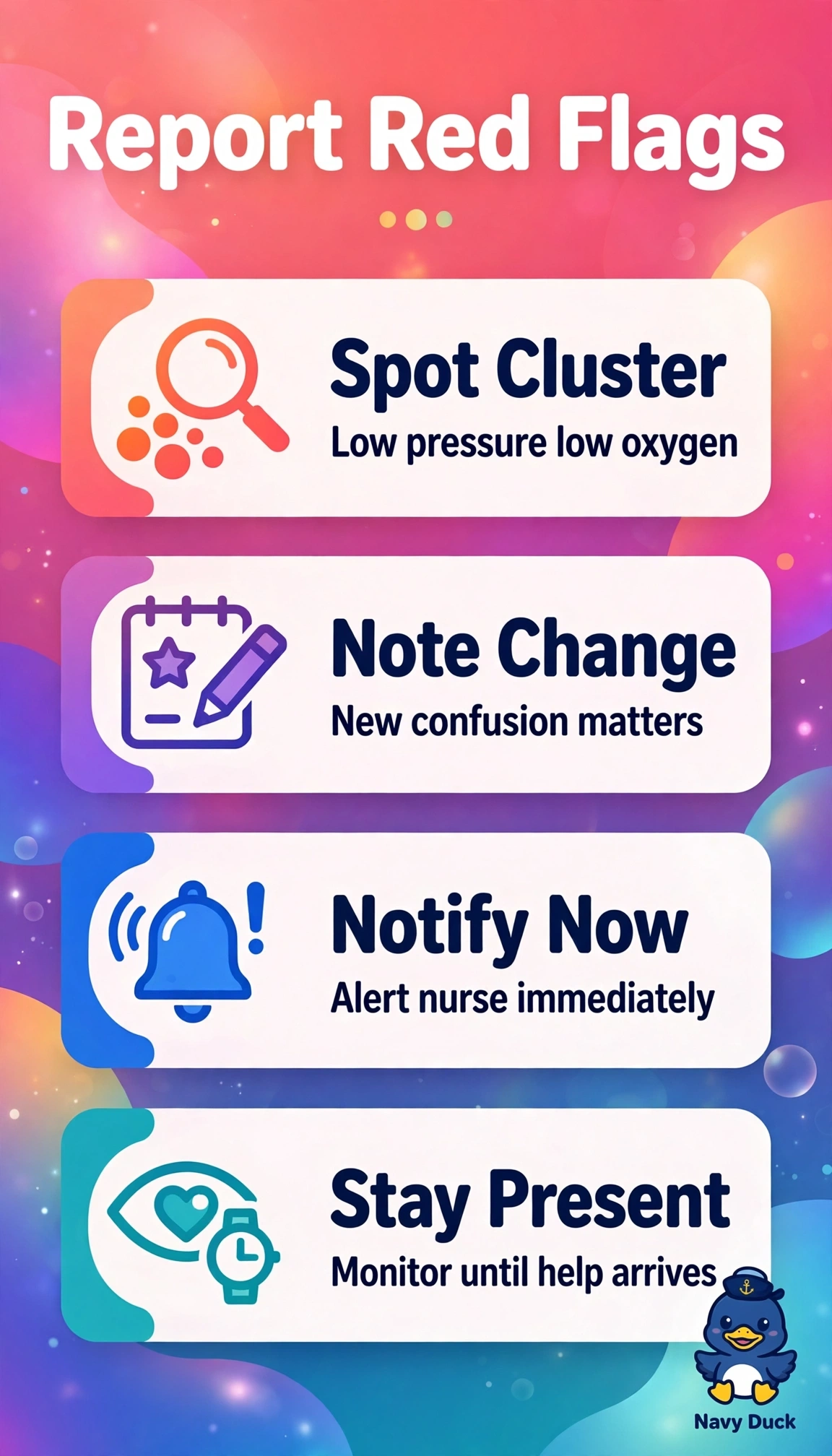
You're doing great when you watch the whole picture, not just one number. When you've got low pressure plus low oxygen with new confusion, that's poor perfusion, so speaking up fast is like pulling the fire alarm at the first whiff of smoke.
Full Explanation
The correct response reflects a combined perfusion and oxygenation threat requiring immediate escalation because 88/54 indicates hypotension, 91% on room air indicates significant hypoxemia, and new mild confusion suggests reduced cerebral perfusion that together meet policy for prompt notification and cannot wait for routine documentation. Rechecking those same findings after rest before telling the nurse fails by timeliness and delegation, since the PCT role is to promptly escalate hypotension with hypoxemia and mental status change rather than independently observe for improvement. Reporting tachycardia with tachypnea and confusion immediately fails by prioritization of primary instability, since heart rate 118 and respiratory rate 22 are important compensatory signs but do not replace the more decisive hypotension and hypoxemia driving risk. Reporting hypotension with hypoxemia and slight fever immediately fails by data accuracy and complete reporting, since 99.1F is not fever in an adult and substituting it omits the critical new confusion signaling deterioration. An exam caveat is to match every value to thresholds plus new symptoms rather than choosing a familiar pair, since full pattern with immediacy is rewarded. A practical check is to use SBAR with exact numbers for pressure, oxygen, and confusion and remain with the patient until directed.