
A frail older adult with diabetes and poor leg sensation requests extra heat for knee pain in a rehab room where a heating pad is already warm, the call light is out of reach, and skin checks have not been documented for two hours. Which hot therapy safety practice best prevents burn injury?
Select an answer to reveal the explanation.
Short Explanation
You’re thinking like a protector for fragile skin. Checking first, buffering heat, and keeping help in reach makes warmth soothing instead of risky for low-sensation legs.
Full Explanation
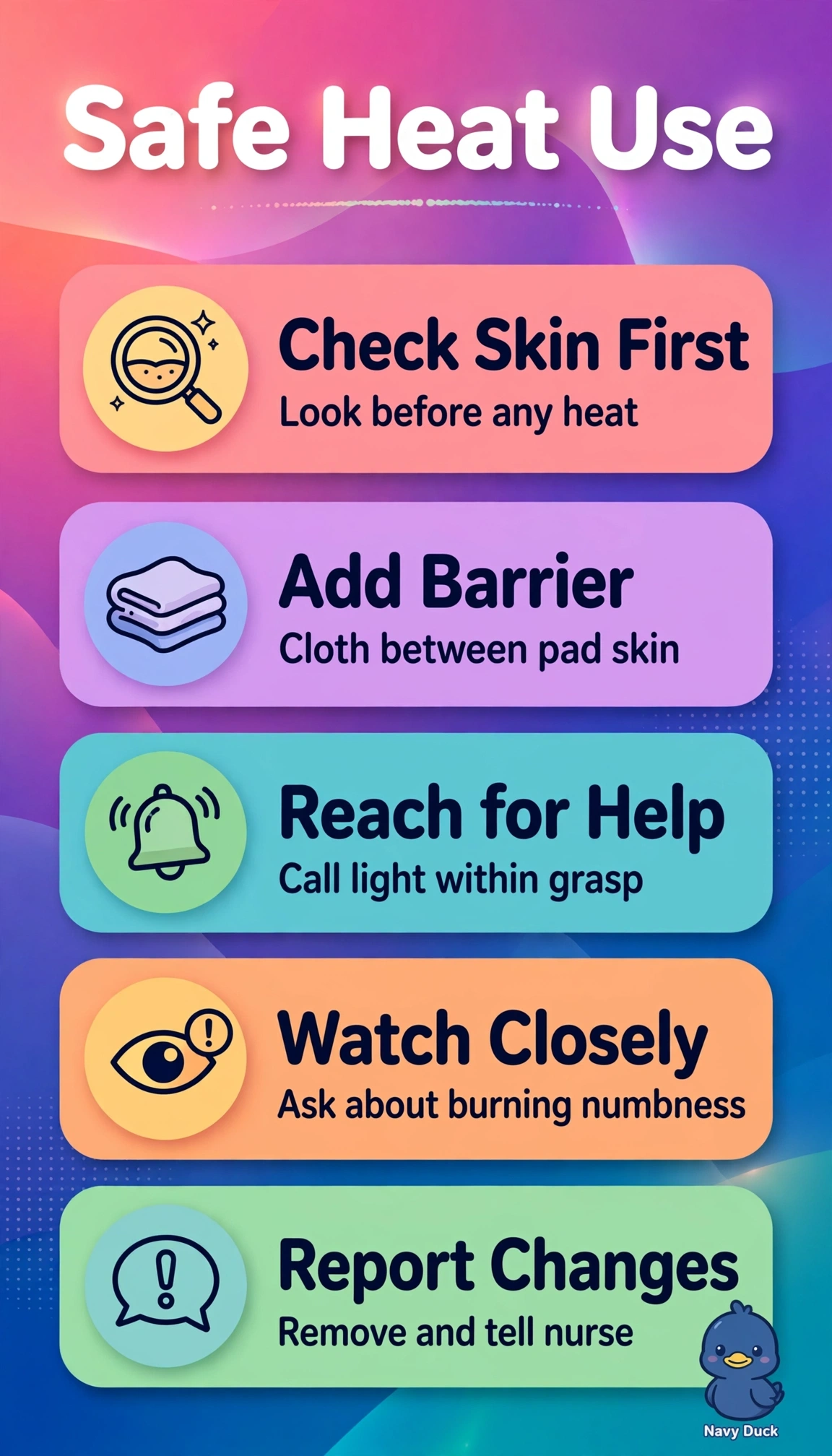
Inspecting the leg first, adding a cloth barrier, securing the call light, and reporting checks per policy address the risks together. Frailty, diabetes, and poor sensation can impair heat perception and healing; an already warm pad and two hours without documented checks allow injury to go unnoticed, while an unreachable call light delays help. Baseline inspection can reveal redness or breakdown, the barrier reduces direct heat transfer, and access to the call light restores the patient’s ability to seek help. Adding a towel barrier, placing the call light in reach, and documenting checks still leaves out an initial skin inspection after prolonged unmonitored heat, so existing injury could be missed. Inspecting skin, securing the call light, and recording checks without a cloth barrier leaves vulnerable skin exposed to direct heat despite monitoring. Inspecting skin, covering the pad, and documenting frequent checks without securing the call light leaves the patient unable to summon help promptly. An exam caveat: comfort requests do not outweigh precautions for neuropathy or frailty, and monitoring does not replace a barrier or rescue access. As a practical check, inspect the skin, verify the barrier and call light with the patient, and set a timer for policy-based rechecks and documentation.