
A recently immigrated older adult admitted to a 24-bed medical unit avoids eye contact, answers softly, and declines a bed bath from a different-gender caregiver while family visits with home foods. Which therapeutic and culturally competent care response best supports trust and comfort?
Select an answer to reveal the explanation.
Short Explanation
You've got great instincts for respect over routine here. Small adjustments like plain language and honoring modesty build trust faster than pushing eye contact or schedules.
Full Explanation
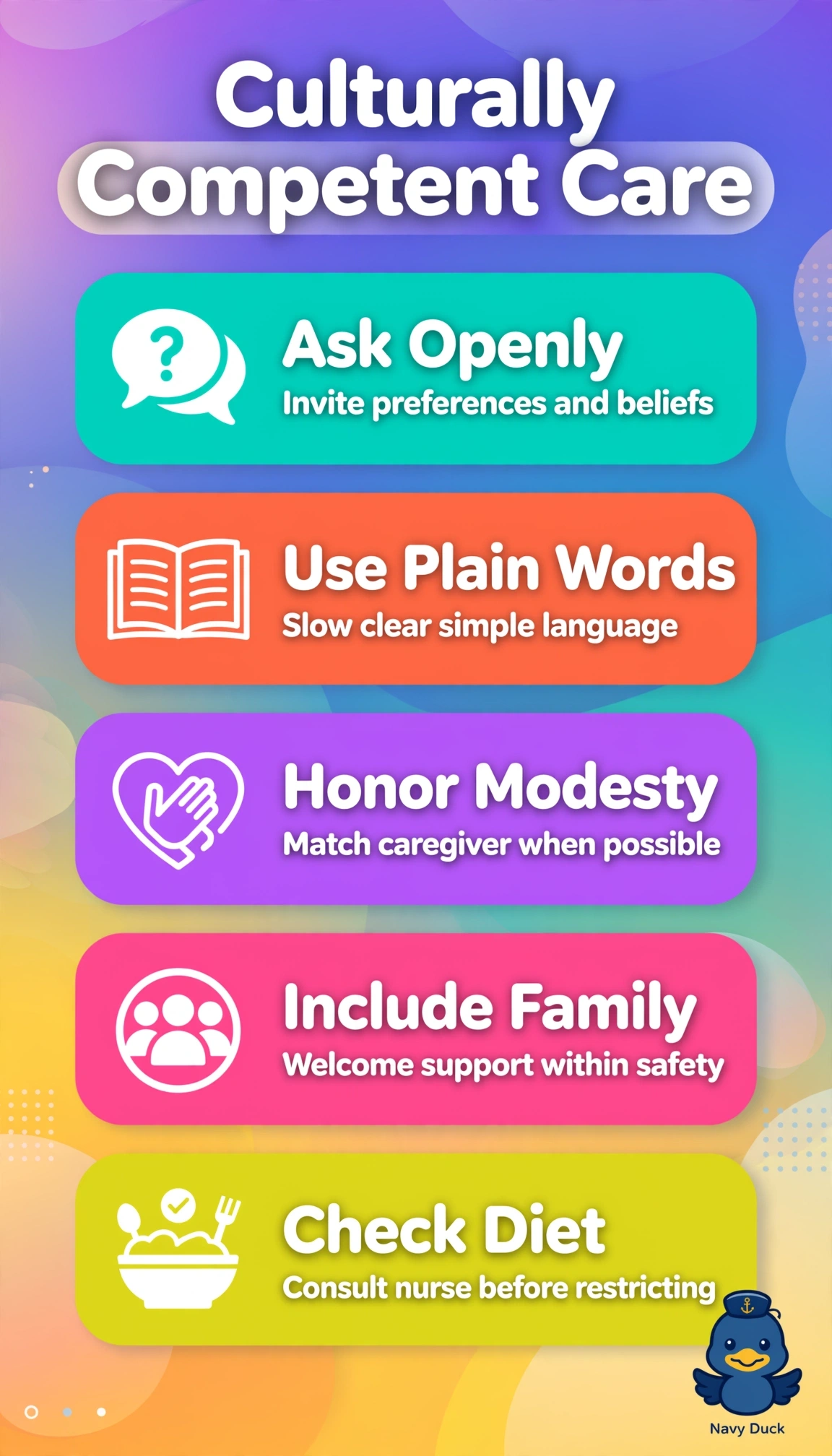
The correct response integrates health-literate therapeutic communication with cultural humility: plain language reduces barriers for a recently immigrated older adult, open questions invite concerns in the person's own words without pressuring soft answers, respecting modesty validates declining a different-gender bath as a preference to accommodate, and arranging a matched caregiver when possible operationalizes autonomy and trust while acknowledging staffing limits. One plausible distractor describing interpreter and modesty accommodation but relying on closed questions to save time fails on therapeutic communication because closed questions truncate assessment, limit disclosure, and undermine trust when communication is already tentative and culturally mediated. Another plausible distractor preserving plain language and modesty language but keeping the assigned caregiver to finish the bath promptly fails on autonomy and culturally congruent care because efficiency and continuity do not override an expressed modesty preference, so proceeding erodes dignity and trust. A third plausible distractor preserving plain language, open questions, and matched staffing but encouraging steady eye contact to show engagement fails on cultural awareness of nonverbals because avoidance may convey respect rather than disengagement, and coaching direct gaze imposes a dominant norm. The exam caveat is to choose the response honoring all cues together rather than a generally sound practice that violates one explicit preference. A practical check is to ask permission, offer choices, use teach-back, welcome family per policy, partner with the dietitian to review home foods for safety, and document preferences and accommodations.