
A PCT splashes a concentrated floor disinfectant on forearms and scrubs while cleaning a spill in a clinic utility room, with burning and odor present and the original labeled bottle nearby. Coworkers suggest rinsing, finding the binder, and calling for help. Which Safety Data Sheet use should the PCT prioritize to manage this chemical exposure safely?
Select an answer to reveal the explanation.
Short Explanation
You are safest when the sheet tells you how to rinse and protect. An SDS is your chemical recipe card — first-aid guidance tells rinse time and when to seek care.
Full Explanation
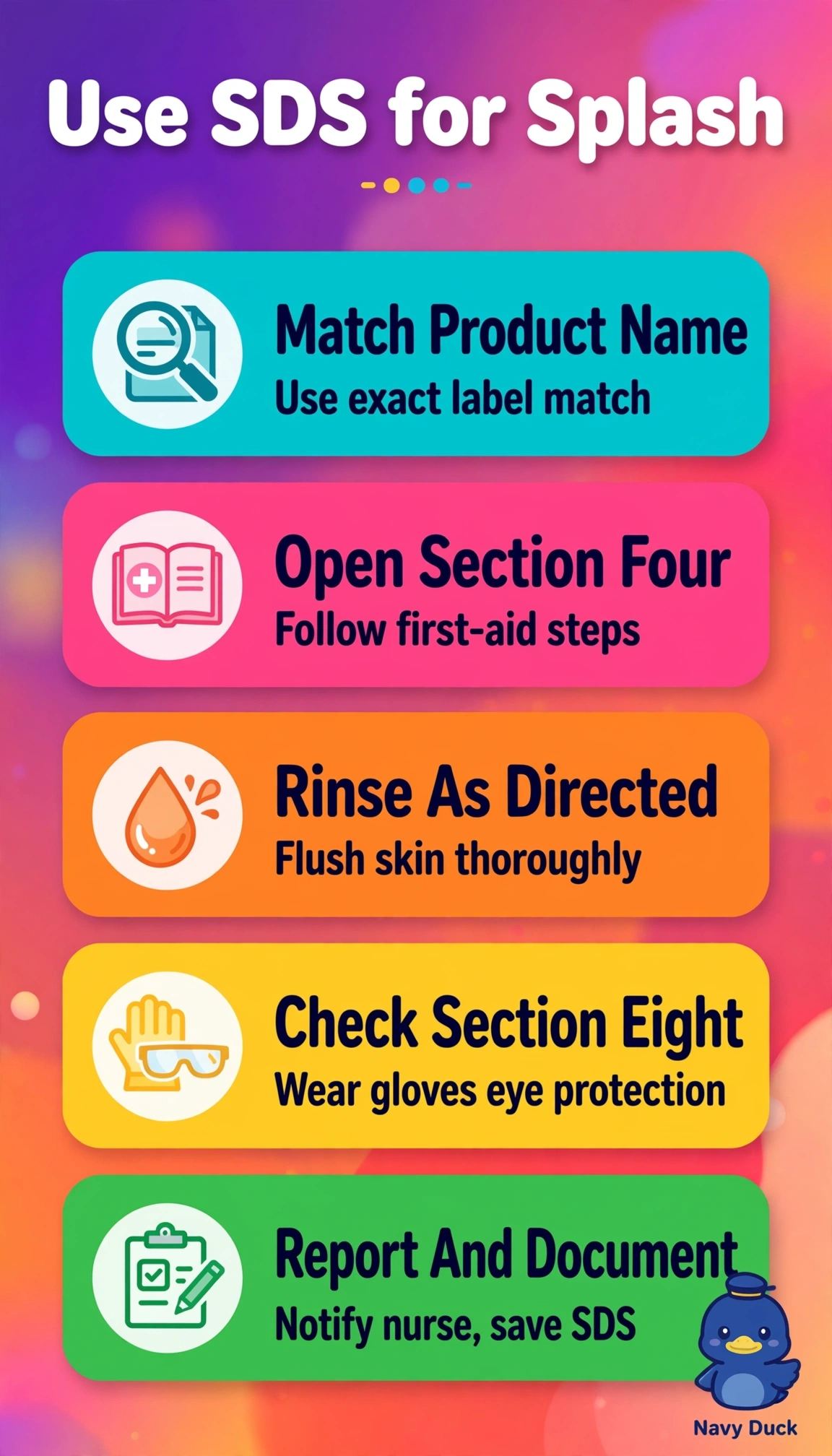
The correct action prioritizes person-centered care using the product-specific Safety Data Sheet, because forearm contact with concentrated disinfectant plus burning indicates active injury needing prompt irrigation, and Section 4 provides first-aid specifics on rinse duration, clothing removal, and medical referral while Section 8 guides protective practices to limit ongoing and rescuer exposure. Following Section 6 containment and cleanup before skin care is routine spill control but fails on sequencing priority because environmental management must not precede human decontamination during ongoing tissue injury. Reviewing Sections 1 and 2 to confirm identity and hazards is standard hazard communication but fails on timely intervention because it delays irrigation for data gathering though the labeled bottle allows verification during rinsing. Calling Poison Control with label data is sound toxicology practice but fails on required source use because the scenario demands Safety Data Sheet application and postponing on-site review delays specific rinse instructions. An exam caveat is that burning plus concentrate cues treat the person first, so otherwise valid spill, identification, or referral steps are wrong when they defer rinsing. A practical check is to match SDS identifier to the bottle, start gentle lukewarm rinsing without scrubbing, remove sleeves, time irrigation, and bring the SDS to handoff.