
An older adult recovering from a right hip repair is cleared for weight-bearing as tolerated, uses a standard walker, and needs to walk 20 feet to the bathroom with the PCT guarding closely and the hallway clear of clutter. The patient can grip well but fatigues quickly and tends to step ahead of the device. Which ambulation cue should the PCT reinforce to keep walker use safe and stable?
Select an answer to reveal the explanation.
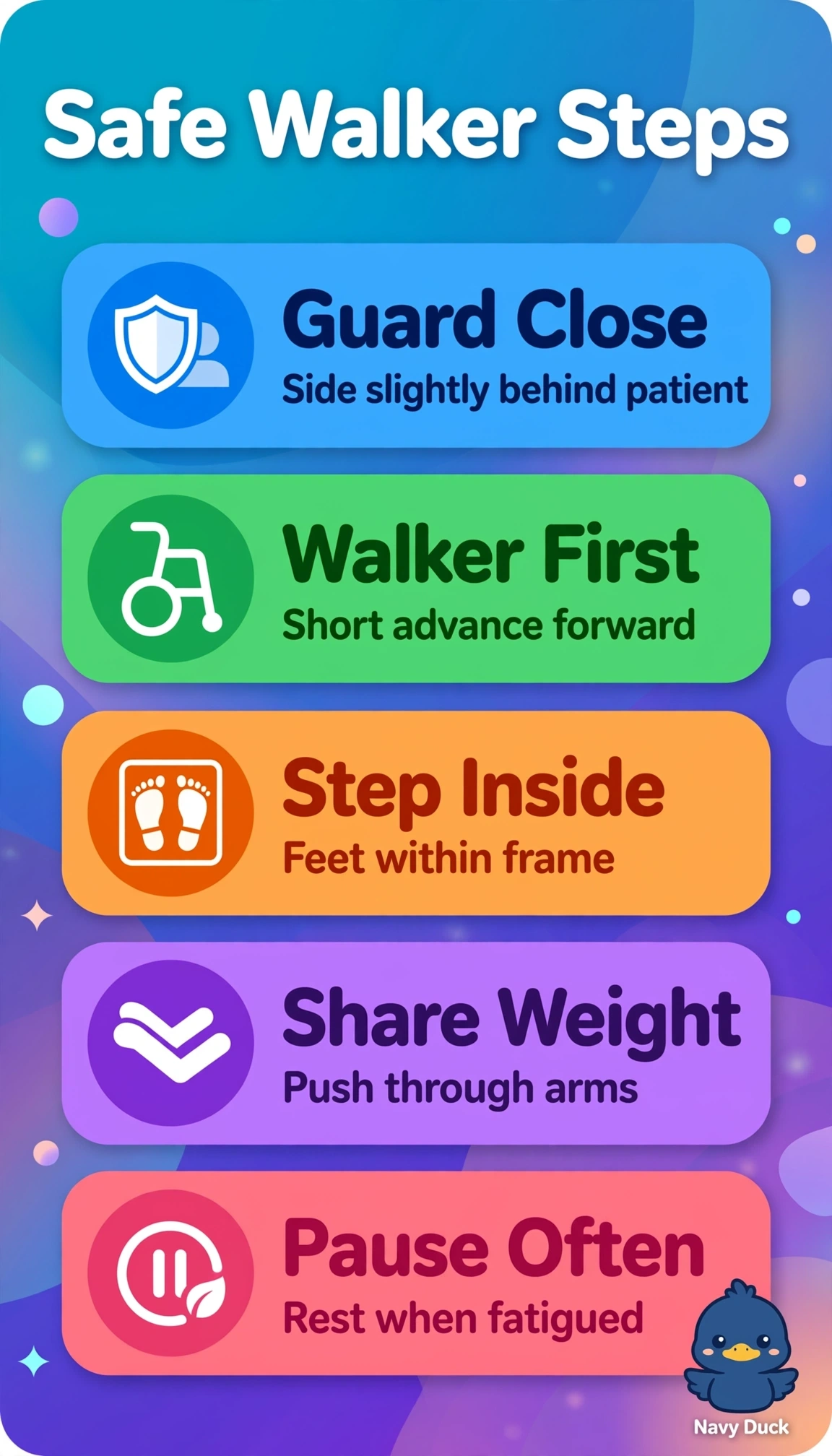
Short Explanation
You are the patient's steady shadow, not their pusher, and timing is everything. Sequencing the walker first and then stepping inside its frame keeps the base wide and steady, like moving a chair before you sit.
Full Explanation
The correct cue preserves stable support for weight-bearing as tolerated after right hip repair in a quickly fatiguing patient who tends to step ahead. Advancing the standard walker only a short distance keeps the base close, stepping into rather than beyond the frame keeps the center of gravity inside the support, and sustained weight through the arms unloads the healing hip and prevents forward loss of balance during the 20-foot walk. The cue to place the walker a full arm's length ahead fails on distance because overreaching pulls the trunk forward, increases arm demand and fatigue, and forces catch-up steps that reduce control despite otherwise correct arm use. The cue to move the walker and right foot together fails on sequencing because a non-wheeled walker must be lifted, planted, and then stepped into to maintain three to four points of contact, and simultaneous motion sacrifices that fixed frame and borrows a wheeled-walker rhythm unsuited to early hip recovery. The cue to bear most weight through the legs fails on load sharing because it abandons upper-extremity support, loading the repaired hip with each step and worsening pain and fatigue despite good grip. An exam caveat is to match timing to device type and not confuse cane or wheeled-walker gaits with standard-walker lift-place-step. A practical check is to guard closely behind and slightly to the affected side, confirm level placement, feet landing inside the frame, upright trunk, and pause for rest if tremor, drift, or hip pain occurs.