
A lampwork bench asks what to do after the loaders exist. Which response fits associate implementation?
Select an answer to reveal the explanation.
Short Explanation
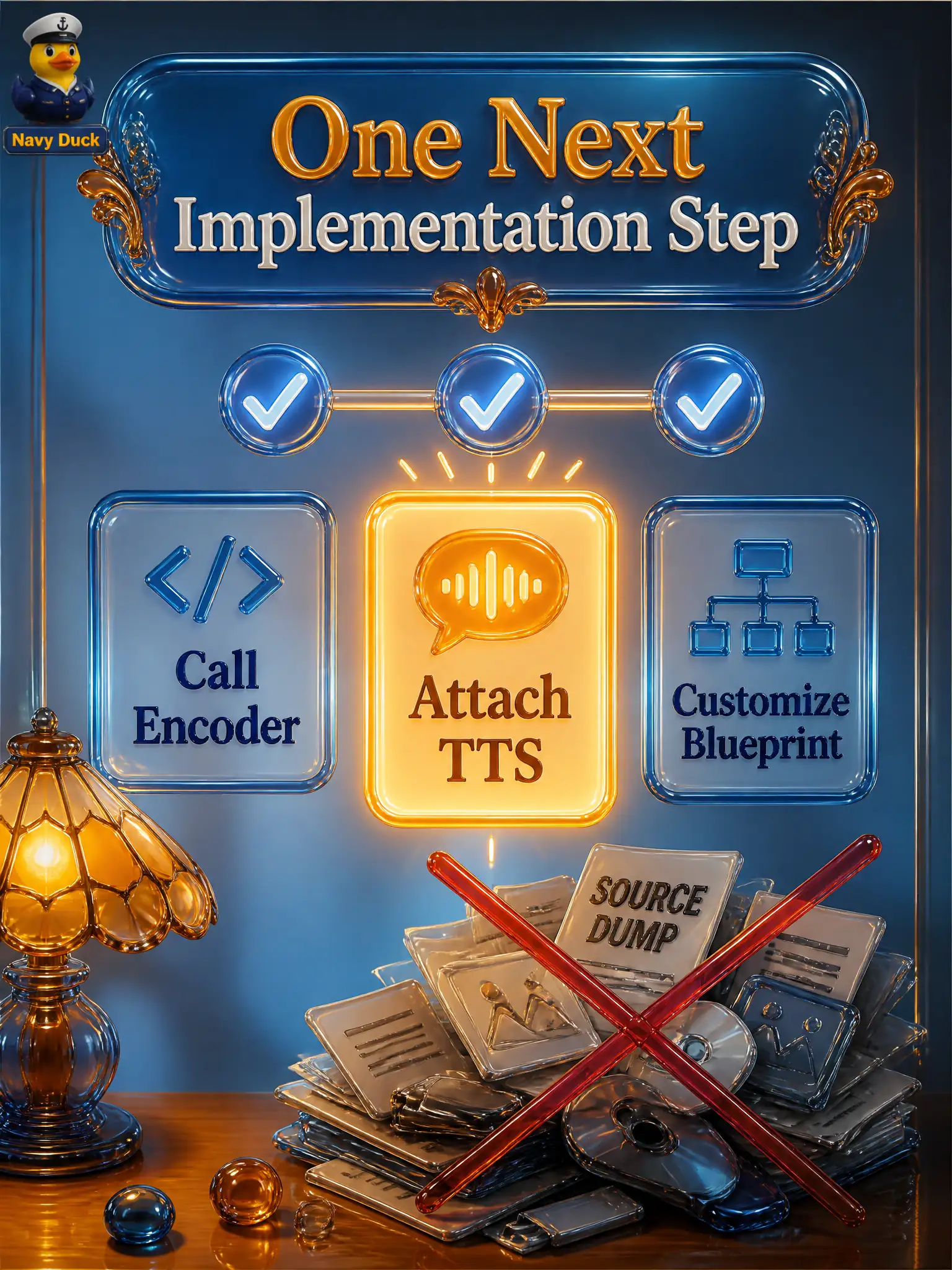
After the loaders, take one clear next nail: call an encoder, attach TTS, or customize a Blueprint. A wall of generated files is not a teaching step.
Full Explanation
After loaders exist, associate implementation names one next step—call the encoder, attach TTS, or customize a Blueprint—instead of dumping a multi-file generated program wall. That response fits the lampwork bench and civic build discipline: incremental, named next actions beat unreadable source dumps.
Dumping a multi-file generated program wall with every possible SDK call fails reviewability. Stopping all work until a Domain 1 fusion lecture is rewritten as source fails progress. Replacing loaders with raw byte feeds and skipping encoders undoes required decode/encode work.
Exam caveat: associate next steps are single, named implementation moves. Operational check: pick one civic next call (encode, TTS, or Blueprint customize), implement it, verify, then proceed—avoid mega-dumps. Align this choice with the agency’s published multimodal runbook so civic operators can audit why the configuration was accepted. Document the VIA Blueprint customization (inputs, query shape, host) in the civic runbook and verify one clip-plus-question answer end-to-end before any scale discussion. Prefer explicit, reversible civic decisions over silent assumptions when multimodal data or software paths move toward production.