
A harness shop wants a talking face. Official additional material names ACE with Riva ASR, Riva TTS, Audio2Face, and a NeMo LLM. What should the assemble choice be?
Select an answer to reveal the explanation.
Short Explanation
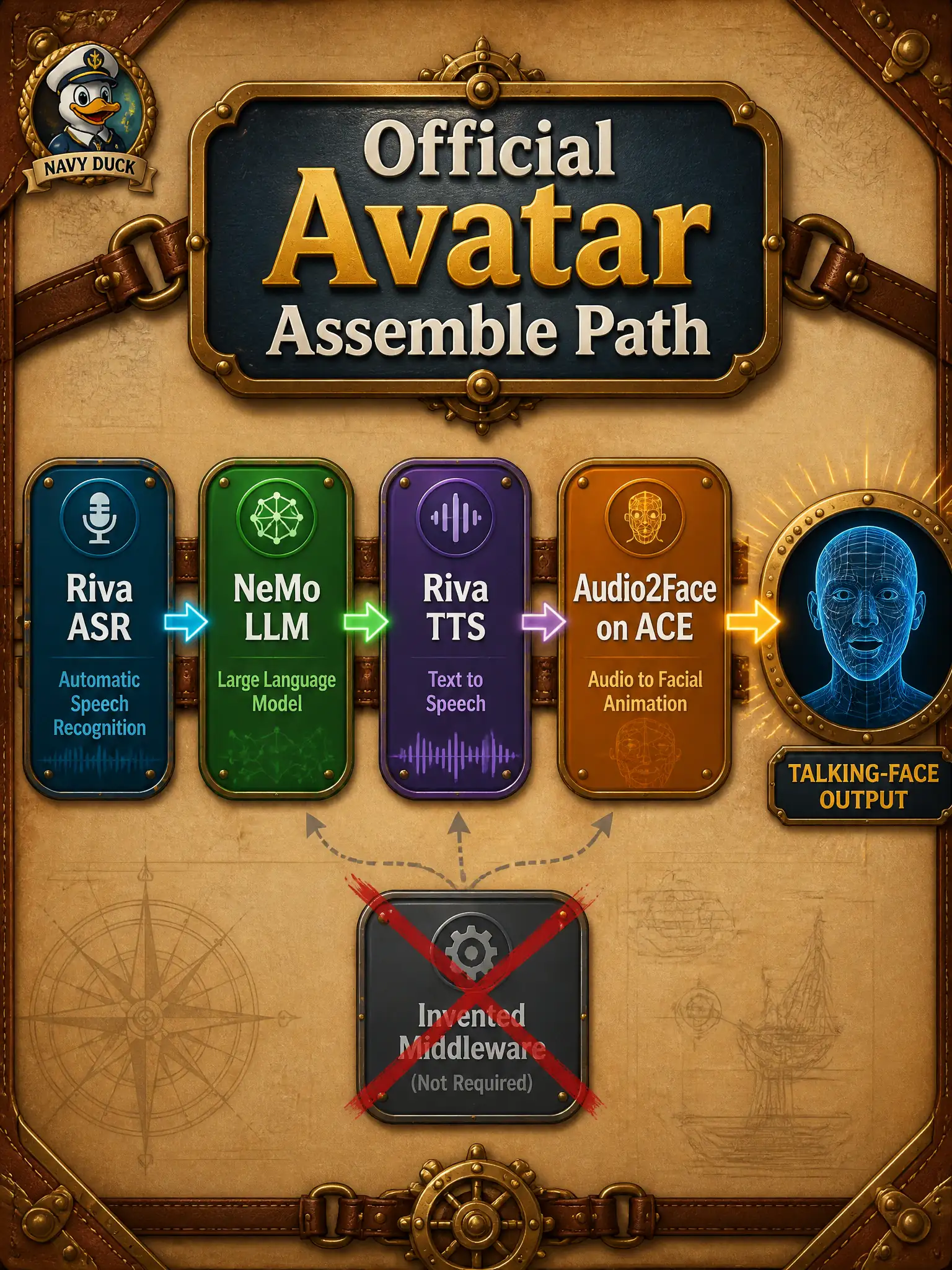
Stick to the named kit on the shelf: ACE, Riva ASR/TTS, Audio2Face, and NeMo LLM. Don’t invent extra glue that the official path never asked for.
Full Explanation
When official additional material names ACE with Riva ASR, Riva TTS, Audio2Face, and a NeMo LLM for a talking face, the assemble choice is to assemble those named pieces as stated. That answer is correct for the harness shop. Civic avatar desks should assemble the published stack rather than invent middleware or substitute CLIP/diffusion.
Inventing custom middleware that replaces ACE and Audio2Face fails official assembly. Using only CLIP and a diffusion denoiser with no speech or face modules fails the talking-face job. Skipping avatar pieces and deploying a Helm chart as the talking face fails by mistaking packaging for face animation.
Exam caveat: assemble the named ACE/Riva/Audio2Face/NeMo set; do not invent replacements. Operational check: checklist civic avatar builds against those named components before go-live. Align this choice with the agency’s published multimodal runbook so civic operators can audit why the configuration was accepted. Record the civic software choice in the service README—named modules, inputs, and domain—so operators can replay the same path during audits and handoffs. Prefer explicit, reversible civic decisions over silent assumptions when multimodal data or software paths move toward production.