
A stone-carving yard’s first script feeds JPEG and WAV byte blobs straight into a model call. What implementation step is missing?
Select an answer to reveal the explanation.
Short Explanation
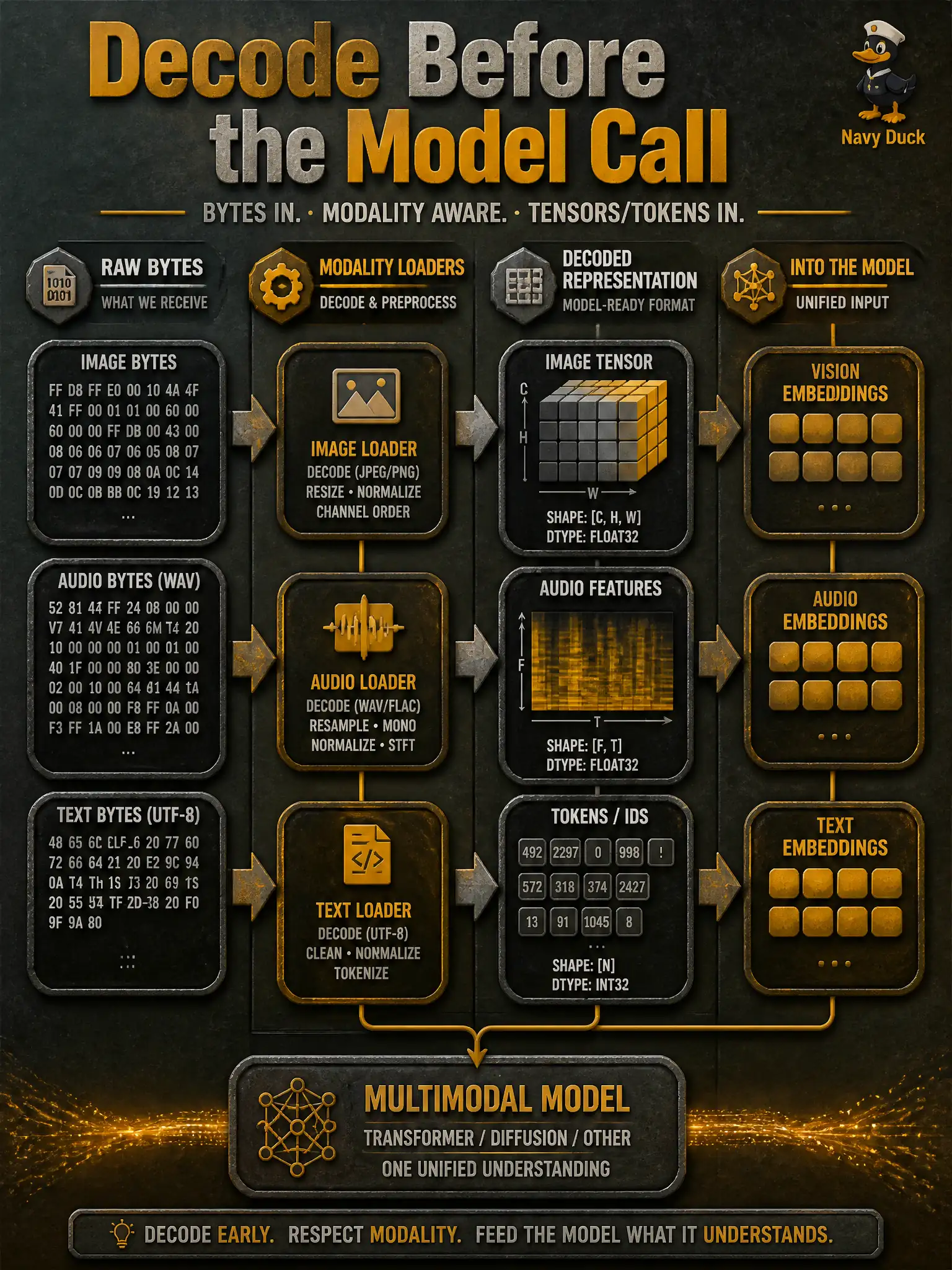
Models don’t chew sealed file envelopes—they need unpacked tensors and tokens. Wire the per-modality loaders Domain 2 already called readiness.
Full Explanation
Feeding JPEG and WAV byte blobs straight into a model call skips required per-modality decode. Adding decode so the project passes image tensors, audio features or tensors, and tokens—not undifferentiated bytes—is the missing implementation step. Civic apps that accept citizen media must decode into modality-appropriate tensors before encoders and heads run.
Replacing every loader with a Helm chart before any tensors exist fails by substituting packaging for decode. Treating raw file bytes as the official network-ready multimodal input format fails modern multimodal practice. Skipping loaders for a Domain 1 fusion-type vocabulary quiz fails by abandoning implementation.
Exam caveat: bytes on disk are not network-ready multimodal inputs. Operational check: implement civic loaders that decode each modality, assert tensor/feature shapes, and only then call encoders. Align this choice with the agency’s published multimodal runbook so civic operators can audit why the configuration was accepted. Record the civic software choice in the service README—named modules, inputs, and domain—so operators can replay the same path during audits and handoffs. Prefer explicit, reversible civic decisions over silent assumptions when multimodal data or software paths move toward production.