
A cloister booth already wired Riva ASR, NLP, and TTS in a framework project. Today pilgrims queue. What step is next?
Select an answer to reveal the explanation.
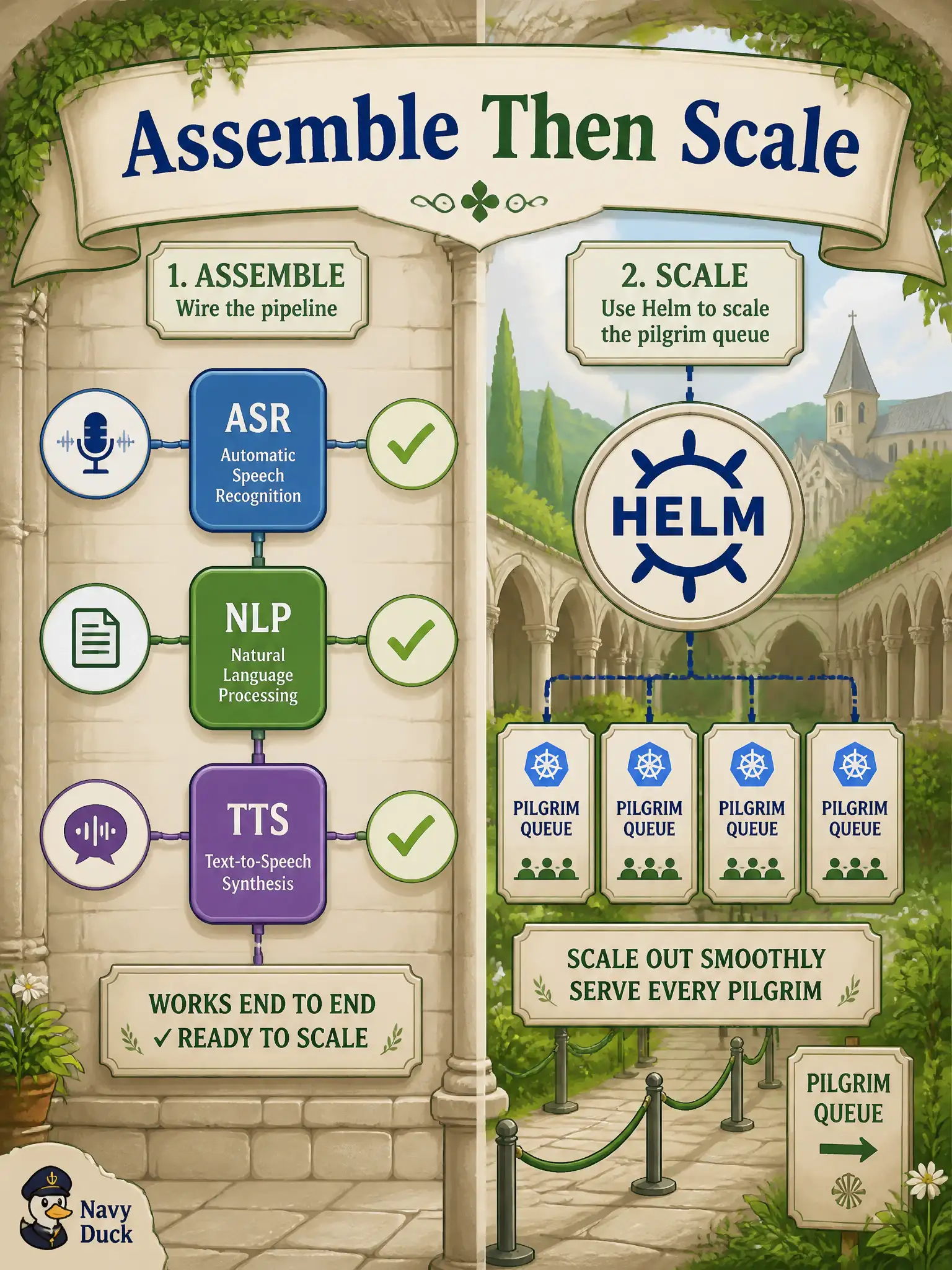
Short Explanation
The pipes are already joined; today the line is long. Shift from “build the path” to “scale the path” with Helm—do not reassemble what already works.
Full Explanation
A cloister booth that already wired Riva ASR, NLP, and TTS in a framework project and now faces pilgrim queues should move from implementation to the Helm/Kubernetes performance step to scale the working pipeline. Domain 6 follows Domain 4 assembly when traffic appears.
Rebuilding the entire hear–understand–speak wiring from scratch as if assembly never happened fails by discarding a working implementation. Treating pilgrim queues as a Domain 3 labeling task instead of a scale task fails when the pipeline already exists and load is the issue. Replacing Riva stages with LangChain text RAG as the queue-clearing fix fails stack and certification scope.
Exam caveat: working conversational wiring + queues → Helm scale. Do not rebuild or swap to unrelated text RAG to clear lines.
Operational check: confirm the framework project still passes smoke tests; deploy via Helm; raise replicas for pilgrim peak; watch latency/throughput on the civic cloister booth. In municipal platform operations, record the chosen performance lever and the rejected alternatives in the change record so future on-call engineers understand the failure modes avoided for citizen services. Re-check the decision after the next traffic spike or model update to ensure the same answer still holds for the city's estate.