
A sieve-maker has a short assembly clip and a typed question and will customize an NVIDIA AI Blueprint with VIA. A volunteer starts a from-scratch video encoder. What should the candidate do?
Select an answer to reveal the explanation.
Short Explanation
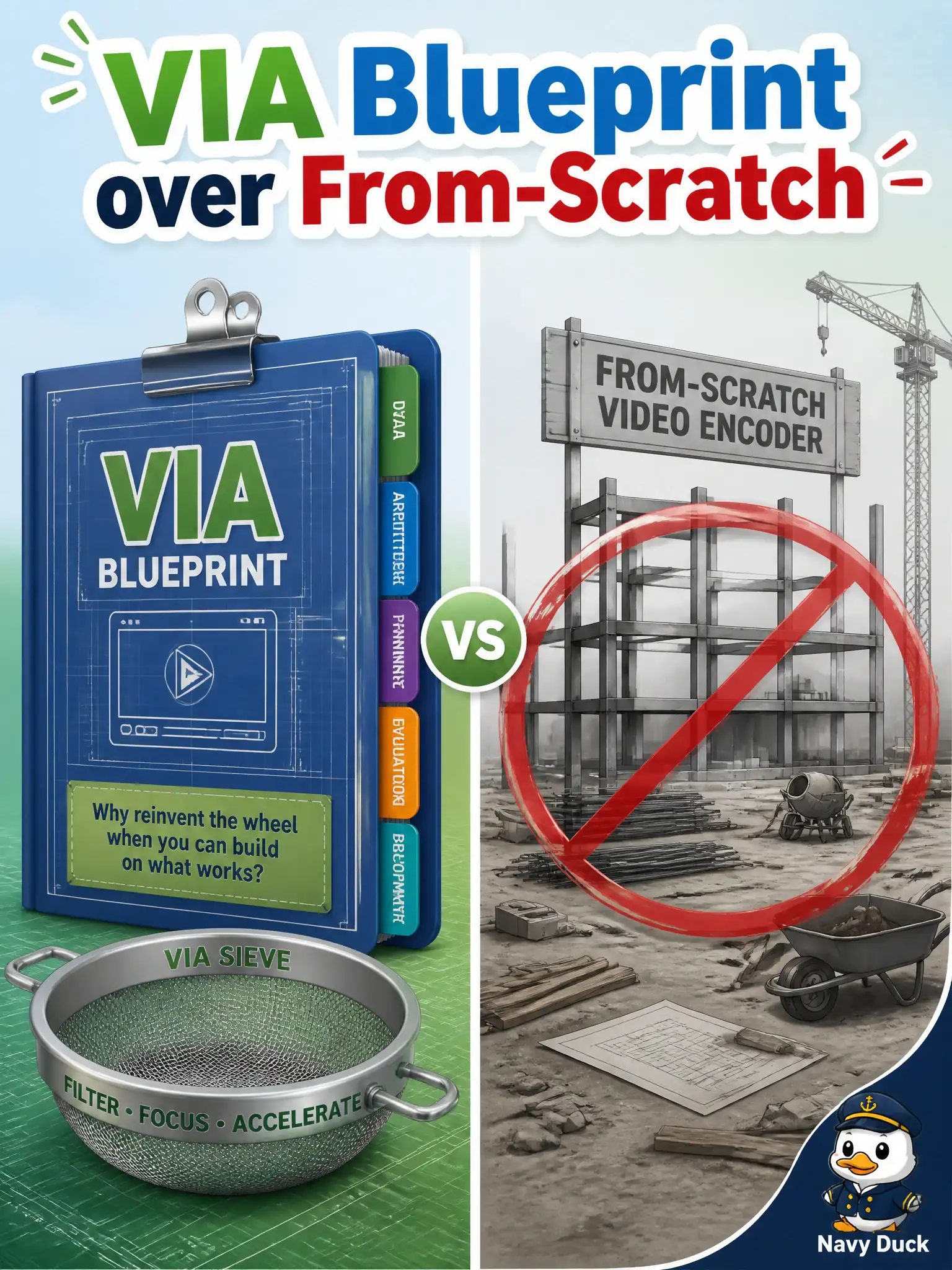
Video on this exam rides the official VIA Blueprint—reuse the path that already exists. Do not grind a new video encoder from dust when the Blueprint is the transfer door.
Full Explanation
A sieve-maker with a short assembly clip and a typed question who will customize an NVIDIA AI Blueprint with VIA should stay with that official VIA Blueprint path (transfer and reuse) instead of approving a volunteer’s from-scratch video encoder. Reuse beats training a video encoder from nothing for associate Performance Optimization on this multimodal job.
Approving the from-scratch video encoder as the faster Performance Optimization path fails: from-scratch video is usually slower and more data-hungry than the Blueprint reuse path. Expanding VIA into a spelled-out product name invented for the exam fails materials discipline—keep VIA as initials. Replacing the clip workflow with cuDF tabular joins because video is out of scope forever fails the stem’s video-plus-text job.
Exam caveat: VIA Blueprint customization is the official reuse path for clip+question work. Do not invent expansions of VIA or retreat to unrelated tabular stacks.
Operational check: customize the NVIDIA AI Blueprint with VIA for the sieve assembly Q&A; reject from-scratch encoder tickets; evaluate answer quality on civic holdout clips before any scale discussion. In municipal platform operations, record the chosen performance lever and the rejected alternatives in the change record so future on-call engineers understand the failure modes avoided for citizen services. Re-check the decision after the next traffic spike or model update to ensure the same answer still holds for the city's estate.