
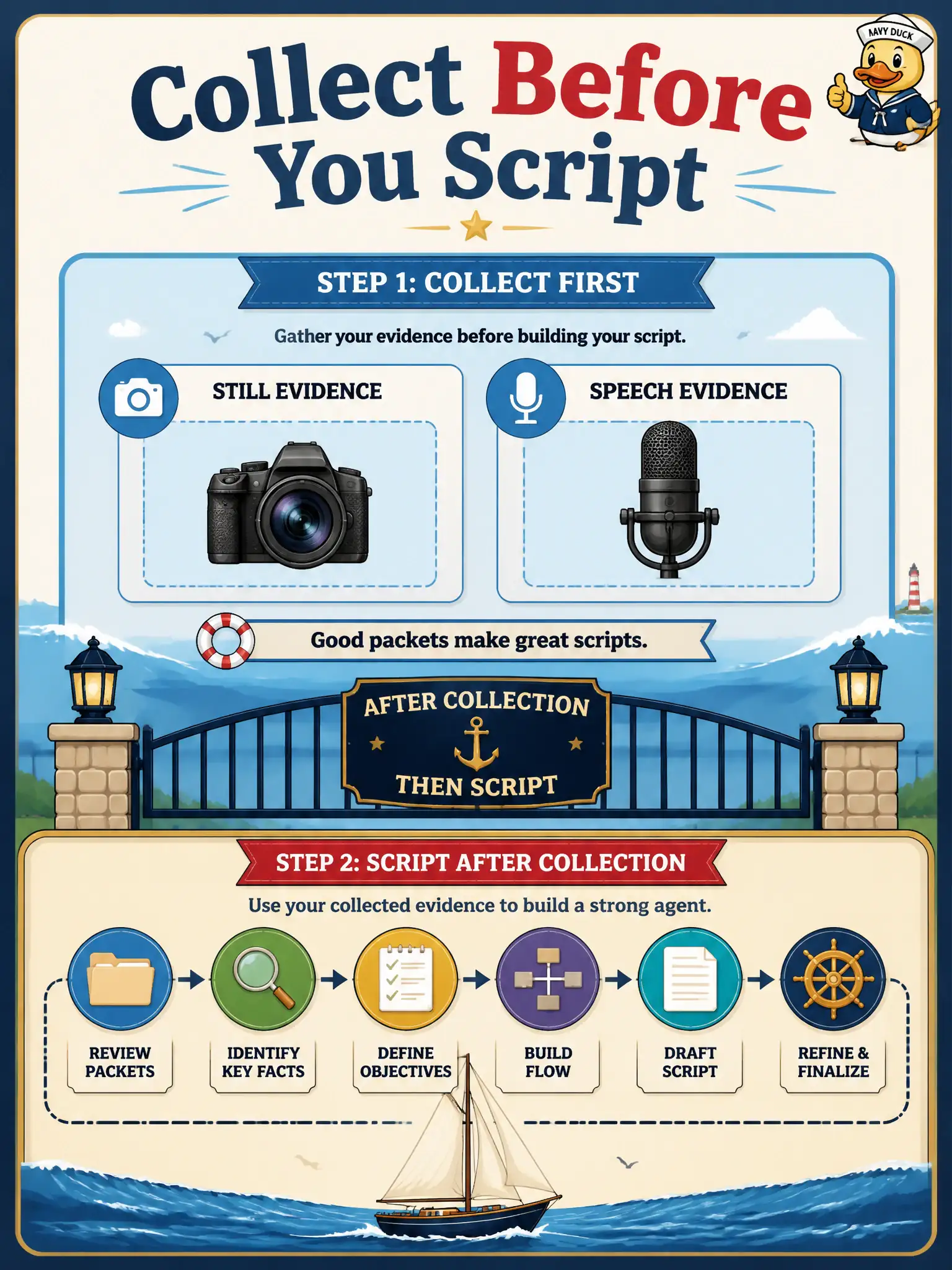
A packet-boat office argues about the next scripted agent action before anyone records the passenger still or the spoken request. What should happen first?
Select an answer to reveal the explanation.
Short Explanation
You can’t route what you never recorded. Capture the passenger still or spoken request first; then argue about which agent step runs.
Full Explanation
When the packet-boat office argues about the next scripted agent action before anyone records the passenger still or spoken request, collection of the missing modality data should happen first. Agent-step order comes after there is something to route. That priority is correct for civic orchestration: empty shelves make script debates theatrical.
Finalizing the full agent script with empty shelves and calling collection optional fails readiness. Picking a fusion type before any still or speech is recorded fails by choosing join strategy without data. Deploying Audio2Face so recording passenger media is unnecessary fails; face animation does not create passenger stills or requests.
Exam caveat: orchestration planning without media is not multimodal readiness. Operational check: gate civic agent-step design reviews on a minimum collected modality set for the scenarios under discussion. Keep municipal reviewers in the loop whenever modality claims, fusion labels, or agent scripts are promoted from lab notes into the production corpus used by public-facing services. Record the decision, owner, and date beside the dataset manifest. Align this choice with the agency’s published multimodal runbook so civic operators can audit why the row was accepted or rejected.