
A bridle loft planned still+speech rows, but the camera failed. How should today’s example be handled on the data side?
Select an answer to reveal the explanation.
Short Explanation
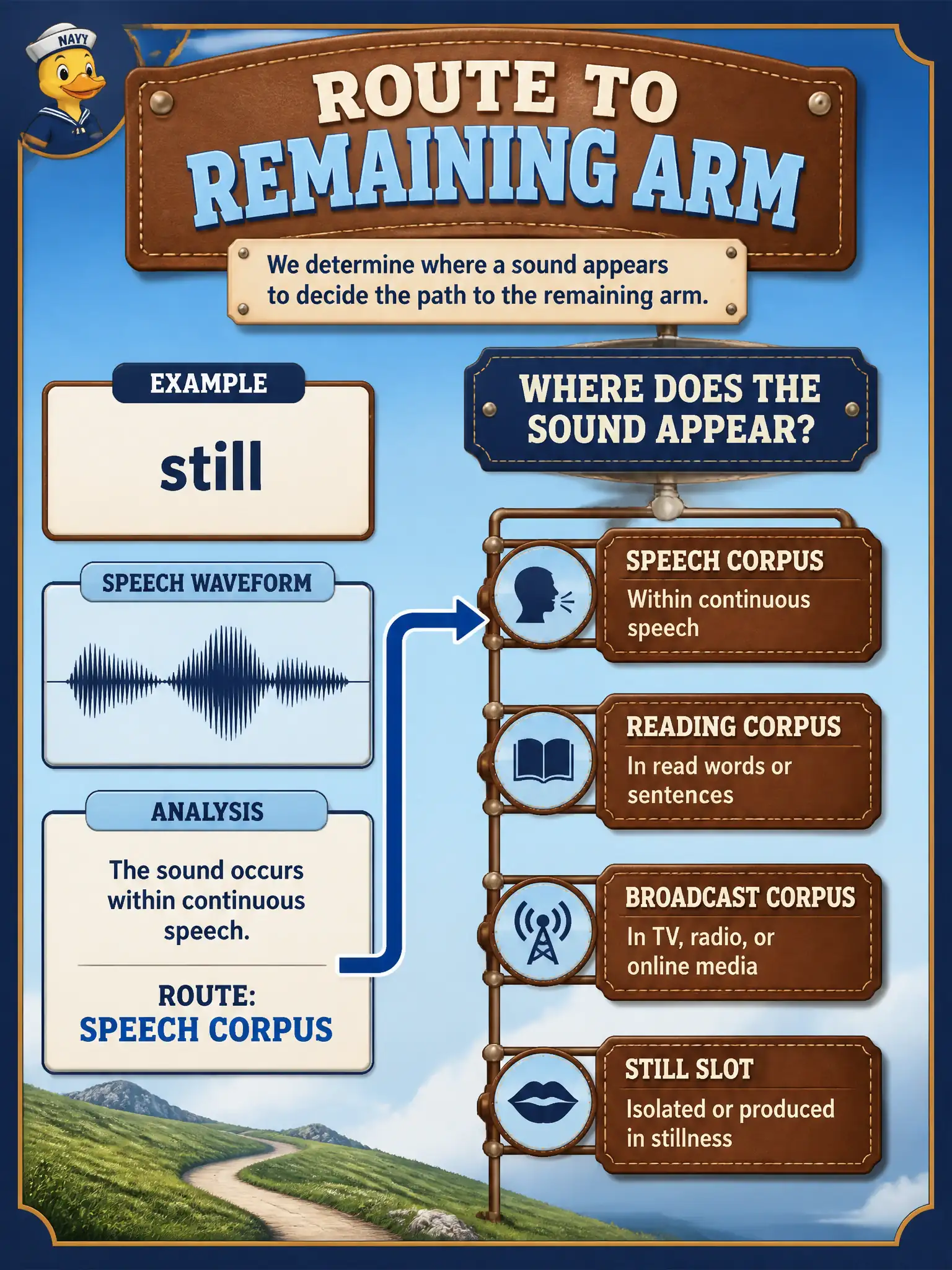
Camera empty, speech still there—send today’s example down the speech path. That is missing-modality routing on the data, not new service wiring.
Full Explanation
When a planned still+speech row loses the camera, the sound data-side move is to route the example to the remaining speech corpus as a missing-modality decision. That handling is correct: keep usable speech under an explicit policy rather than inventing pixels or discarding everything. Civic capture days often lose one sensor; honest routing preserves what taxpayers already paid to record.
Wiring a new Domain 4 microservice before any routing decision fails by jumping to software assembly too early. Forcing early fusion to invent a still from speech fails data integrity. Discarding the speech because the still arm failed fails by throwing away a complete remaining modality without policy rationale.
Exam caveat: missing-modality routing is a corpus decision, not automatic fusion magic. Operational check: tag civic incomplete rows, route remaining arms to the appropriate corpus, and document that the still was never captured. Keep municipal reviewers in the loop whenever modality claims, fusion labels, or agent scripts are promoted from lab notes into the production corpus used by public-facing services. Record the decision, owner, and date beside the dataset manifest. Align this choice with the agency’s published multimodal runbook so civic operators can audit why the row was accepted or rejected.