
A wrought-iron shop sometimes has a spoken request and sometimes only a scroll still. What is the data side of modality orchestration for today’s example?
Select an answer to reveal the explanation.
Short Explanation
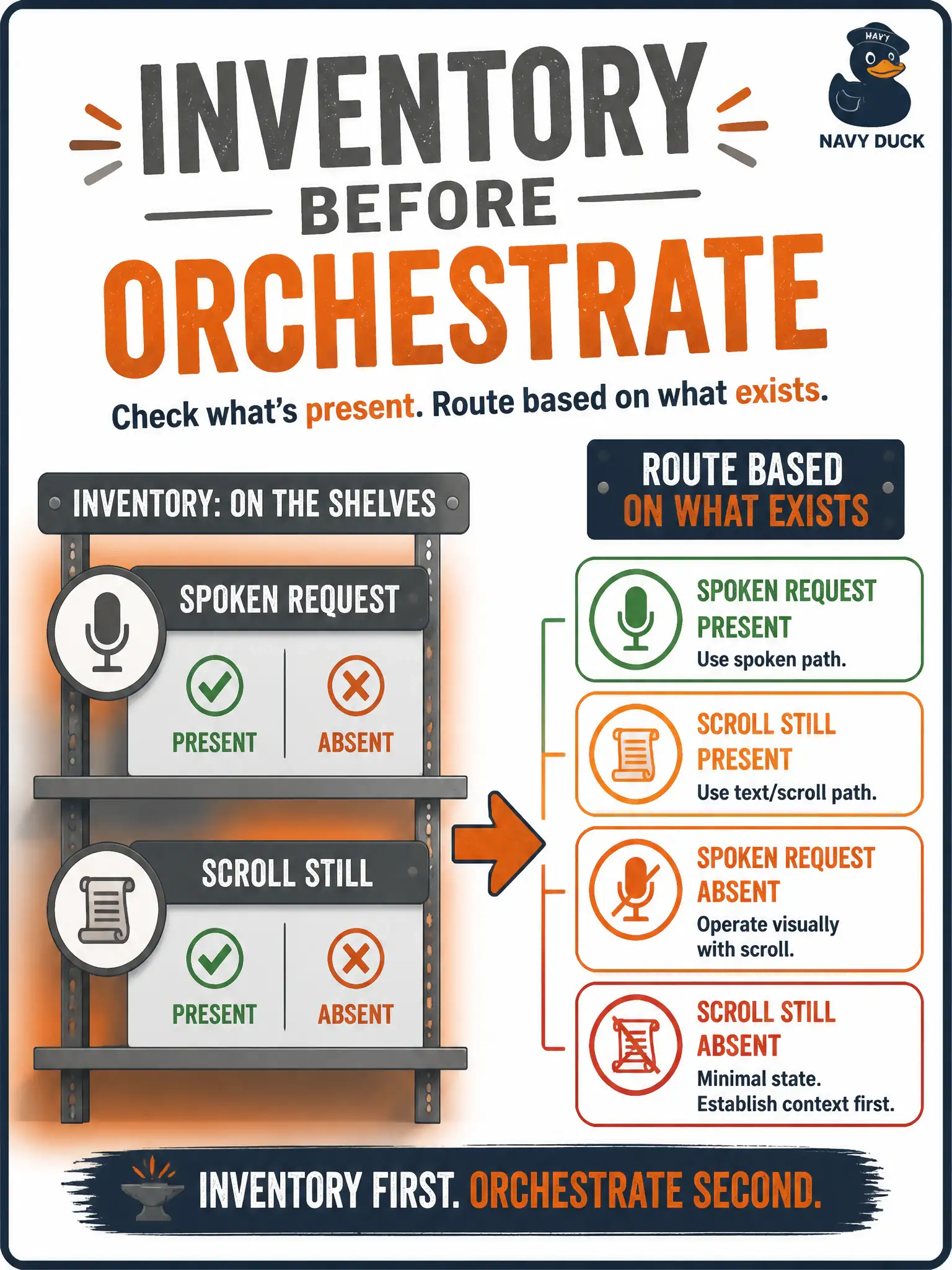
Orchestration starts with “what’s on the shelf today?” Spoken request, scroll still, or both—count the files that actually exist before routing.
Full Explanation
Modality orchestration on the data side begins by inventorying which modality files were actually collected for this example. That answer is correct for the wrought-iron shop that sometimes has speech and sometimes only a scroll still. Routing and fusion choices are meaningless until the shelf contents for today’s civic example are known.
Ignoring which files exist and always running every encoder fails against missing arms and wastes compute. Rewriting the fusion definition before checking the shelves fails by putting vocabulary ahead of inventory. Assuming audio is present whenever a still exists fails because modalities are independently collected.
Exam caveat: orchestration follows presence, not hope. Operational check: for each civic example, list present modalities, then choose routing/fusion paths that only claim arms that exist on disk. Keep municipal reviewers in the loop whenever modality claims, fusion labels, or agent scripts are promoted from lab notes into the production corpus used by public-facing services. Record the decision, owner, and date beside the dataset manifest. Align this choice with the agency’s published multimodal runbook so civic operators can audit why the row was accepted or rejected.