
A litho-stone loft plans to meet vision codes and text codes halfway for intermediate fusion. What data requirement comes first?
Select an answer to reveal the explanation.
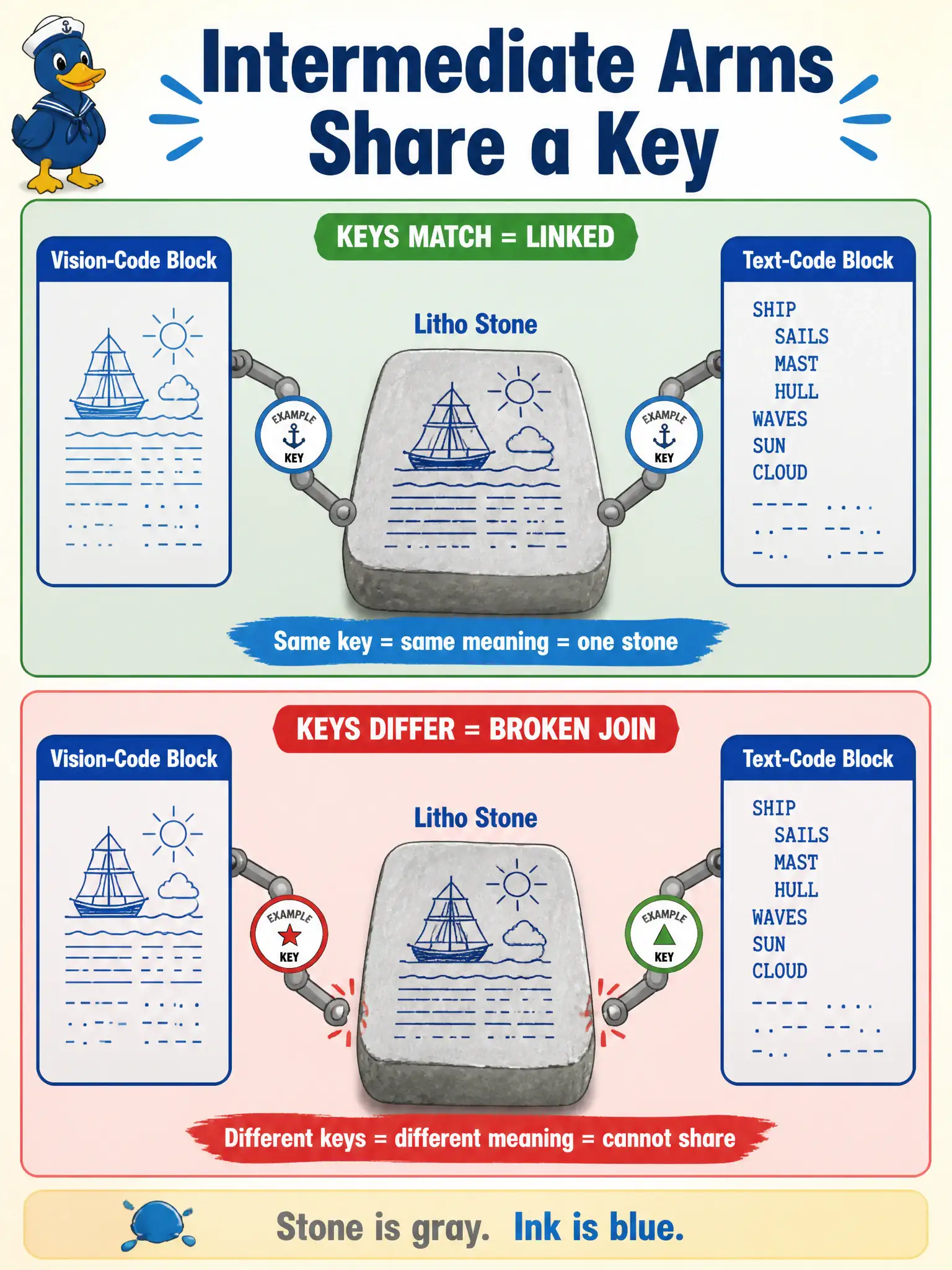
Short Explanation
Halfway meeting only works if both code arms are for the same stone and share a lookup key. Naming the style “intermediate” without joinable arms is just a label.
Full Explanation
Intermediate fusion meets mid-level codes halfway, so both mid-level arms must exist for the same example and be look-upable under one key. That requirement comes first for the litho-stone loft: vision codes and text codes for the same stone must be joinable before anyone claims intermediate fusion. Civic intermediate pipelines—code from an inspection photo meeting code from a typed note—depend on that shared lookup or the halfway meeting is fiction.
Only putting the word “intermediate” in the project title fails as data readiness. Storing vision codes without any shared key if text codes are complete fails the same-example join. Deploying ACE Audio2Face before any mid-level join fails by dragging an avatar path into a vision–text intermediate-fusion data prerequisite.
Exam caveat: intermediate fusion is a meeting of mid-level arms, not a title string. Operational check: for civic intermediate rows, verify both mid-level arms exist, share one example key, and resolve under that key before fusion training. Keep municipal reviewers in the loop whenever modality claims, fusion labels, or agent scripts are promoted from lab notes into the production corpus used by public-facing services.