
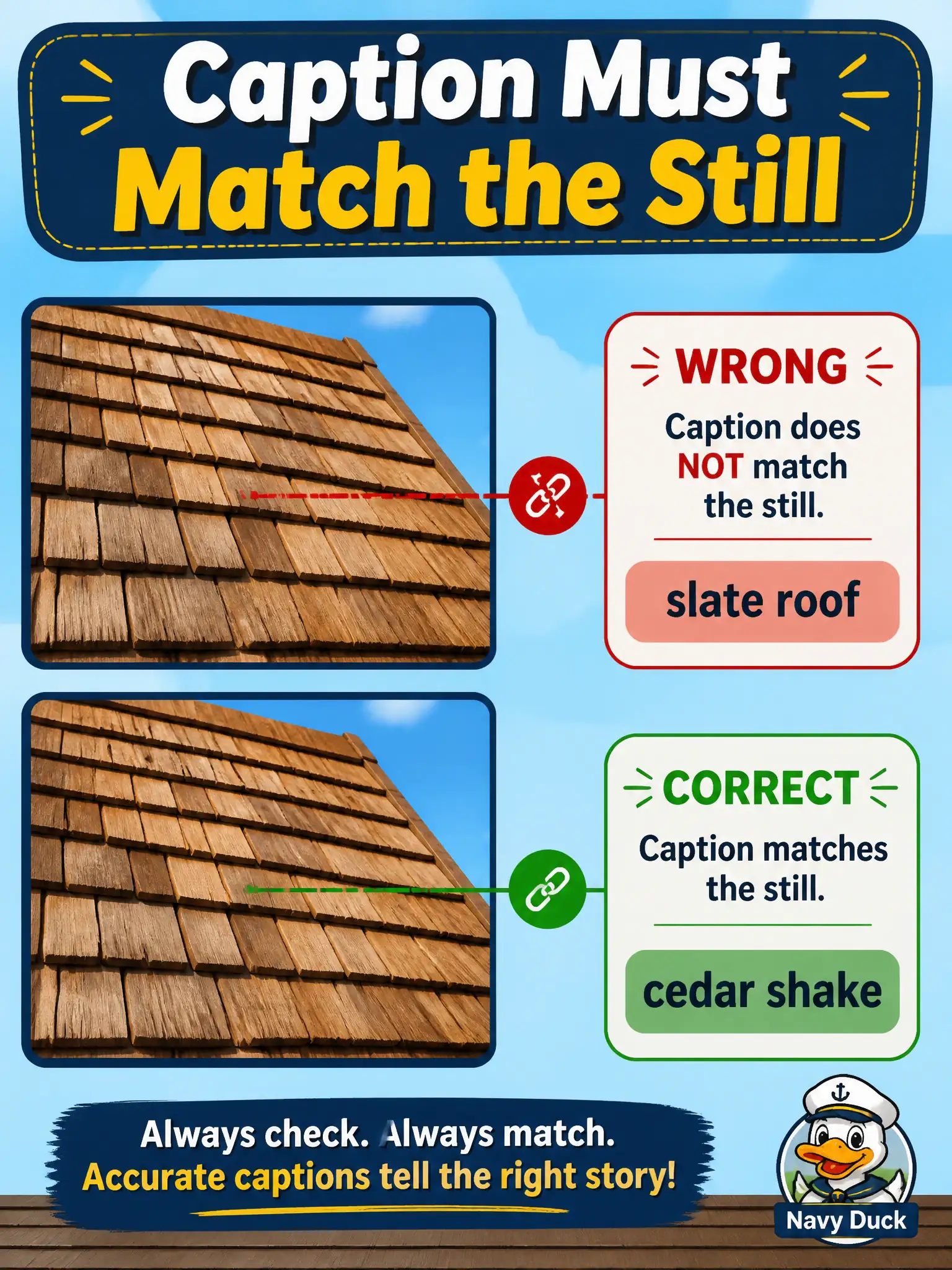
A shingle-mill row shows a cedar shake, but the English line describes a slate roof from another bay. How should that CLIP row be treated?
Select an answer to reveal the explanation.
Short Explanation
If the photo is cedar and the sentence talks slate, the flash card is lying. Fix the match—do not blame a generation knob for a bad pair.
Full Explanation
CLIP pairs require semantic alignment between the English prompt and the still it joins. Treating the shingle-mill row as misaligned data because the caption must describe the attached picture is correct: a cedar-shake still with a slate-roof sentence from another bay teaches the model the wrong association. In civic documentation—roof inspections, housing stock photos, public-works stills—misaligned captions create unreliable retrieval and can mislead downstream decisions.
Calling any English sentence valid beside any still fails the alignment requirement that defines a CLIP pair. Framing the issue as a Domain 1 guidance-scale trial fails by blaming a generation control for a corpus defect. Claiming CLIP prefers poetic slogans over scene descriptions fails conceptually; associate CLIP data wants faithful scene captions, not motto contests. Correcting the caption or re-shooting the still restores a trustworthy civic pair; leaving the lie in place poisons every downstream similarity search that touches the row.
Exam caveat: generation knobs do not repair cross-row caption swaps. Operational check: spot-check civic CLIP rows for caption–still identity, reject mismatches, and fix the join before any training or evaluation run.