
A harbor museum claims “clearer context helps everything” and runs a tighter sentence on the postcard generator and a tighter reply template on the Riva booth. How should metrics be logged?
Select an answer to reveal the explanation.
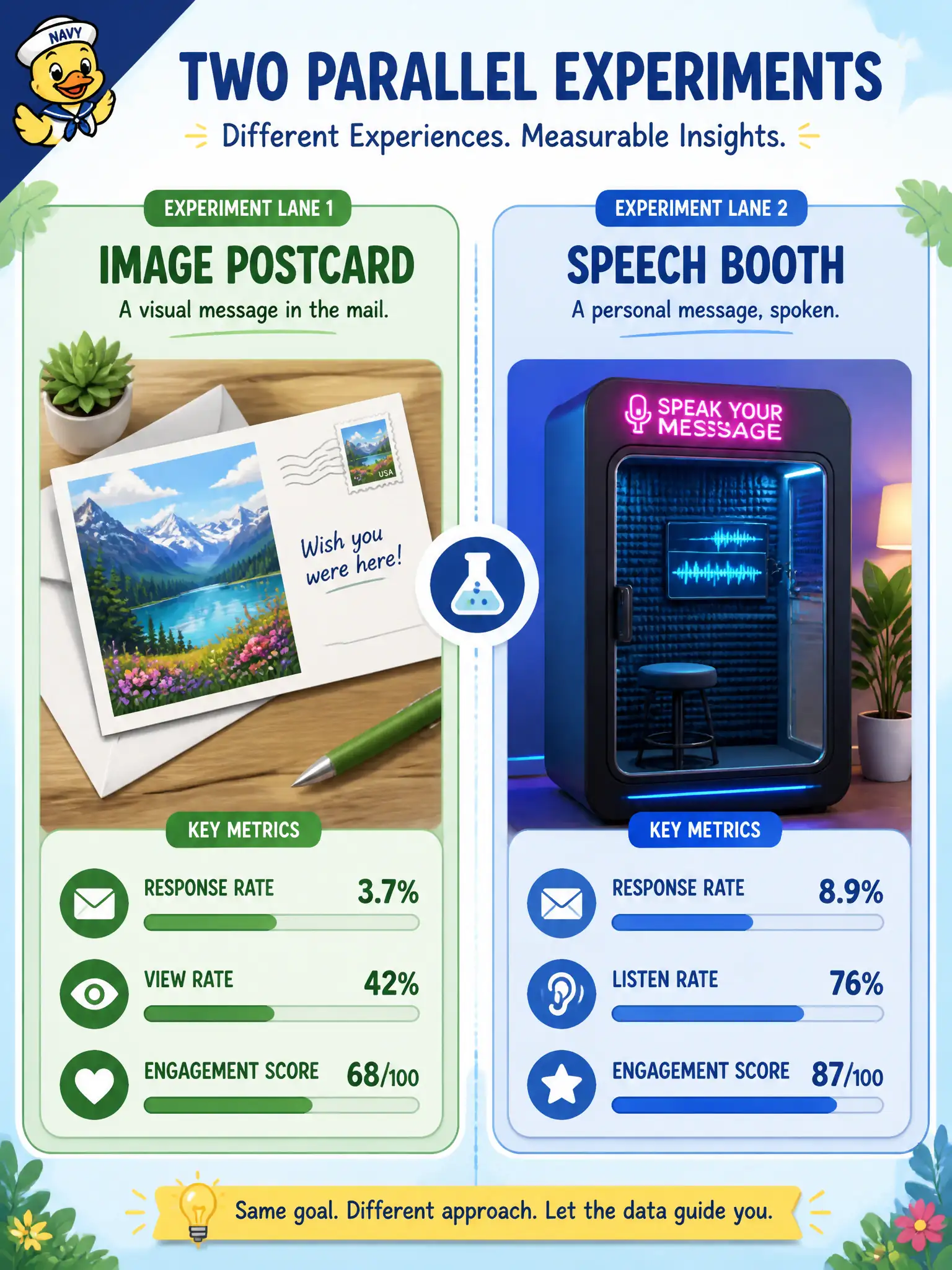
Short Explanation
Postcards and help-desk speech are different senses. Grade the card on image–text fit and the booth on transcription or listener clarity—do not mash them into one fake score.
Full Explanation
A harbor museum that claims “clearer context helps everything” and runs a tighter sentence on the postcard generator and a tighter reply template on the Riva booth should log an image–text alignment check for the card and a transcription or listener check for the booth—one metric per modality. Civic multimodal programs fail when postcards and help-desk speech share one fake quality number; separate metrics keep public dashboards honest about which sense actually improved for visitors.
Forcing a single shared quality number across image and speech fails by erasing modality-specific signal under false unity. Scoring only cluster fabric bandwidth for both trials fails by substituting networking telemetry for postcard alignment and booth speech quality. Dropping modality metrics to grade only slide-deck aesthetics fails by judging presentation polish instead of generation and conversational outcomes.
Exam caveat: clearer context still demands modality-matched metrics—image–text for cards, speech measures for Riva booths—on the associate path. Operational check: create two dashboard rows, attach alignment scores to postcard trials and transcription or listener scores to booth trials, and refuse a blended “context quality” KPI that mixes senses.