
A dye-garden wants “weld yellow on linen, shade, no flower,” but the first render shows a bouquet. What is the official test-and-refine experiment?
Select an answer to reveal the explanation.
Short Explanation
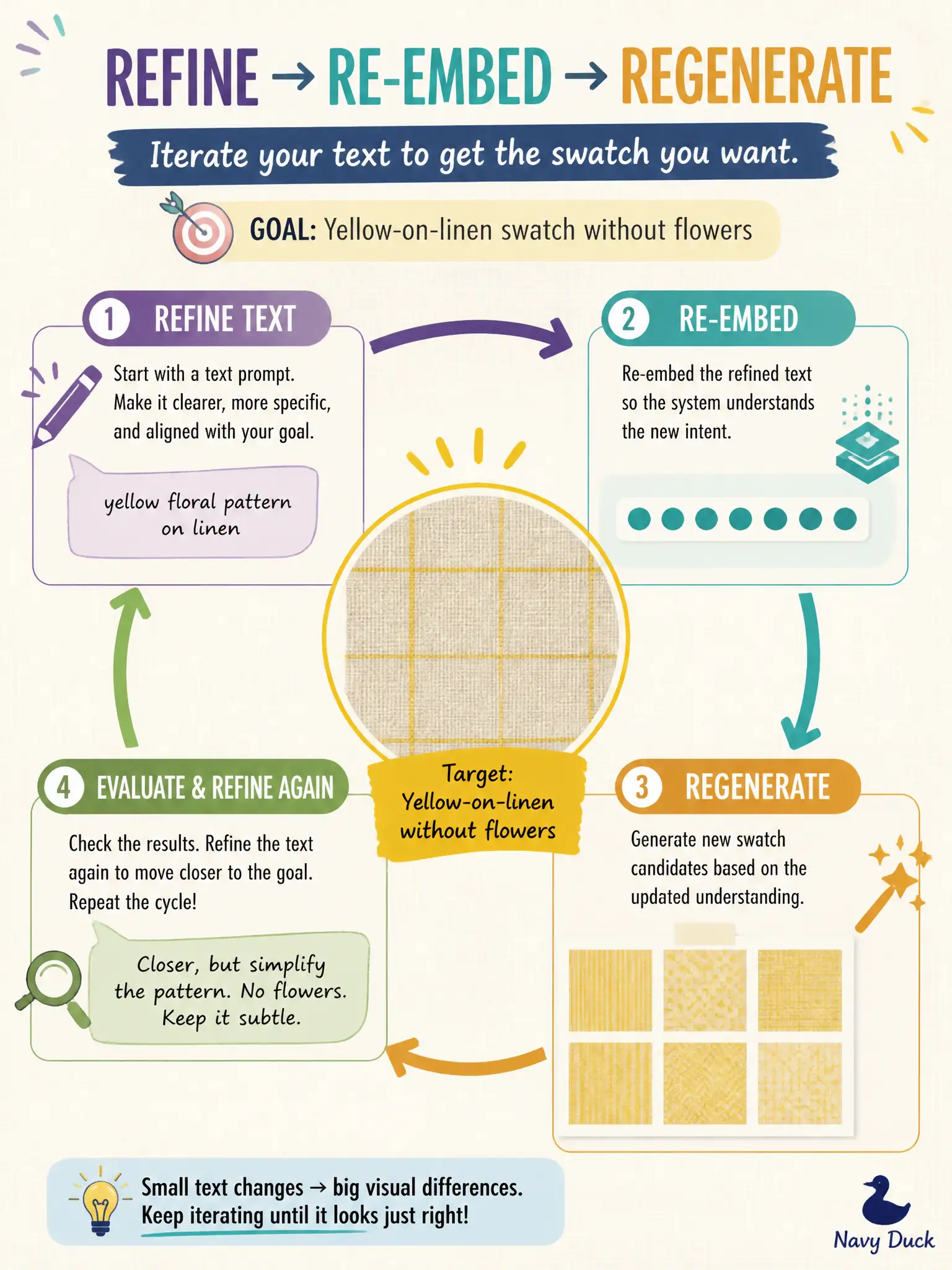
Missed the target? Rewrite the note on the compass, embed again, and take another shot—before you rebuild the whole generator from scratch.
Full Explanation
A dye-garden that wants “weld yellow on linen, shade, no flower” but first renders a bouquet should run the official test-and-refine experiment: refine the sentence, re-embed, and regenerate until the picture matches the target. Civic pigment desks should iterate language conditions before rebuilding networks from scratch, saving public compute and volunteer time while teaching the associate refine loop. Prompt refinement is the proportional first response to content mismatch.
Immediately training a brand-new network from random weights before editing any text fails by escalating to from-scratch training when the steering sentence is still wrong. Switching the task to PDF OCR extraction only fails by abandoning image generation for document text extraction. Ignoring the image and scoring only Riva TTS latency fails by measuring speech latency instead of whether the render matches the pigment brief.
Exam caveat: official test-and-refine for mismatched renders starts with sentence refine → re-embed → regenerate, not cold network rebuilds. Operational check: edit the brief to emphasize weld yellow, linen, shade, and no flower, regenerate with a fixed seed policy, checklist the four constraints, and only escalate beyond embedding iteration if the constraints remain unmet after documented refinements.