
A lace archive’s new denoiser wins a “looks like a real card” check, but a later text matcher still retrieves the wrong pattern name. What should the associate design next?
Select an answer to reveal the explanation.
Short Explanation
Looking like a postcard and matching the right pattern name are two different quizzes. Winning the “looks real” round does not finish the alignment round.
Full Explanation
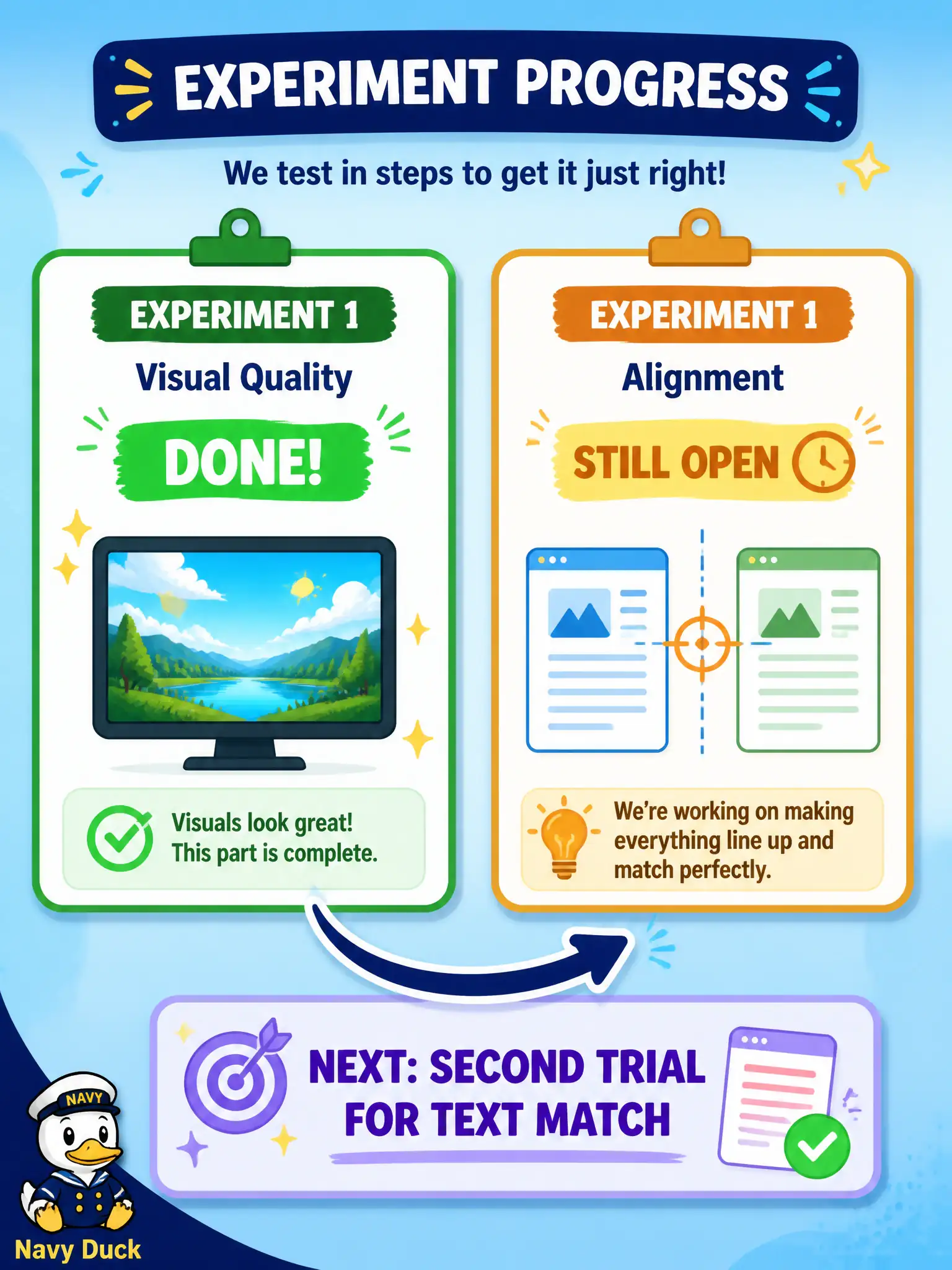
A lace archive’s new denoiser that wins a “looks like a real card” check while a later text matcher still retrieves the wrong pattern name should run a second experiment for image–text alignment rather than ending after visual quality. Civic pattern catalogs fail the public when beautiful wrong names ship to volunteers and researchers; realism and retrieval agreement are different quizzes on the associate multimodal path. Keeping both experiments ensures taxpayers get cards that look right and retrieve by the correct pattern name.
Declaring the quality project finished because realism alone is enough fails by ignoring the failed text-matcher outcome that still blocks catalog use. Deleting the text matcher to keep only pixel sharpness forever fails by abandoning the retrieval job the archive explicitly needs. Replacing both checks with a single datacenter cooling KPI fails by substituting facility telemetry for multimodal quality of lace cards.
Exam caveat: visual realism success does not finish image–text alignment work on the associate path. Operational check: freeze the realism-winning denoiser settings, design an alignment trial with pattern-name queries against generated cards, measure matcher accuracy, and iterate embedding or training levers until names retrieve correctly before calling the project done.