
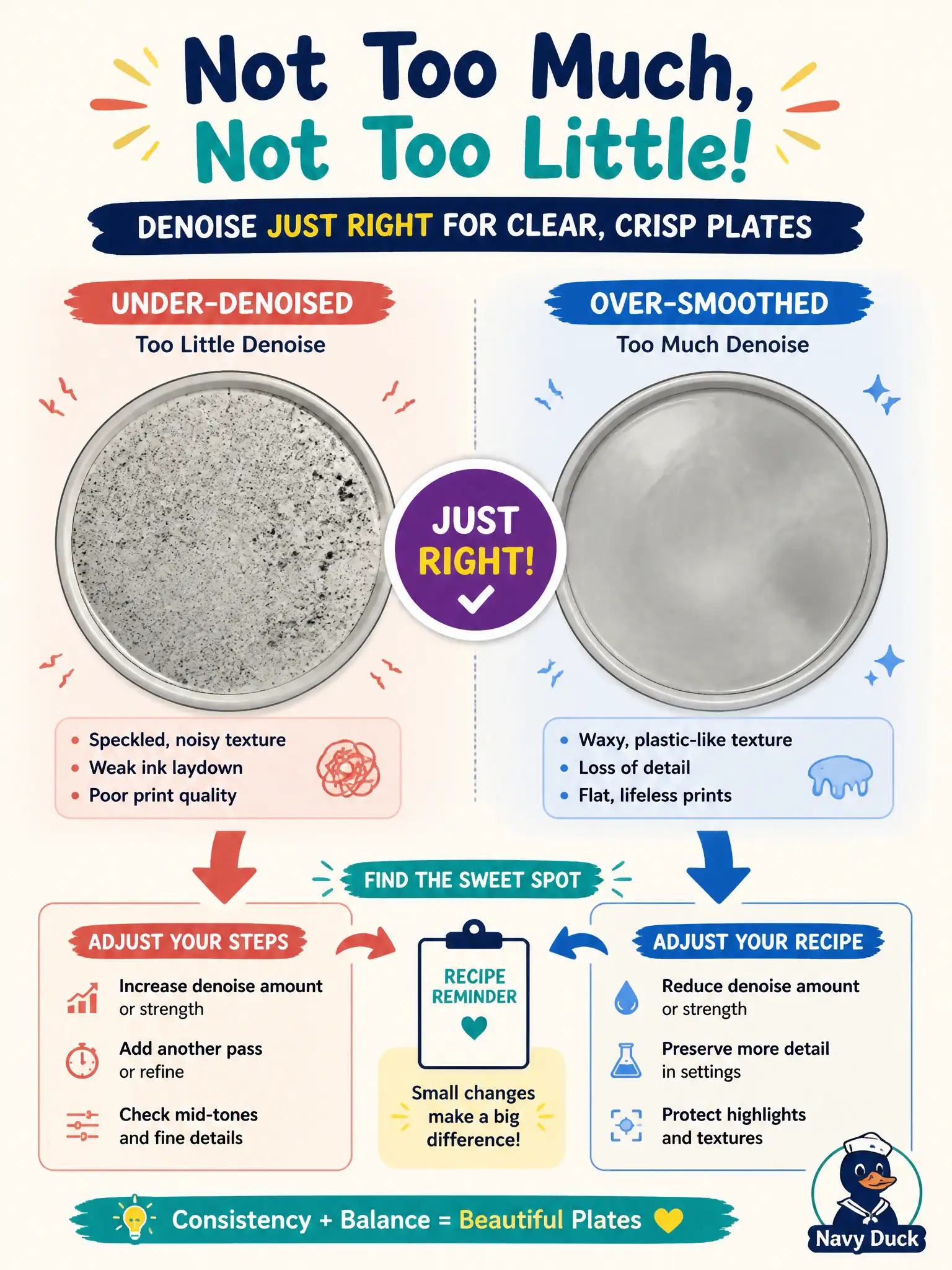
One observatory-plate render still looks speckled; another is waxy and loses a hairline crack that mattered. How should the associate read those diffusion-quality outcomes?
Select an answer to reveal the explanation.
Short Explanation
Leftover TV snow means you stopped wiping too soon; a waxy plate means you wiped so hard the fine crack vanished. Those are opposite denoising failures, so the next trial aims at the matching fix.
Full Explanation
When one observatory-plate render still looks speckled and another is waxy and loses a hairline crack that mattered, the associate should read residual grain as under-denoising and a too-smooth plate as oversmoothing, then pick the next step-count or recipe trial accordingly. Civic plate archives depend on cracks and fine structure for scientific and public interpretation; opposite denoising failures need opposite next levers, not celebration that “any change means learning.”
Claiming both prove the text prompt was never embedded fails by inventing a single embedding diagnosis for two opposite visual failure modes. Calling both successes because any change means the model is learning fails by treating uncontrolled visual damage as progress. Saying speckles always mean the Helm chart forgot a GPU request fails by blaming packaging for a denoising-quality symptom.
Exam caveat: residual grain vs waxy oversmoothing are opposite diffusion-quality outcomes that steer step-count or recipe trials differently. Operational check: classify each failed plate as under- vs over-denoised against a crack checklist, raise steps or strengthen denoising for grain, reduce steps or soften the recipe for waxiness, and re-score the hairline crack on held-out plates.