
A glasshouse kiosk chart is live. One dashboard shows pods ready; another still tracks transcription error on a weekly phrase list. How should those signals be treated?
Select an answer to reveal the explanation.
Short Explanation
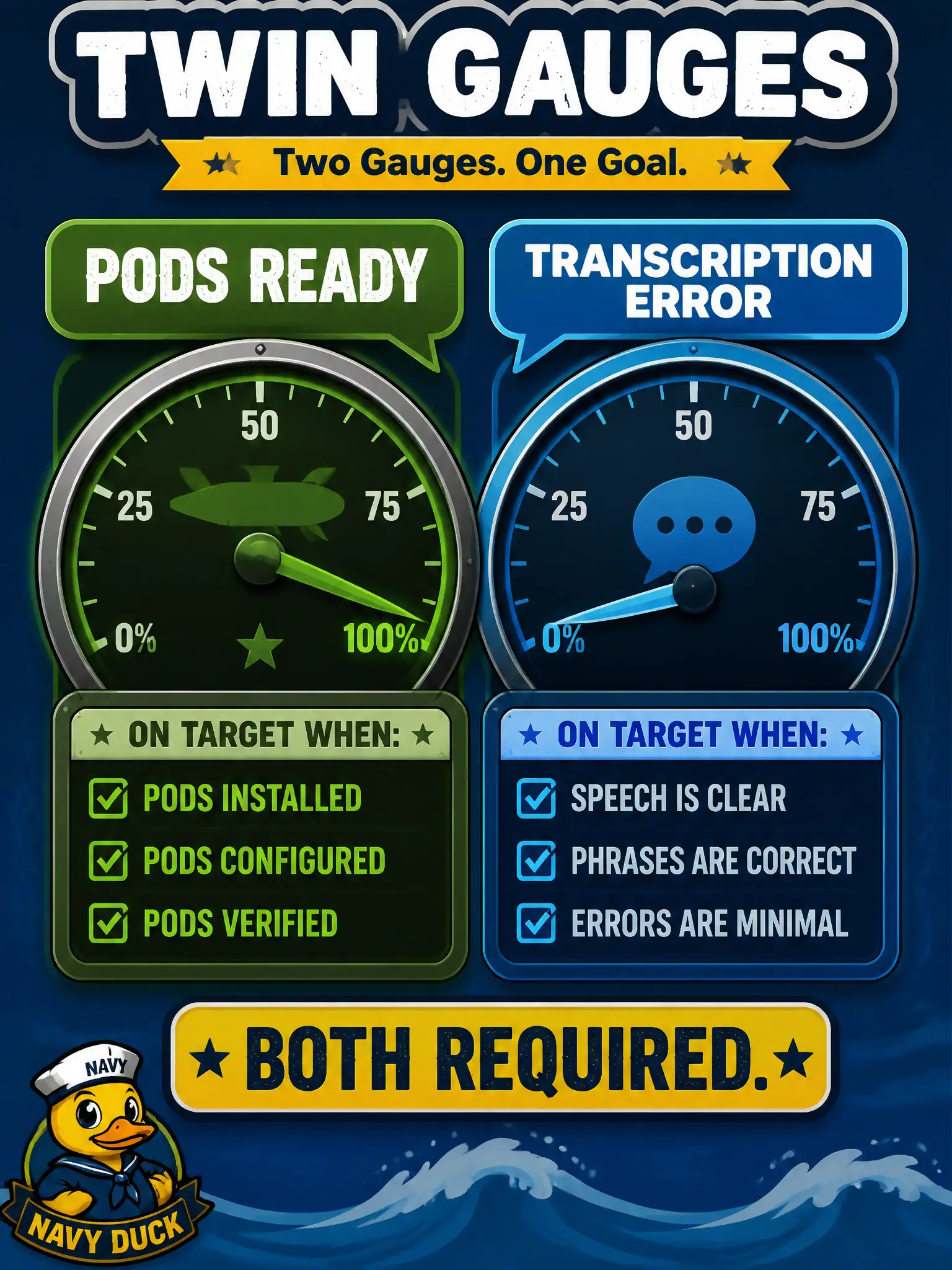
Pods Ready means the booth can open; the weekly phrase list means it still hears right. You need both lights on the dashboard. Health is not the same as speech quality.
Full Explanation
A glasshouse kiosk chart that is live should keep both signals when one dashboard shows pods ready and another tracks transcription error on a weekly phrase list: readiness shows the experiment is deployable; the speech metric shows it is still correct. Civic horticulture kiosks fail the public if “Ready” is mistaken for “hears right.” Associate practice keeps packaging health and multimodal quality as separate lights so taxpayers see both deployability and correctness.
Dropping the speech metric once pods are Ready because Helm health replaces multimodal quality fails by conflating Kubernetes health with recognition accuracy. Dropping pod readiness and trusting only GPU temperature as the deploy signal fails by substituting thermal telemetry for both packaging and speech quality. Merging both into a single image-quality score fails by forcing a vision metric onto a speech deploy dashboard.
Exam caveat: pod readiness ≠ speech correctness; associate dashboards retain both for conversational Helm deploys. Operational check: require Ready replicas before opening the kiosk, continue weekly phrase-list word-error checks, and page on either packaging failures or speech-quality regressions independently.