
A boardwalk team can field either a spoken Q&A booth or a short-clip review that uses an NVIDIA AI Blueprint with VIA. How should they choose the experiment?
Select an answer to reveal the explanation.
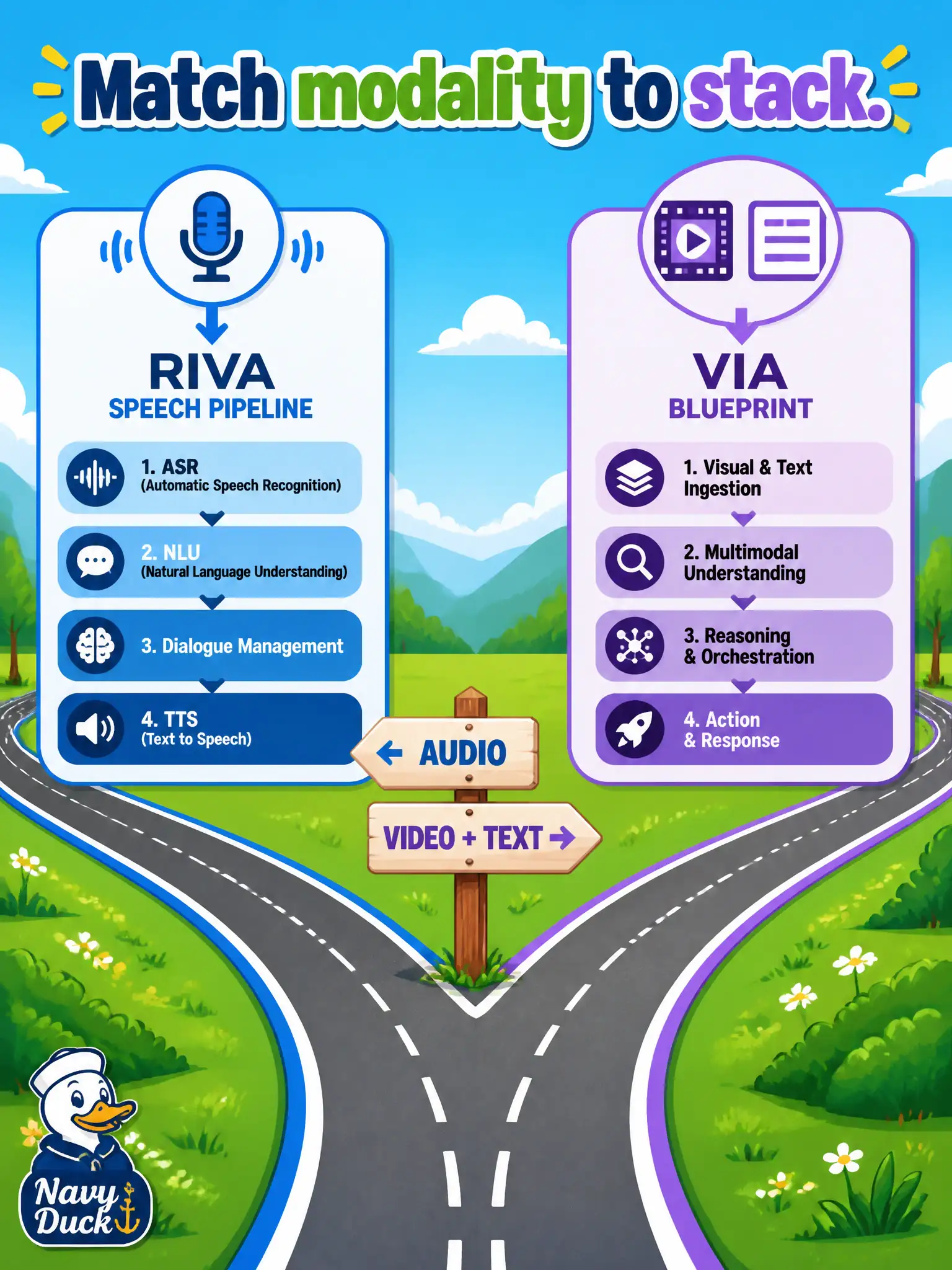
Short Explanation
Pick the tool that fits the tape you already have—live voices point to a Riva booth; short clips with text point to a VIA Blueprint trial. Do not invent an expansion for VIA; just match modality to stack.
Full Explanation
A boardwalk team choosing between a spoken Q&A booth and a short-clip review that uses an NVIDIA AI Blueprint with VIA should match the experiment to the incoming modality: live speech → Riva pipeline; recorded video+text → VIA Blueprint. Civic event desks pick tools from the tape they have, keep VIA as official initials, and avoid declaring one stack universally superior. Modality-to-stack matching protects public trial budgets from fashion-driven swaps.
Always preferring VIA because video Blueprints supersede any Riva speech trial fails by ignoring live-speech jobs that need a conversational pipeline. Always preferring Riva because associate exams forbid VIA by name fails against materials that do name VIA for video+text Blueprints. Expanding VIA into a full product architecture document before any trial runs fails by blocking experimentation with premature architecture theater.
Exam caveat: associate selection matches live speech to Riva and recorded video+text to VIA Blueprints; do not invent VIA expansions. Operational check: inventory whether the boardwalk’s next data is live audio or short clips with text, choose Riva or VIA accordingly, and write success metrics for that modality before launch.