
A glasshouse orchid desk renders the identical weekly care notice with two custom Riva TTS voices and plays both for interns. What success measure fits that TTS comparison?
Select an answer to reveal the explanation.
Short Explanation
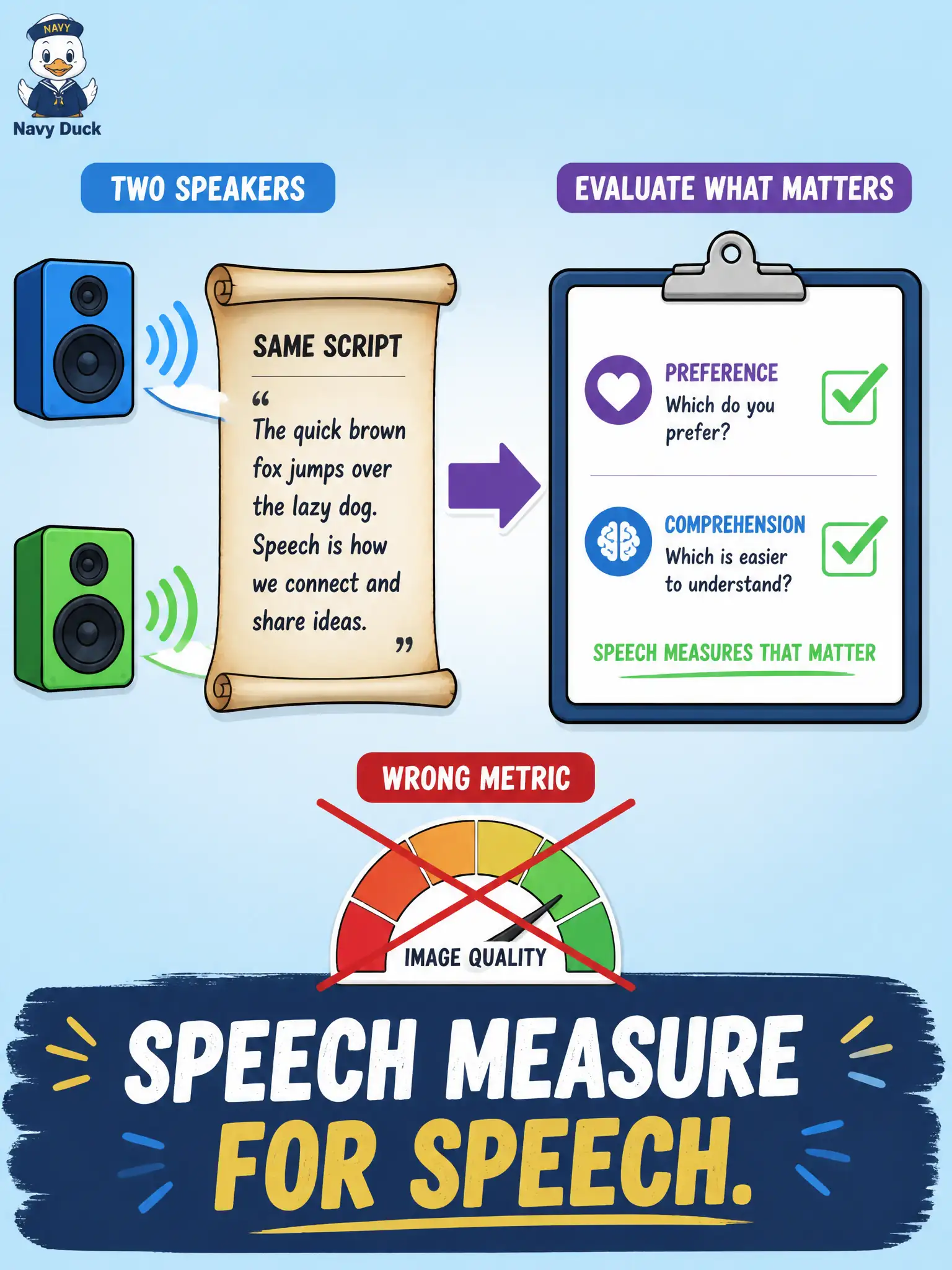
Judging a spoken care notice with a picture-quality score is like grading a radio show with a paint chart. TTS customizations need speech-appropriate outcomes—listener preference or whether hearers catch the message. Hold the script fixed so the voice is what you compare.
Full Explanation
A glasshouse orchid desk that renders the identical weekly care notice with two custom Riva TTS voices should score listener preference or a short comprehension quiz on the spoken notice. Holding the script fixed isolates voice as the factor, and speech-appropriate outcomes tell civic horticulture staff which voice actually helps interns follow care steps. Matching metric to modality protects public training materials from being graded with picture scores.
Applying FID or another image-generation quality score to a spectrogram screenshot fails by using vision generative metrics on a speech comparison. Treating lower GPU utilization as the better voice fails by optimizing resource burn instead of listener understanding. Judging success by whether Helm replica count increased after the voice swap fails by importing a packaging/scale knob as a TTS quality measure.
Exam caveat: TTS A/B tests use listener preference or comprehension with a fixed script—not FID, GPU percent, or replica count. Operational check: synthesize both voices from the same notice text, run a preference or quiz panel with interns, and select the voice that wins on understanding before updating the greenhouse playlist.