
A wind-farm blade-photo desk has inspector notes and stills. Leadership wants “something with a pretrained language model.” If the real need is to pull the matching still for a typed fault question, which text-arm trial should they run?
Select an answer to reveal the explanation.
Short Explanation
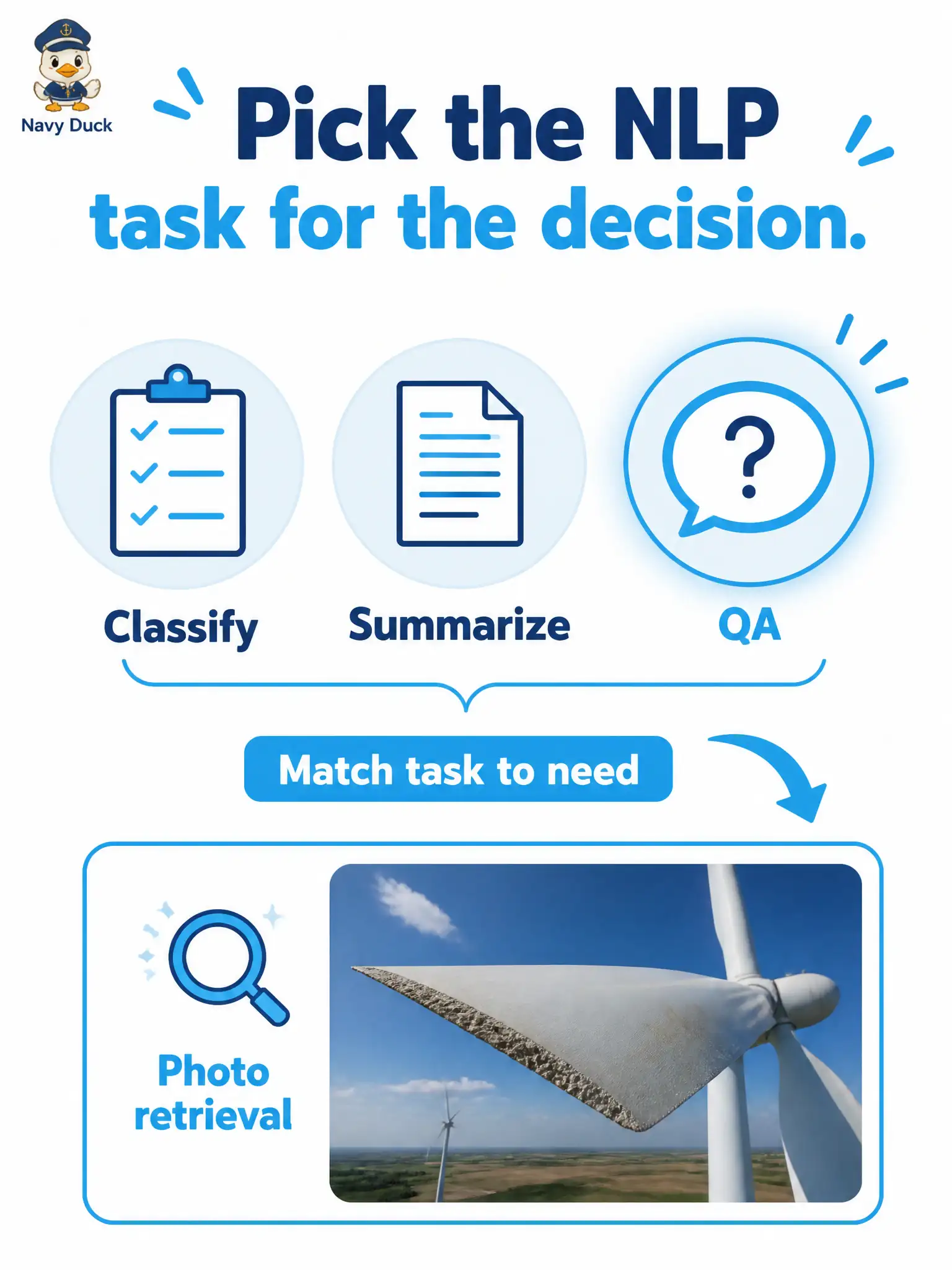
If the job is “ask a question, get the right blade photo,” that is question-answering with a still at the end — not a chatty box, a vague summary, or a sorter nobody asked for.
Full Explanation
A wind-farm blade-photo desk with inspector notes and stills that needs to pull the matching still for a typed fault question should run question-answering over the notes that then retrieves the matching blade still. Among text-arm NLP task types, QA is the match when a civic inspector’s typed question must surface the right photo for safety review. Aligning the trial to that retrieval job protects public infrastructure maintenance from fashionable but mismatched language-model demos.
A generic chatbot that never ties answers to the photo set fails by omitting the multimodal still requirement. Summarization alone with no path to a specific still fails by producing digests without the retrieval decision leadership asked for. Text classification into fault bins when no routing decision was requested fails by solving a sorting problem nobody defined instead of question-to-still retrieval.
Exam caveat: pick the NLP task type that matches the decision—QA for question-to-still, not chat, summary-only, or unsolicited classification. Operational check: issue held-out fault questions, require a returned note plus blade still, and mark success only when the still matches the answered fault record.