
An aquarium dive-bell office tags species names in a transcript, then a speech synthesizer reads the tags aloud to a gallery. Visitors hear the wrong Latin name even though the photo wall is correct. Where should the next single-stage experiment look first?
Select an answer to reveal the explanation.
Short Explanation
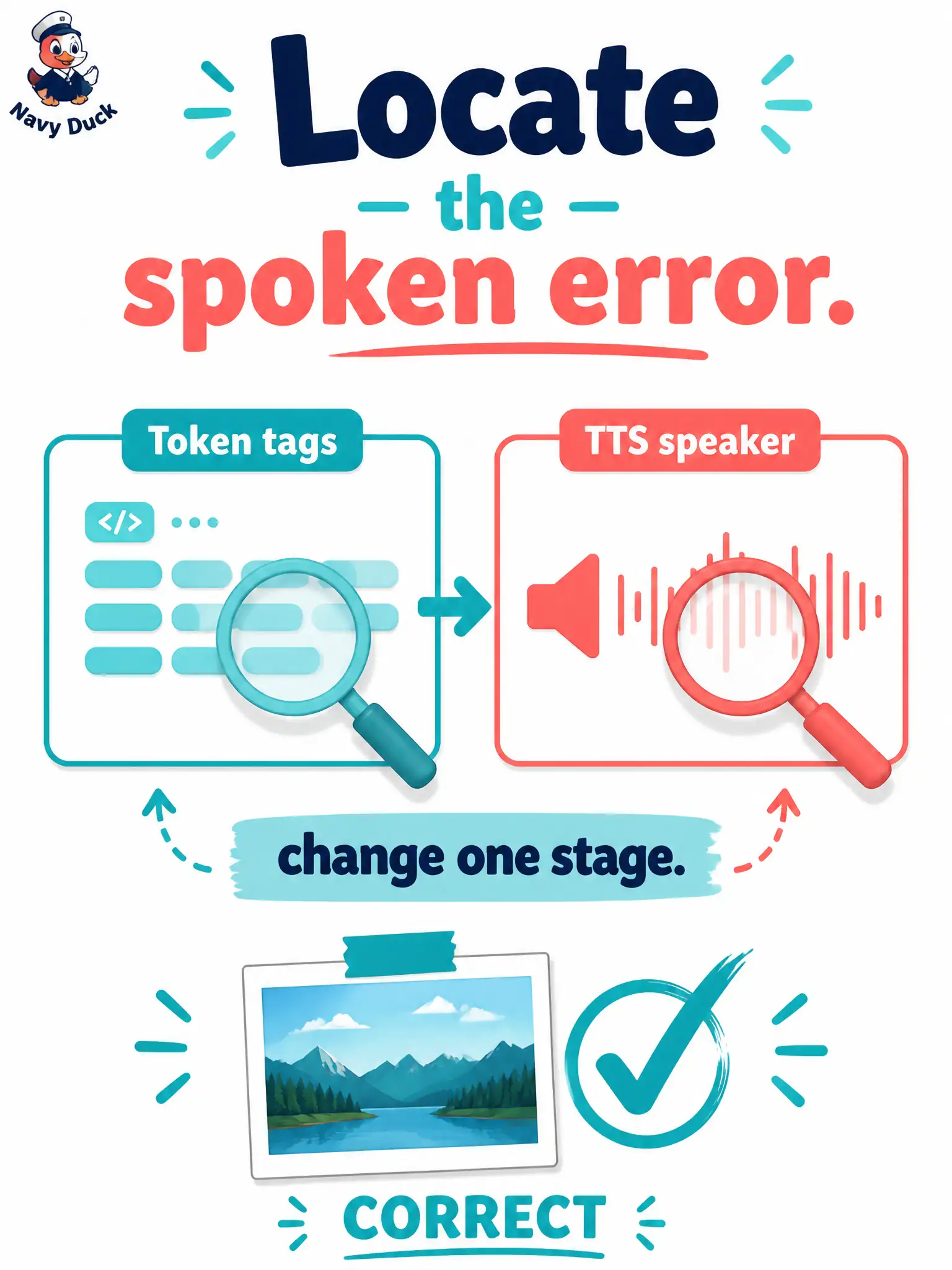
Wrong words out of the speaker can mean bad tags or a clumsy reader. Fix one stage at a time — highlighter versus voice — so you know which knob moved the error.
Full Explanation
An aquarium dive-bell office that tags species names in a transcript and then uses speech synthesis for a gallery can hear the wrong Latin name even when the photo wall is correct. The next single-stage experiment should separate whether the token-classification tags are wrong from whether the later speech stage misread correct tags. Civic galleries owe visitors accurate spoken names; isolating highlighter versus voice keeps public trust repairs cheap and interpretable when families hear species labels beside the tanks.
Replacing the entire gallery with a new cooling system for the speakers fails by treating a speech-pipeline error as a facilities problem unrelated to tags or TTS. Assuming the photo wall caused the spoken Latin error fails by blaming a correct visual modality for a text-or-synthesis fault downstream of tagging. Changing ASR, token tags, and TTS in one combined rewrite fails by moving three stages at once so staff cannot tell which knob introduced the wrong Latin name.
Exam caveat: after tagging-plus-TTS, localize faults one stage at a time; correct photos do not explain spoken tag errors on the associate path. Operational check: inspect whether tagged Latin strings match ground truth on the same utterances; if tags are correct, freeze them and vary only TTS settings; if tags are wrong, freeze TTS and repair classification first before any gallery-wide voice change.